



Brent Erickson – Noctropolis

[b]Ingmar[/b]: Do you have any role models among adventure developers/companies that have had an impact on your own approach to this genre?
[b]Brent[/b]: The early text adventure games are what piqued my interest in story games. I never met Tim [Anderson], Marc [Blank], Bruce [Daniels] or Dave [Lebling] but they certainly had an impact on my future.
Wizardry also had a large impact on my early games. It was one of the first games that had a graphical representation of the world.
I loved Ron Gilbert’s games and of course I played the classic Monkey Island through several times. I thought his games had a good balance of adventure and humor. I got to know him and Shelley Day in the early days of the Game Developers Conference.
Speaking of the GDC, I definitely learned a lot from the conference and founders there: Chris Crawford, Tim Brengle, and Brenda Laurel to name a few. I think I attended the second conference when there were only about 100 attendees. I’ve even spoken at the conference.
The King’s Quest series also inspired me. Roberta’s reworking of fairy tales was fantastic.
I also love the Ultima series of games. Though not in the same genre as “story” games, they still have deep stories and character interactions.
This was also the time that I was getting interested in the “business” of gaming. I’ve been lucky to get to know many of the game industry’s early leaders like Trip Hawkins, Richard Hilleman, Chris Weaver, Richard Garriott, John Carmack and many more. All have inspired me in different ways.
[b]Ingmar[/b]: Before I get to Tex Murphy, what are your recollections of the other games you worked on at Access Software? Please share some of your personal highlights from that time.
[b]Brent[/b]: Echelon was actually a product I proposed. We had been developing some 3D technology for Leader Board (which was actually a pseudo-3D) and I wanted to do a game somewhat like BattleZone with what we had. After several iterations, Echelon emerged as a futuristic space combat game. The original name stuck. Echelon was one of the first true 3D games for the C64. I think the only other at the time was Elite. As you can imagine, true 3D was difficult, especially on a CPU with not only no floating point processor but not even a multiply and divide instruction. In Echelon we needed to display objects and terrain at a large distance. I came up with a technique that would allow us to project objects out a great distance and still have a fast update (well, relatively fast; I think we were at 5 fps). The other challenge was putting all the data together. This was all done by hand using large sheets of graph paper and hand-extracting point and line data. There were no 3D modeling programs at the time. Echelon also used a little device that Bruce and Steve came up with called the LipStick. It would basically allow you to “talk” to the game to fire your weapons. It was a bit gimmicky but was very unique at the time.
Countdown was one I actually had a great deal to do with. Not only did I program the thing but I did a significant amount of the design work. Countdown was a bit of an experiment but it did well and is one of my products that is still mentioned fondly.
Leader Board had some interesting “firsts”. I already mentioned the fact it was our first 3D game. The second is that we used a “rotoscoping” technique to digitize the golf swing. We recorded a golfer swinging the club (I think it was Roger Carver, actually) on videotape and then overlaid a sheet of graph paper on the TV screen. Roger then colored each pixel by hand from each frame of the swing. He then digitized it a pixel at a time into sprites. The result was an incredibly smooth golf swing that had not been seen before. The development of Leader Board also allowed me to branch out of the Commodore 64 platform. At the time, the AtariST and Commodore Amiga had been released and we wanted to explore developing for the platforms. I got an AtariST and ended up writing World Class Leader Board for it. The original Leader Board’s golf courses had no details such as sand traps or trees. I added these in the AtariST version and they were then moved into the Commodore 64 version. Of course Links came along a little while later and was one of the first games we did on the Amiga.
[b]Ingmar[/b]: So now: Tex, a series beloved by many adventure gamers. What do you recall most about the production of Mean Streets?

[b]Brent[/b]: Mean Streets was heavily inspired by the campy early detective movies and mixed with a Blade Runner-like environment. Chris and Doug (Vandegrift) used to make 8mm movies when they were young (actually they still did them when they were grown up). Mean Streets took this love of movies and moved it into the realm of point-and-click games.
Mean Streets was the first to use a pseudo-FMV. The actors were mostly people who worked at Access, with a few actors and actresses who were hired locally. It was all very new. All the video was shot right in our office. It was great fun. Chris playing Tex was a hoot and was quite convenient. Since we were learning as we were going, we could reshoot Tex’s scenes and dialogs many times over, and we did.
Mean Streets was also the first game I know of that used digitized speech. It used our newly developed RealSound technology to play back digitized audio. At the time the Commodore 64 only had an FM synthesis chip that was not capable of playing back digitized audio. We figured out a way to make it do this and that really made the characters come to life.
Originally the design was based around doing a full flight simulator in the game. The technology was originally developed for Echelon; we decided that would be a unique thing to do. Roger Carver ended up mapping out and digitizing, more or less, the West Coast. It was mapped out on a bunch of taped-together graph paper sheets. Specific areas (such as San Francisco) were done in much higher detail. It was painstaking work. But it added something unique to the game.
On the PC side it was the first game Access produced that supported VGA graphics. 256 colors was a lot back then compared to the 16 color EGA graphics we had been using. We still had to support EGA and we came up with some cool technology to do color reduction down to 16 colors.
[b]Ingmar[/b]: What do you remember about developing Martian Memorandum?
[b]Brent[/b]: For Martian we went back to the more traditional point-and-click style adventure. More work was spent on the story elements rather than on the travel aspects.
This was also the game that used actual FMV. We advanced the technology to the next step where we could do real video sequences. We also began to hire real actors and actresses. Working with outside actors required a different level of discipline in our dialog and story. I think it resulted in a bit more polish in the story.
Martian also introduced a more sophisticated dialog system that used some branching rather just some preset paths or database inquiries. This also added to the depth of story.

[b]Ingmar[/b]: What motivated you to leave Access Software?
[b]Brent[/b]: I think it was really a combination of things. I had been at Access for nearly ten years. Before Access I had run my own business. I kind of missed that. Access had also grown larger, which made is less personal to me. I had also made many contacts in the industry and people had started to ask me to do products for them. Shaun and I had started talking about concepts and we just wanted to pursue them. All these things together made it the right time to take the leap.
[b]Ingmar[/b]: If you had stayed at the company, what direction would you have liked to take the Tex Murphy series?
[b]Brent[/b]: I think Chris did a great job moving it forward. The non-immersive world was always a little bit of a problem for the detective genre. You really need a more free-form way of searching for clues and interacting with the environment. We always kind of knew that when 3D technology was advanced enough, that was the way to go for the environments. The technology just wasn’t there and wouldn’t be for several more years.
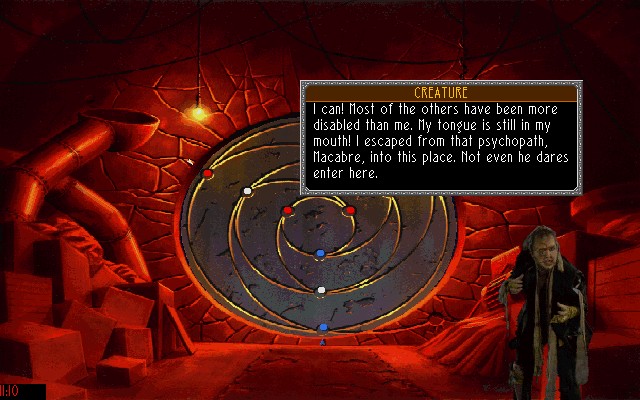
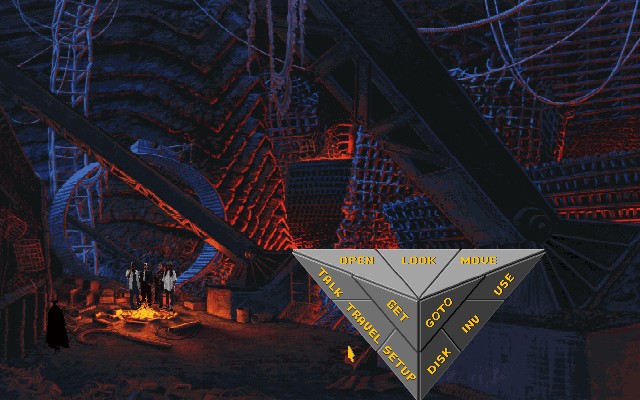
[b]Ingmar[/b]: Thank you very much for doing this, Brent. We wish you all the best with the enhanced version of Noctropolis, and hope that a wide number of adventurers discover this gem the second time around.
[b]Brent[/b]: Thank you for the stroll down memory lane. It’s been a pleasure sharing it with you.
Latest Gaming Articles
All Articles