


Brent Erickson – Noctropolis

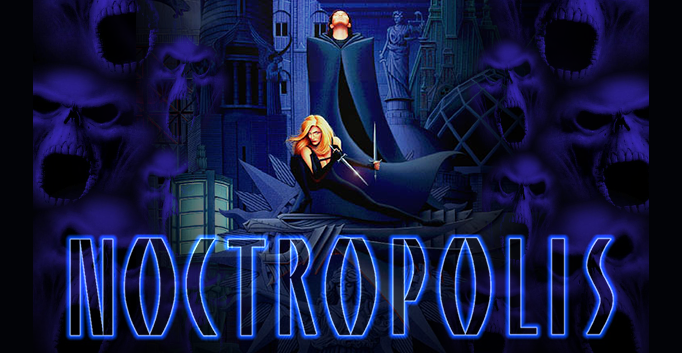
[b]Ingmar[/b]: What improvements does Noctropolis 2015 offer in comparison to the original version?
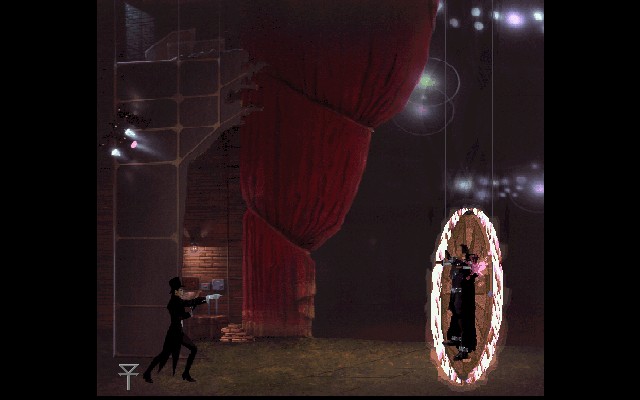
[b]Brent[/b]: Most of the game is exactly the same as it was in the early ‘90s. The main enhancements involve improving the mouse and keyboard support, and it has a remastered soundtrack. Of course it now supports modern computers systems and graphics cards. There were several bug fixes also made (yes, the old game did still have some bugs in it).
[b]Ingmar[/b]: Do these fixes also include removing the dead-ends from the original game?
[b]Brent[/b]: Of course software is never 100% bug free (the “programmer’s disclaimer”) but as far as I know, the dead-ends that were found in the original code have been fixed. Ironically, a couple of these were fixed in the original game in an update that never went out. Back then it was much more difficult to release any sort of patch or update so the fixes never made it into the hands of users.
[b]Ingmar[/b]: What aspects of the game are you especially proud of, and what elements could have worked out better?
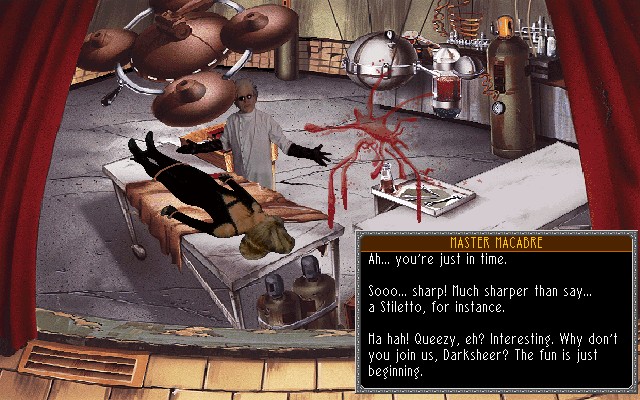
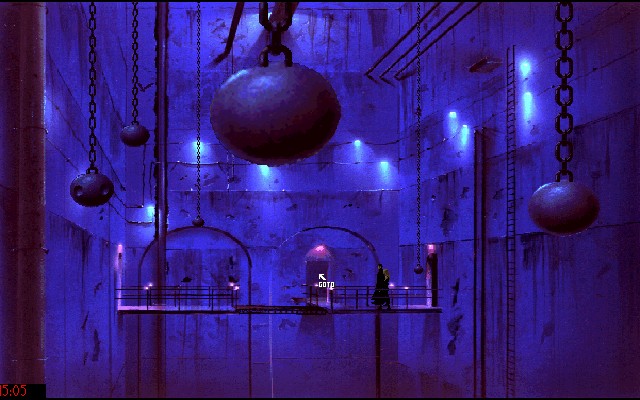
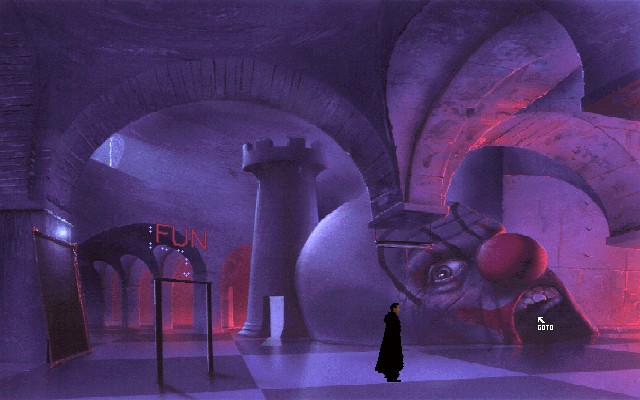
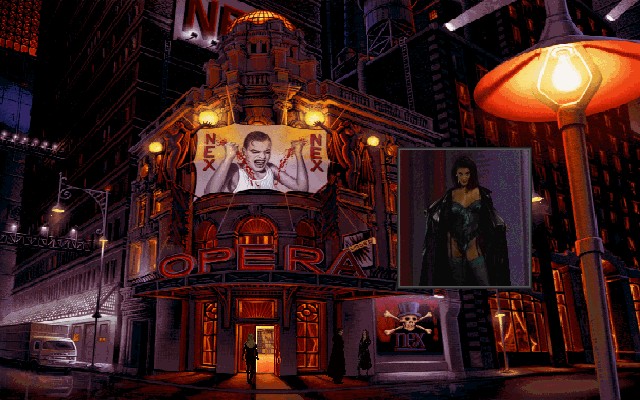
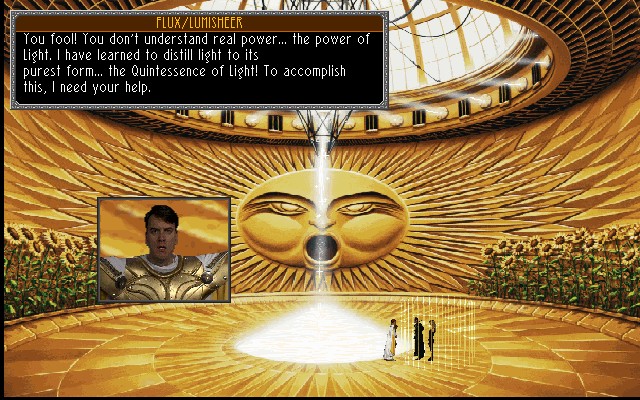
[b]Brent[/b]: I think the game had a very unique look and feel. The way we generated the artwork was very labor intensive but allowed for some very interesting perspectives and moods. The video was also a step forward in quality and quantity.
If I could go back I would work on improving the quality of the animations, especially the player walking. When we started the game we were very concerned about memory use so we limited the number of frames of animation to make sure we could fit all scenes in memory. By the end of the project, memory was starting to be less of an issue and we could have added additional frames and had some “transition” frames to smooth out the change between animations (for example, from walking to standing or from walking left to walking right).
[b]Ingmar[/b]: In an earlier interview, Shaun Mitchell said that he wrote a sequel to Noctropolis before Flashpoint was acquired by Bethesda. Even though the game never went into production, it would be neat to get a little insight into that proposed sequel.
[b]Brent[/b]: We had several concepts floating around but nothing was developed to a full design state. We also had some other concepts for “story” games that followed similar fantasy or ethereal worlds. When we were purchased by Bethesda we also had access to some of the IP (intellectual property) there and we developed some concepts around extending or branching off of those stories (Redguard and Daggerfall, for example). Bethesda was really more focused on the RPG genre and never ended up developing any more “story”-style games.
[b]Ingmar[/b]: Do you see any possibility that there might be a new Noctropolis game at some point in time? Could crowdfunding ever be an option?
[b]Brent[/b]: This is something I have thought about. I have several files of concepts and preliminary designs that I could bring to life. Mobile platforms bring some added technical possibilities for gameplay that I want to explore. Cameras, GPS and sensors, and cloud connections all have possibilities to enhance a “story” game experience.
I’ve watched some of my friends in the industry do successful Kickstarter (or similar) campaigns, such as Ron Gilbert (Thimbleweed Park), Tim Shafer (Broken Age), Chris Jones (Tesla Effect) and Chris Roberts (Star Citizen) to name a few. It’s definitely worth looking into when that time comes.
[b]Ingmar[/b]: You had already been working on games for several years before you joined Access Software. Please give us an overview of your pre-Access activities.
[b]Brent[/b]: I published my first game in 1978 called Trek For Riches. It was for the TRS80 Model 1. I was 12 years old at the time. I actually didn’t own a computer yet (they were very expensive) but just happened to be racing my BMX bike on a track that was behind a local University in Washington State. Before and after practice I would spend time in the computer lab there. I was introduced to games like Zork and was captivated by the ability to create your own story based your choices. So I made my own. I knew this was what I wanted to do. I did a bunch of odd jobs and finally earned enough to buy a Timex Sinclair ZX81 kit and built it (I still have it). I rewrote my games in the BASIC language that the ZX81 had on board. From there I bought a Commodore VIC20 and then a Commodore 64 and started to learn assembly language. From there I wrote three other games before being hired at Access Software during my junior year in High School.
Brent’s first games, stored on cassettes
[b]Ingmar[/b]: How did you get involved with Access Software, and what are some of your early memories from working there?
[b]Brent[/b]: I would frequent a local computer store that carried Commodore equipment and one day met Steve Witzel, the store owner. I told him about my work on games and he told me about a local company that was just starting up and gave me Bruce Carver’s name and number. I called up Bruce and basically pestered him into taking a look at some of the things I had done on the Commodore 64. He hired me to help on Beach-Head II and update SpriteMaster with some enhanced functionality. I was the fourth Access employee.
The first Access office was in the upper floor of the company that Bruce and Chris worked for. It was an engineering firm called Redd Engineering. Chris was both Access’s accountant and had input on the creative aspects as well. I think, initially, Chris was probably there mostly to run the business aspects of the company while Bruce concentrated on the products. Bruce’s brother Roger Carver also worked for the company. Bruce and Roger were definitely highly technical. Roger came from a military background where he was exposed to computers and started programming. From my perspective, Bruce would take on the highest technical aspects (anything involving lots of math or complicated logic) and Roger would focus on things like animations system or game mechanics. It’s really hard to pin it down like that, however, because we all just did what was needed. Roger was an excellent golfer and really helped make Leader Board and Links feel and look right.
Bruce was a “jack of all trades” and quite a perfectionist. Bruce designed many of the product boxes and even did the graphic layout of the boxes. I remember watching Bruce spend hours and days designing, cutting, gluing and folding different box designs. I remember him buying a set of airbrush markers to paint a gradated box cover (I think it was Mach5). I learned a lot from Bruce regarding what was “finished” and how to complete a project. Bruce would work and rework something until it felt right and worked right.
We also had a lot of fun at Access. We often spent our lunch times in the early days playing Frisbee Football or Frisbee Golf at a local park. When we first moved to our own building, Bruce had a small basketball court built inside and we would spend time playing hoops after work or even during lunch (sometimes it got very heated. :)) Foosball was also popular. Roger was definitely the champ there. He could really play well. Bruce, Roger and Chris also all played instruments. Bruce on guitar, Roger was on bass if I remember right, and Chris was a very good keyboard player. They would all jam at various times of the day and anyone could join in. I would pop in on the drums every once in a while even though I had no idea how to play the drums. I think Bruce and Chris also wrote most of the music found in the early games.
Latest Gaming Articles
All Articles