



Brent Erickson – Noctropolis

[b]Ingmar[/b]: What do you remember about shooting the FMV sequences?
[b]Brent[/b]: From the outside looking in, it would probably seem that shooting the video would be a lot of fun. The truth is it was a lot of work with brief periods of fun. As I mentioned earlier, the FMV sequences were all scripted like a typical Hollywood script – but ten times more work because of all the dialog paths. Then there were hours of setting up the blue-screen background and getting it properly lit. Cameras, tape recorder, audio equipment was next. Then rehearsals and makeup and props. Then the actual shooting of lines – usually multiple “takes” per line. Then the teardown of the equipment and finally the capture and final editing of the video. It amounted to very long days.
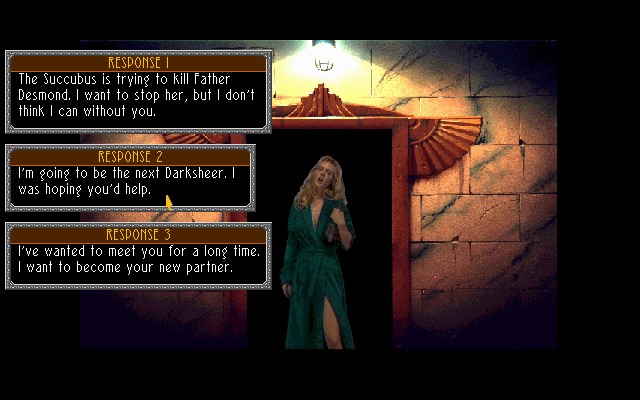
At the time, there was no digital video. We shot on BetaCam, which had the highest quality and best professional-level equipment. Working from tape seems archaic today. It would take hours just to review the footage we shot so we could choose the best takes. The video was then captured, more or less a frame at a time, and then composited into a video using our own tools. The audio was captured separately and then combined and interleaved with the video. It was all very manual but we did the best we could.
A little known fact about the video in Noctropolis is that most of it was actually shot twice. Early in the project, we worked in Hollywood. Casting calls, costumes, makeup, studio, equipment, etc., were all hired in Hollywood. We met and cast some fairly well known talent. About half the characters were shot in Hollywood until I got a call one day from an executive at EA who told me that the project was way over budget and that the shoot in Hollywood was not approved. This was all news to me. We shut things down and I flew into the EA offices in Redwood City to meet with our new Producer. EA apologized for the problem and told us to go ahead and complete or reshoot the video sequences using our own local talent and resources. We were able to find some great actors in Utah and we pretty much did everything else ourselves. Some of the costumes we used were the ones made in Hollywood but we did all the rest. Luckily I had several very talented veterans of the theater that worked for me. We pulled it off.
[b]Ingmar[/b]: Can you tell us about any of the Hollywood talent that was originally cast?
[b]Brent[/b]: Oh, boy, tough question, that was a long time ago. Most of them were “B” movie actors (we did have a budget). Some of the people I can recall right off that we either talked to or cast were: Cynthia Rothrock, Jeff Speakman, Julie Strain, Fabio, and Brandon Lee. We also used the award-winning Burman Industries to do prosthetics and some makeup.
For the final casting in Utah we had some really great talent such as Hope Carlton (Stiletto), Brittney Lewis (Succubus), David Jean Thomas (Father Desmond), Michael Berger (Darksheer), and Arsenio Trinidad (Whisperman) to name just a few. Full cast can be found here.
[b]Ingmar[/b]: You were witness to a time in the industry when FMV seemed to be the next big thing. What do you remember most of those days?
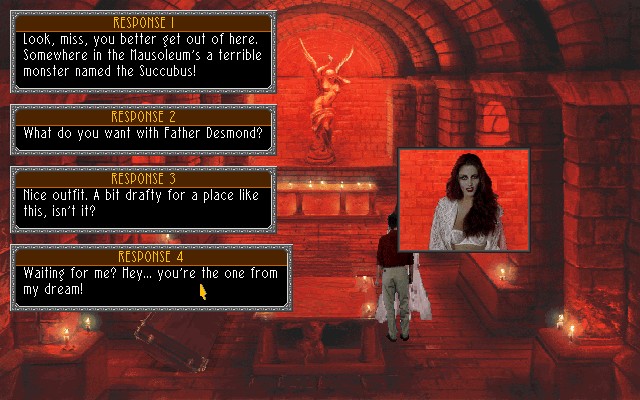
[b]Brent[/b]: The first “interactive movie“ that I experienced would have been the classic arcade game, Dragon’s Lair. Although lacking in interactivity, it demonstrated the potential of video in games. Later on, Sewer Shark and Night Trap followed a similar structure with limited gameplay. When I did Mean Streets there were no other games that had video content except for maybe an opening sequence or title screen. Chris Jones and I knew that the current technology limited our ability to develop characters without a lot of background text and effort from the user. Video could establish the personality and intentions of a character in a few seconds. I set about figuring out a way to compress frames of video along with synchronized audio into a form that could fit on early floppy disks and play on limited CPUs. I remember the late night in my basement office when I finally got it working. I had compressed about ten seconds of video down to a few thousand bytes of memory. I immediately called Chris and told him the news. This was originally developed on a Commodore 64 computer entirely in assembly language.
At that time there were only a few options for capturing images into a computer. There were some scanners that could grab a frame of film and a few video capture cards such as the Targa series cards. These cards could barely capture video at 15 frames per second at low resolutions. There was no video capture or editing software – so we wrote our own software to do it all. Our software could control the Targa card and capture video and allow us to add audio and export to my compressed format. Looking back on it, it was pretty amazing stuff.
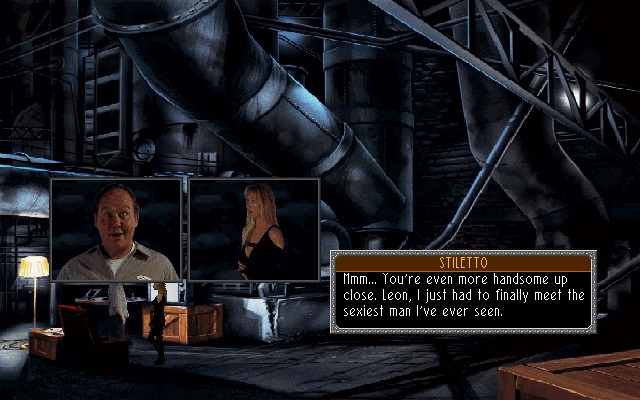
The other technology that was just in its infancy was green-screen or blue-screen chroma-key technology. It was just starting to be used in movies and TV and there were no commercial products that supported it. If I remember right, the Targa card could do some form of it but not very well. So we wrote our own. Our software could “key” onto a certain color and would use various techniques we developed to remove that color and similar colors and blend the edges of the remaining video image onto a background image. Using the blue-screen caused a lot of problems when shooting. The background had to be lit just right and we had to be very careful about costuming and small details. Blond hair was the worst because the blue color would bleed through the hair and was difficult to remove. But we figured it out and it worked reasonably well.
[b]Ingmar[/b]: What potential did you see in FMV at that time, and do you feel like the format was dismissed too soon?
[b]Brent[/b]: Video has the incomparable ability to establish the personality of a character. The human mind is incredibly sensitive to facial expressions, eye movements, and contradictions in what is being said and what is visual being presented. Our understanding of what a character is actually saying is a combination of the audible and visual communication. There is no other medium that can do this.
Video is still used in games but is used more as cinematic sequences that contribute or set storyline. It’s very effective for this but I think its greatest value is in character development. In that sense, maybe it has been dismissed too soon. It’s a lot of work to do and is quite expensive both in resources and in cash. Motion capture has become the current standard, for many reasons. But even the most sophisticated motion capture still falls short of capturing the important, subtle nuances of the human character.
[b]Ingmar[/b]: As far as I know, EA used to own the Noctropolis rights. What happened in the meantime, and how did the enhanced version of Noctropolis come along?
[b]Brent[/b]: EA originally owned the distribution rights to Noctropolis up until it was de-listed and then had the option for two years after that. After that expired, the rights reverted back to me.
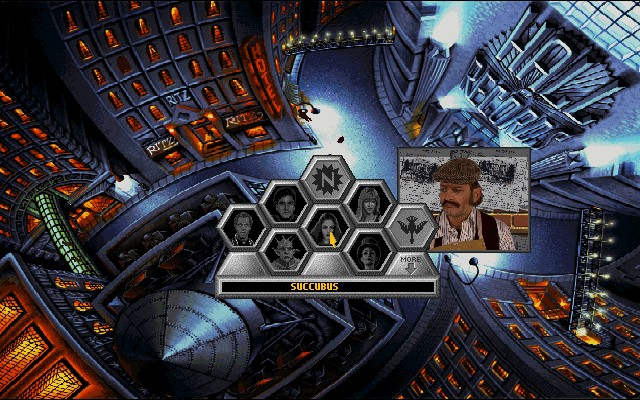
Early in 2015 I was contacted by Night Dive’s President, Stephen Kick, over LinkedIn. Stephen introduced himself and let me know he was looking to augment their current “classic” game lineup which included some really great games like System Shock 2 and I Have No Mouth, and I Must Scream. I did a little research and decided to let Night Dive give it a try.
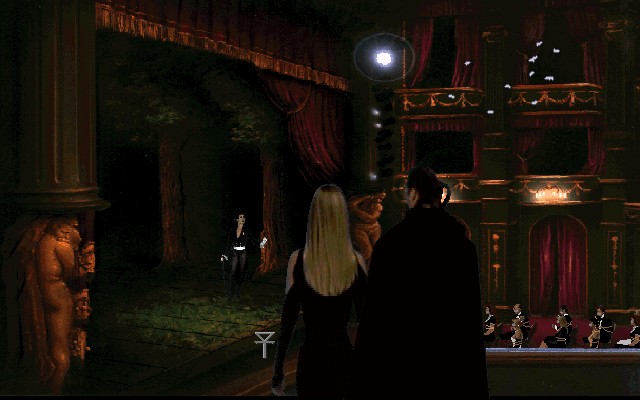
At various times I have thought about re-releasing some of my old games – maybe doing a mobile version or something. The early games are actually a lot of work to move over. They were generally written in assembly language and moving the code to a modern language like C++ is not an easy task. Night Dive did a great job with it. I was impressed. I actually did do some coding on the new version. I rewrote the video playback system. It is a fairly complex system and I actually still remembered (mostly) how it all worked. It was fun to get back into that code for a bit.
Latest Gaming Articles
All Articles