



Casual Collection – November 2011 releases


Death Under Tuscan Skies: A Dana Knightstone Novel
by Jack Allin
Boomzap’s Death Under Tuscan Skies: A Dana Knightstone Novel should more appropriately be subtitled “A Dana Knightstone Short Story”. Not because the game itself is short by any means, but by the time you’re finished with its nearly wall-to-wall puzzles, there really isn’t much room left for narrative. The setup is nearly identical to the first game, Death at Fairing Point, but this time Dana is visiting Italy following the rousing success of her latest book. After giving a lecture at a university, Dana spots a frightened ghost who pleads with Dana to help her. And so begins another cross-country investigation into a century-old tragic tale of star-crossed lovers, with protective fathers, jealous colleagues, stunning betrayals, and an invaluable medical discovery all playing their part. It’s a solid premise for a supernatural whodunit, though ultimately it’s just a flimsy excuse to deliver puzzle after puzzle after puzzle (sometimes immediately, with puzzles within others).
A puzzlefest may sound like a dream for some, but it isn’t without its problems. Many of the puzzles are recycled standards: jigsaws to swap and rotate, Lights Out buttons to press, sliders to manipulate, and circuits to align, some of which are thinly disguised and repeated later. Other types are common as well, but at least show a measure of creativity in the presentation, thankfully avoiding twiddleware for the most part. Here you’re often matching symbols, numbers, patterns and themes in varying ways, frequently in some combination together. Even an otherwise routine pairs-elimination task means adding coded numbers first to determine the correct sequence to remove them, adding a welcome layer of complexity. Strangely, however, the puzzles tend to be either super-easy or insanely obtuse (mainly due to insufficient instructions), with little middle ground in between. Given the frequency with which the puzzles occur, the result feels more like a scenic tour marred by endless speed bumps (and a horrendously dull gentle piano soundtrack) than a riveting murder investigation.
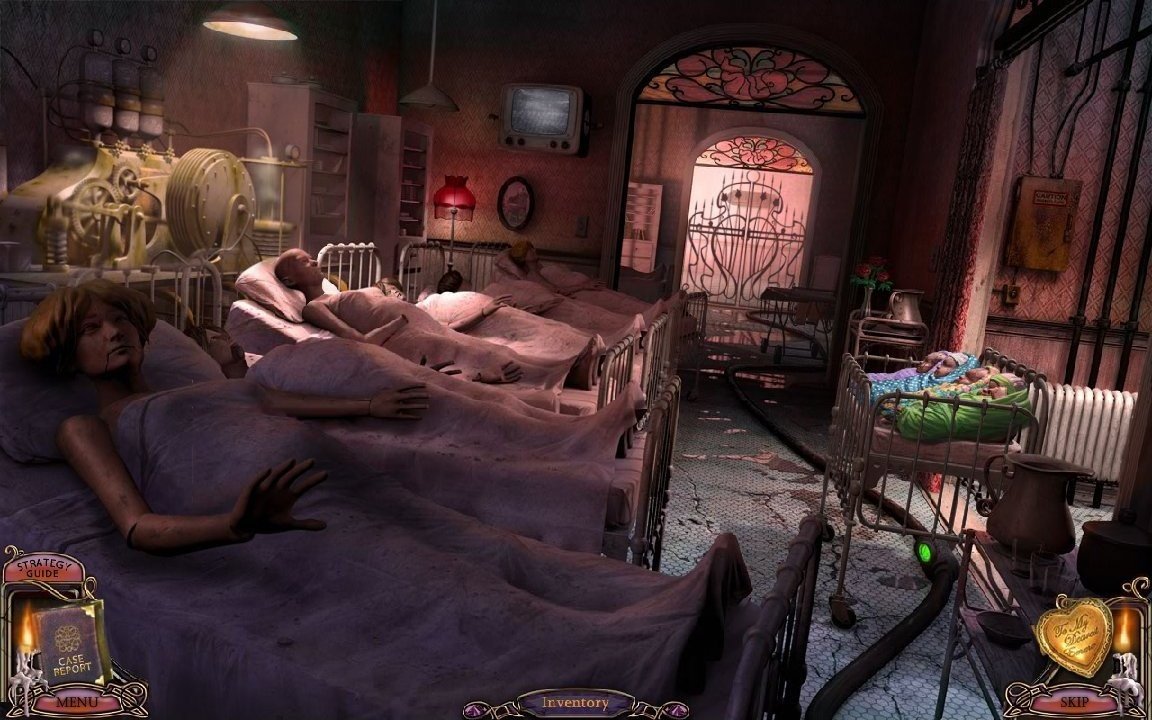
If you don’t mind slamming the brakes every five minutes, there is some lovely scenery to admire, as Dana travels to a quaint Italian town, a remote monastery, and an elegant cathedral. Though the perspective is often disappointingly distant, the artwork is crisp, which is useful since there are no hotspot highlights to help you out. There is a hint button that spells out what to do next if you’re stuck, which may happen as the objectives are often fairly random and neither the task list nor journal are particularly informative. There is inventory to collect, but usually it’s multiple figurines, lettered buttons, coins, and even plastic organs to initiate yet another completely contrived puzzle. Some feel better integrated, like sterilizing lab equipment and developing film, but you’re just as likely to be fixing a mechanical pigeon at a toy shop or sorting a vendor’s postcards. There are maybe a dozen hidden object tasks to complete, but only half of these are traditional searches for random lists of items. The others include finding silhouetted objects, locating matching image fragments, collecting item sets, and identifying discrepancies. None are repeated, and their judicious use throughout prevents them from ever feeling tiresome.
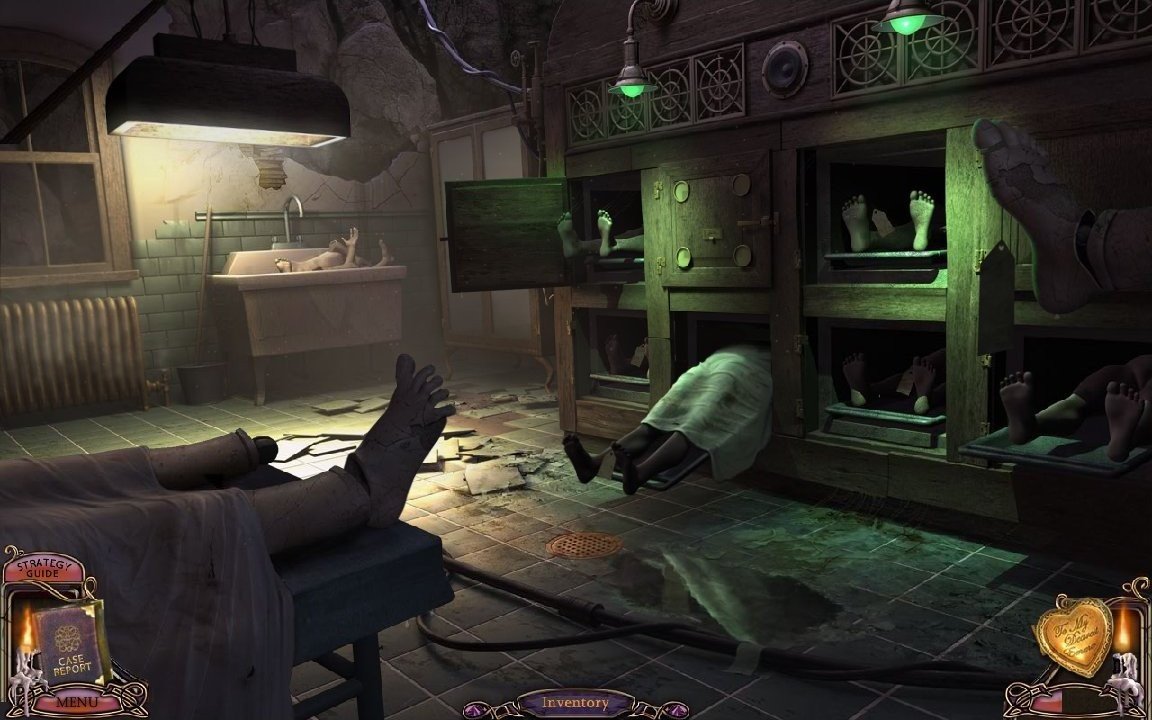
Depending on your puzzle-solving ability (or puzzle-skip tendency) and difficulty level chosen, it should take at least four hours to complete the main adventure, which wraps up the mystery in a rather superficial but satisfactory fashion. The Collector’s Edition bonus chapter adds another hour or so to that, offering more of the same puzzle-dense, HOG-lite gameplay. The storyline here feels entirely unnecessary, picking up after the original mystery and veering off in a silly direction involving a secret society. There are a couple macabre locations that are fun to explore, but that’s about the best the expansion has to offer. But there are lots more puzzles! And did I mention the puzzles? I don’t want to sound like I’m condemning puzzle-centric gameplay, but this is a novelist you’re playing. Unfortunately, what little story there is gets parceled out in voice narration alone as Dana connects the dots of scant information between each of the game’s six chapters. Presumably Dana Knightstone pads out her own books with far more details than we get here, or it would be a very thin novel indeed. There’s plenty of gameplay bang for your buck, but if it’s a ghostly romance mystery you’re after, you’d best look elsewhere, as you’ll mainly find puzzles under the Tuscan Skies.
Mystery Stories: Mountains of Madness
by Jack Allin
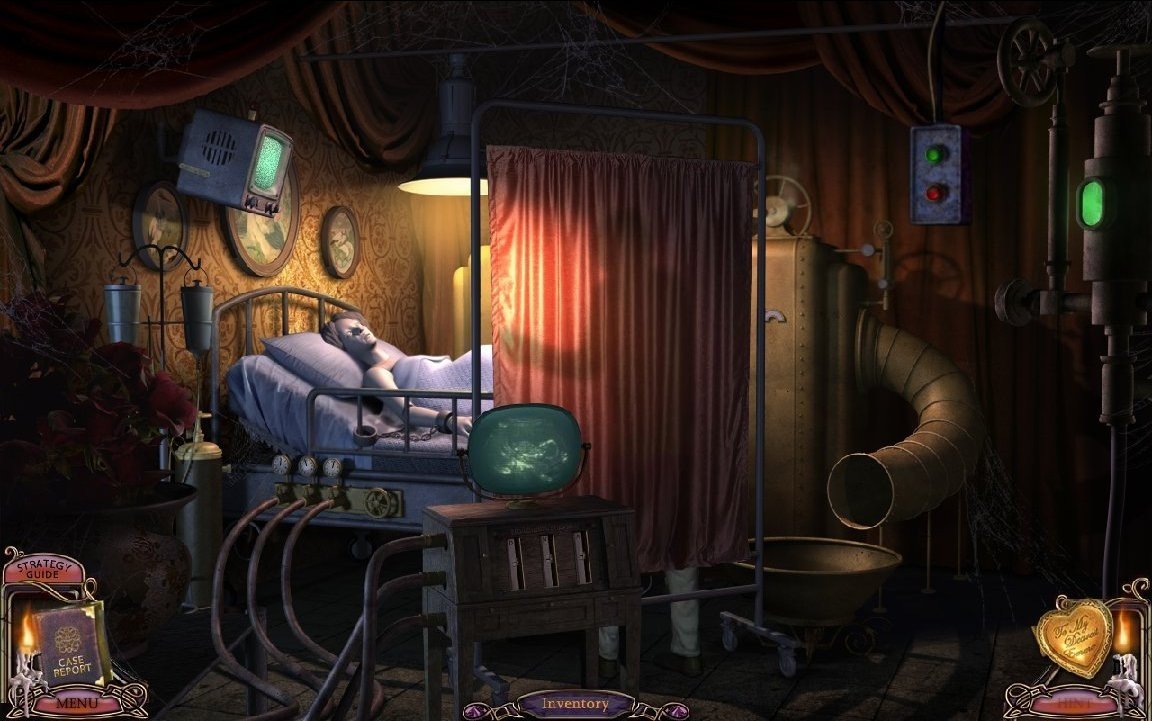
A novella by H.P. Lovecraft provided the inspiration for cerasus.media’s Mystery Stories: Mountains of Madness, which sends players into the eponymous wintry mountain range in search of an expedition team that’s gone missing. When the team is found dead alongside alien creatures frozen in the ice – some of whom have been dissected – Lynn Morgan and William Dyer take turns working their way through a series of icy caverns and bizarre technology as they seek to discover the mystery of the Elder Gods and the deadly Shoggoth slaves they created. It’s a very short trip, however, and doesn’t provide many answers besides “how fast can I get out of here?”
Gameplay is entirely traditional for a hidden object adventure, though the item hunts list only 6 objects at a time out of as many as 27 in total. While you do have to repeat the same scenes multiple times, the items you’ve already gathered remain missing on return visits, making each subsequent hunt much easier. Inventory puzzles tend to feel rather unintuitive, as you’re often collecting crystals or broken fragments to power who-knows-what kinds of bizarre equipment. Hotspots and even exits can be a little hard to make out, but an “advice” button will give you a nudge toward your current objective, and the hint feature will point you directly to the next achievable task. Standalone puzzles include some rather cryptic pipes challenges, rotating jigsaws, line-matching and tile-smashing, but there’s nothing here that will give you much difficulty, at least on the easier setting.
The snow-covered locale allows for little visual variety, as the only thing deviating from the endless screens of cool blues and whites is a lone underground geyser and a hokey-looking smoke monster of some sort. A few locations do allow for optional parallax scrolling, however, which is a nice touch that would have been welcome throughout. A wooden narration represents the only voice acting in the game (particularly odd when you’re listening to a static-filled, crackling “voice” recording of subtitles-only), while the soundtrack rounds out the production with a collection of pleasant tracks. Mind you, “pleasant” isn’t really the vibe the story is projecting, so some haunting, ominous tunes are conspicuous by their absence. Between chapters you’ll learn a bit about the strange visitors and the tragedy that occurred, but the measly two hours of play time allows only a very cursory look. Given its ease and short length, unless you’re a Lovecraft fanatic there really isn’t enough here to recommend wholeheartedly. For everyone else, “because it’s there” just isn’t a good enough reason to climb these mountains of madness.
And with that, we’re done! That’s it, we’re through, the fat lady has sung. It’s been a blast following the rapid transformation of casual games into more fully-featured adventures this past year, but the time has come to say goodbye. Why the end of Casual Collection? Like most things, it’s a combination of reasons. Who could have foreseen that the simple hidden object genre would evolve so quickly, so fully into a flood of adventure hybrids? So much so, there are far too many games, far too few people and time to deal with them all. Add to that a decreasing availability of review copies of late, and such comprehensive coverage is no longer possible. Besides, there’s such an inherent degree of sameness to the vast majority of games, it’s starting to feel like we’re reviewing the same six or seven games over and over again.
We regret having to bring this series to a close, and we may yet revisit the possibility of a scaled-back version at some point in future, but for now it’s time for a much-needed break. That will make some people very happy (though if you’re reading this, you’re likely not one of them), but we know others will be disappointed. Rest assured that any lite adventures that move beyond the traditional hidden object adventure formula will continue to get our complete, undivided attention. And hey, maybe more casual developers will get the hint and raise their games to a whole different level from here on out. We can always hope, can’t we? In this rapidly-changing field, who knows what the casual space will look like a year or two from now?
Note: Adventure Gamers is a Big Fish Games affiliate.
Latest Gaming Articles
All Articles