



Casual Collection – November 2011 releases

Azada: In Libro
by Jack Allin
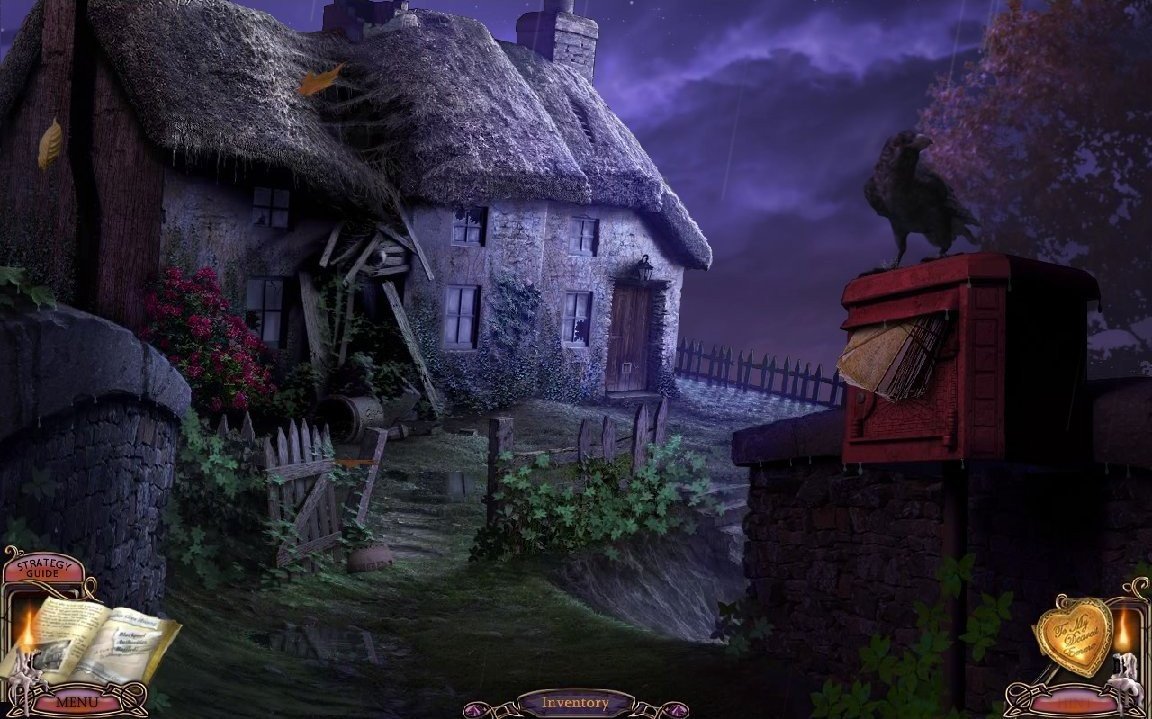
The more casual games become adventurey, the less hidden object searches seem to fit the new style. Increasingly I’ve been wondering what it would be like if a developer simply removed the scavenger hunts altogether. Azada: In Libro does precisely that, offering a pure adventure experience, albeit still with some traditional casual helps like puzzle skips, hint systems, and difficulty levels. The good news is, this formula works fairly well; the bad news is, it comes at the expense of what made the previous Azada games so whimsically entertaining. This is a darker, sprawling, relatively complex adventure set across three troubled worlds cursed by a power-mad magician. For reasons unknown, only you can stop him (after being duped and essentially kidnapped for the privilege) by collecting the keys that lead to his destination. This is more like Azada-meets-ERS Game Studios… which, of course, is exactly what it is, as the franchise torch has been passed on this time around.
The story in Azada has always been threadbare, but it worked better in the more streamlined first two games. Here there’s so much open exploring to do, and so little actual information about the bizarre fantasy worlds to learn along the way. The three distinct areas consist of a deserted harbour town with docked ships and railcars to investigate; a fantasy valley with fairy village, tainted forests and mountain towers; and a lava-lined hellish canyon with deadly crevasses and rickety staircases. None of them on their own bring anything new to the table, but together they make for a wonderfully diverse adventure. And this being an ERS game, there are plenty of macabre touches. The inhabitants of these worlds have suffered different afflictions, each as sudden and fatal as the others, whether being stripped to skeletons by a cyclonic monster or being turned to copper by a living mist. Everywhere you look there are ghosts, demons, giant rats, stone chimeras, and other haunting images, all of them mixed with lovely natural scenery, convincingly depicting a peaceful land suffering an unnatural torment.
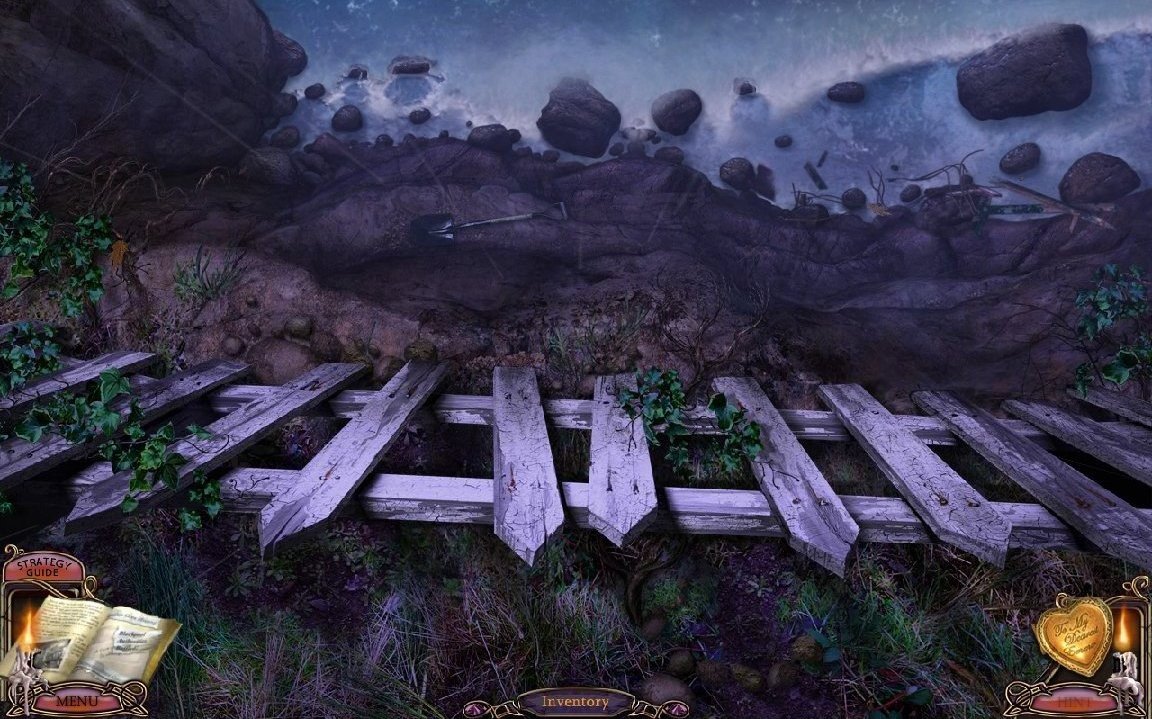
Production values are typically high for an ERS game, or perhaps even higher than normal, at least visually. The stage is set by a lengthy dynamic cutscene of a train travelling to Prague, and the eye candy carries over into the vivid hand-drawn backdrops. Ambient animations bring these postcard environments to life, including a couple of inquisitive otherworldly guides that lead the way to your final goal, ever out of reach. The audio doesn’t fare quite so well, however. All major speaking parts are voiced, including Titus, the man who connived to bring you to Azada, and the three guardians of each realm, plus a peculiar mechanical sailor. The acting can be a little stiff, but the bigger problem is that the voices sound muffled, as if they were recorded in a closet. Music plays only sporadically and changes with each new world. Much of it simply blends into the background, at times enhancing the eerie mood with discordant tones and dark orchestrals, though a few jauntier harp pieces are both repetitive and occasionally out of place for the circumstances.
With no hidden object searches to complete… Okay, you could maybe count two screens as such, which task you with identifying sets of items, like zapping all snakes with a repellant to clear the way. The entire rest of the time is spent simply exploring the dozen-plus screens in each world, collecting inventory items the old-fashioned way (sadly including some pixel hunting, even on the easiest difficulty setting, whose sparkles are so brief as to be practically non-existent). Item uses are fairly intuitive, but like most casual games, this one has a tendency to demand only the “right” object when others would seemingly do. They’re also extremely random in their (often inaccessible at first) placement. If you need honey, you won’t go looking for a beehive; you’ll stumble around and jump through hoops until you find it buried where no honey would EVER be. This can lead to clueless wandering – or clued wandering, if you utilize the hint system screen by screen until you find something interactive you’ve overlooked.
As you attempt to assemble a gun, reconnect a weather tower, or mix potions, often you’ll need to collect multiple items like gears, doll clothes, mechanical bugs, or the entirely unsubtle “puzzle parts”. And indeed there are many puzzles to solve, with a wide range of types and difficulty. Some are entirely standard: jigsaws, misaligned levers, code combinations (requiring clues), and patterned edge-matching, but several are quite clever and far less common. Standouts include moving an expanding spring past obstacles into a prescribed slot and sliding coloured bugs into place on a grid with only a pair of small ledges to use for resistance. Speaking of grids, you’ll also need to cover all symbols with stencils a couple times, and unify multi-coloured balls in limited moves, which can be both challenging and fun. Some unnecessarily complex twiddleware does bung up the proceedings (rotators, okay; sliders, fine – but both together??), and the final Sudoku task feels anything like the climactic moment it ought to be, but for the most part there’s plenty of puzzling value to be found.
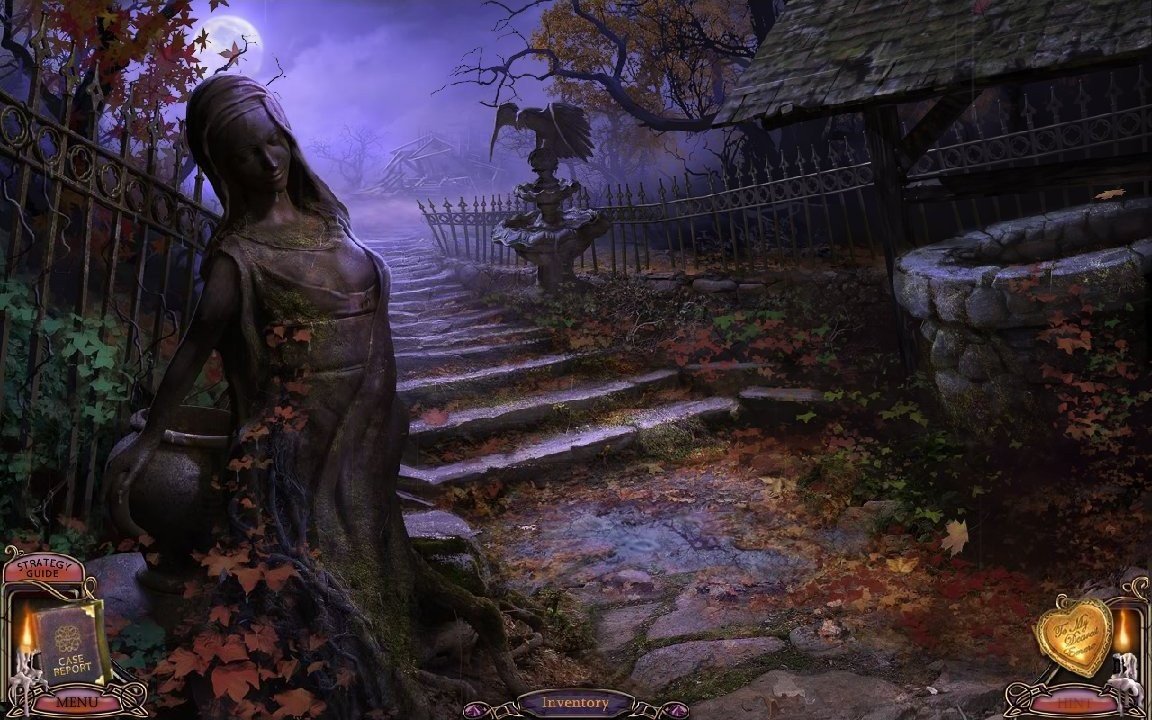
All that puzzly goodness should take upwards of four satisfying hours to complete, capped off by a completely unsatisfying ending. The Collector’s Edition offers a much better ending. The problem is, it only adds about a half hour of additional gameplay. There are a few nice new puzzles, like routing your way through a numbered math grid and sliding opposite-moving keys into place, along with an annoying rotating target minigame, but your trip though an unexplained Prague-that-really-isn’t-Prague is over all too soon. It’s games like this that make me resent extended editions, as the standard version feels incomplete and the bonus content isn’t worth double the cost. Still, for the most part you can’t go wrong with either version of this game. If you enjoy puzzles and are getting tired of (or never liked) random hidden object hunts interfering with your adventuring, book your passage on the train bound for Azada: In Libro now.
The Keepers: Lost Progeny
by Merlina McGovern
There’s just something about children, especially children in period costume, that ratchets up the creep factor in just about any scary situation. Take any typical haunted scenario – house, island, anything – throw in a bad seed child, and you’ve got a surefire recipe for spooky fun. The demon boy you meet in Blam! Games’ The Keepers: Lost Progeny isn’t just a bad seed, he’s an entire basket full of bad apples. But he’s only one of a variety of eerie characters that you’ll enjoy getting to know, or getting away from, in this entertaining dark casual game packed full of well-integrated inventory and logic puzzles and fantastically gory artwork.
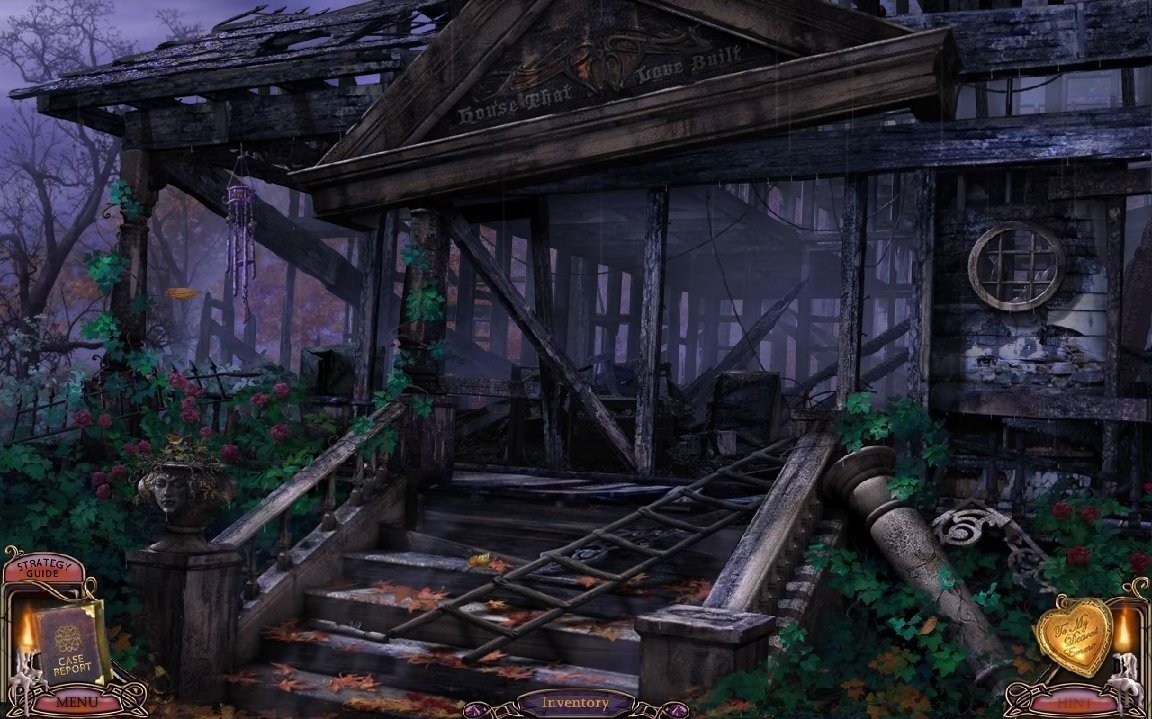
You play an orphan who receives a mysterious package of information that promises to enlighten you about your parents and family history, pointing you in the direction of a small town. You know all is not right with the world, however, when you enter the town of Rutland and see a young boy in old-fashioned clothing squatting and peering into a large crevice in the ground next to a teetering “Rutland Welcomes You” sign. He warns you against going into the devastated town, surrounded by earth cracked open spewing noxious fumes and abandoned homes, but of course it’s the very place you need to explore.
The artwork doesn’t shy away from the grim and gruesome, and it’s the first casual game I’ve played that came with a warning about mature graphic content. One character isn’t just dead in this game, he’s a suicide, which you can see by the revolver in his hand, the blood spilling out of his mouth and splashed on the wall behind him. Another is a cop who’s been burned to a crisp. Ambient animations also ratchet up the tension at times, with motorcycles zooming past you and bursting into flames, a near miss that nearly takes your life. As you investigate scenes of murder and mayhem, flashbacks in scratched film suddenly appear – a woman swinging from a hangman’s noose when you least expect it is sure to leave you squirming with unease.
It’s not just the dead characters who are interesting, either. You’ll get to meet a mysterious hotel owner with a terrible comb-over, the demon child, and a mysterious woman who seems just as fond of blood and pagan rituals as she is of children. All characters are voiced and well acted, and in addition to the morbid artwork, which makes copious use of blood splashes and splatters, the music is a haunting tinkling and singing of violin strings that hovers over you as you explore, adding to the macabre atmosphere of the game.
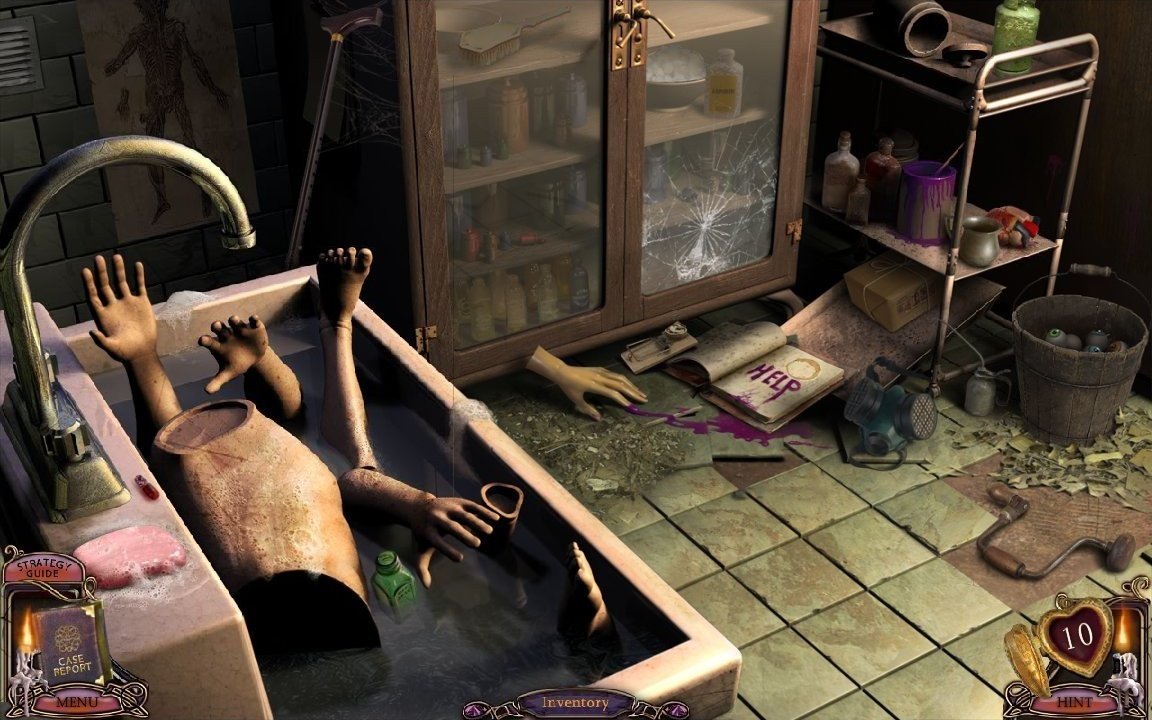
The inventory puzzles and repeating hidden object scenes are well integrated and often tie into the gory theme of the story. You’re not just finding and combining random items, you’re seeing if a character might like their meal with a side of sedative. You won’t just look for something to break through a wall to find some randomly placed object; you’ll discover something much more ghoulish lurking behind those walls that has been placed there for very specific reasons. Hidden object scenes are logical and not overly teeming with clutter. Searching for ties and hats in a closet, bullets and police apparel in a police station, or rats in a coffin makes sense and also fits in with the prevailing themes. You’ll also encounter a wealth of logic puzzles that will not only satisfy any puzzle addict’s craving, but also add to the grim feel of the game, including line-drawing puzzles, where you’ll have to create complicated patterns without crossing a line more than once; a mini-hangman game with a real miniature hanging skeleton; and a lock-picking puzzle adorned with more skeletons than you can shake a stick at.
All of these wonderful puzzles surround a complex story that emerges in the three hours you spend exploring the town of Rutland and your family history. This is a tale that touches on evil forces and people banding together as keepers to keep that evil at bay. The Collector’s Edition provides you with a fantastic set of bonus chapters to play. You’ll attempt to become a keeper in one chapter, while in the other you’ll control a character who is becoming fully evil. These bonus chapters represent one of the more substantial bits of bonus play I’ve encountered in a while, clocking in at more than an hour of extra playing time combined. In addition to setting up future games in the series, the extra chapters add to the mythology hinted at in the ending of the main game. If you’re ready for a good, adult-themed game that piles on the puzzles as well as the gore, you should pick up The Keepers: Lost Progeny and never let go.
Latest Gaming Articles
All Articles