



Casual Collection – July 2011 releases


Timeless: The Forgotten Town
by Merlina McGovern
Have you ever wanted to put time in a bottle and save a precious moment forever? While saving memories from a wonderful vacation may be fantastic, getting stuck in a town frozen in time from 100 years ago might be kind of a bummer. Fortunately, though you won’t find anything new (either literally or figuratively) as you search through typical hidden object scenes in Boolat Games’ Timeless: The Forgotten Town, you will encounter a wide variety of nicely designed puzzles and an atmospheric magical theme to help pass the time in a place where all the clocks have stopped.
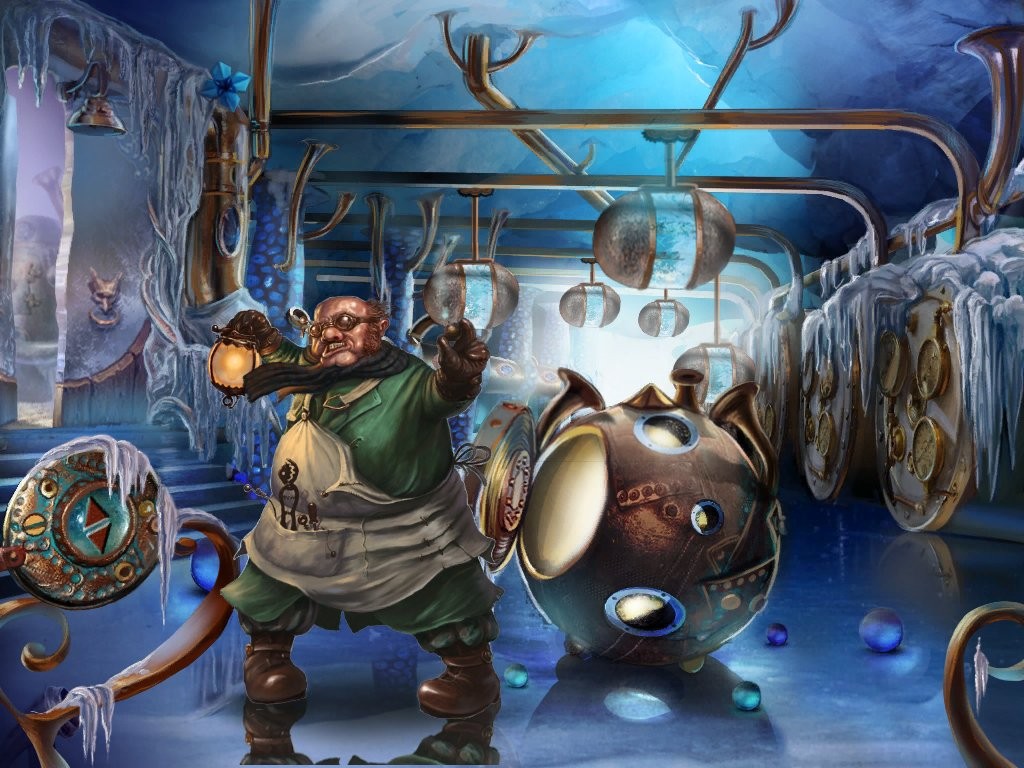
While aboard a European bullet train on your way to a vacation in Italy, a mysterious figure (aren’t they always mysterious figures?) emerges and menacingly talks about a strange device called a chronometron. Upon the figure’s disappearance, you find yourself seeing visions of old-fashioned train cars and ghostly figures beckoning you to explore. You’ll oblige with a fair amount of roaming the train, but when you finally disembark, you’ll find yourself stepping off a steam engine train rather than the modern one you entered. The surroundings become stranger still as you discover a town completely devoid of people, which has apparently not changed at all since 1907. As you investigate further, you’ll discover a sordid tale involving a count, the love of his life, the time-altering chronometron, and a shady advisor who appears to have dabbled in the dark arts.
As the townsfolk all appear to have vanished, you’ll need to work your way through a variety of puzzle locks to progress. In addition to typical inventory locks, you’ll also have to use other items to advance through the game, such as finding ways to cross obstacles or reach doors or other objects high off the ground. Some of these items you’ll find by searching through standard hidden object scenes. The designers did mix things up a bit by including silhouetted displays instead of text lists on occasion. These searches are more challenging, as the objects may be much smaller or larger than the silhouettes in your item list. The art is extremely detailed in all search scenes, however, and at times dimly lit, so even the regular hidden object scenes can be challenging if you’re determined not to use a hint.
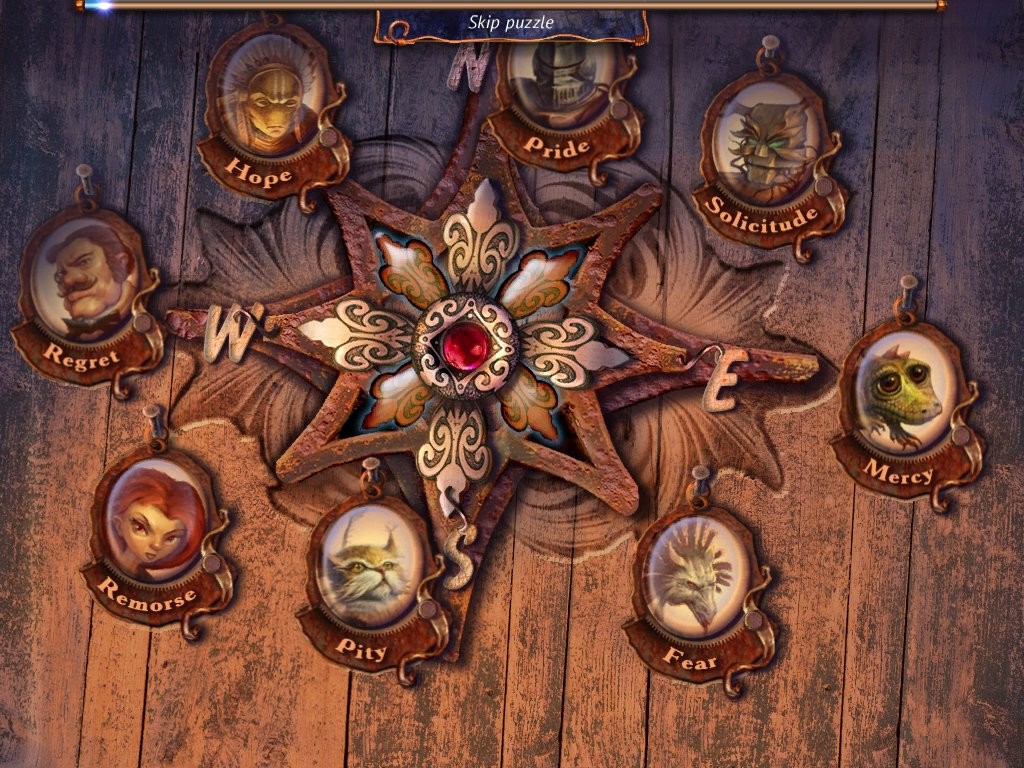
Balancing out the inventory obstacles and hidden object scenes are a wide variety of logic puzzles. These puzzles are nicely designed, with just the right amount of difficulty. Many times you’ll have to find clues in the environment around you, and your journal keeps track of all of such details. The puzzles move beyond the usual tile and slider variety, although those do make an appearance as well. One clever puppet puzzle requires you to not only decipher what role each puppet represents, but also in which order they should appear on stage. Other puzzles depend on riddle-type clues, such as determining what animal would eat or be eaten by another. You’ll also have to develop photographs, which seems to be de rigueur in casual adventure games nowadays. The themes typically revolve around astrology and dark magic, and stay fairly consistent throughout, with some puzzles involving remembering astrological signs or matching astronomical symbols with their planetary counterparts.
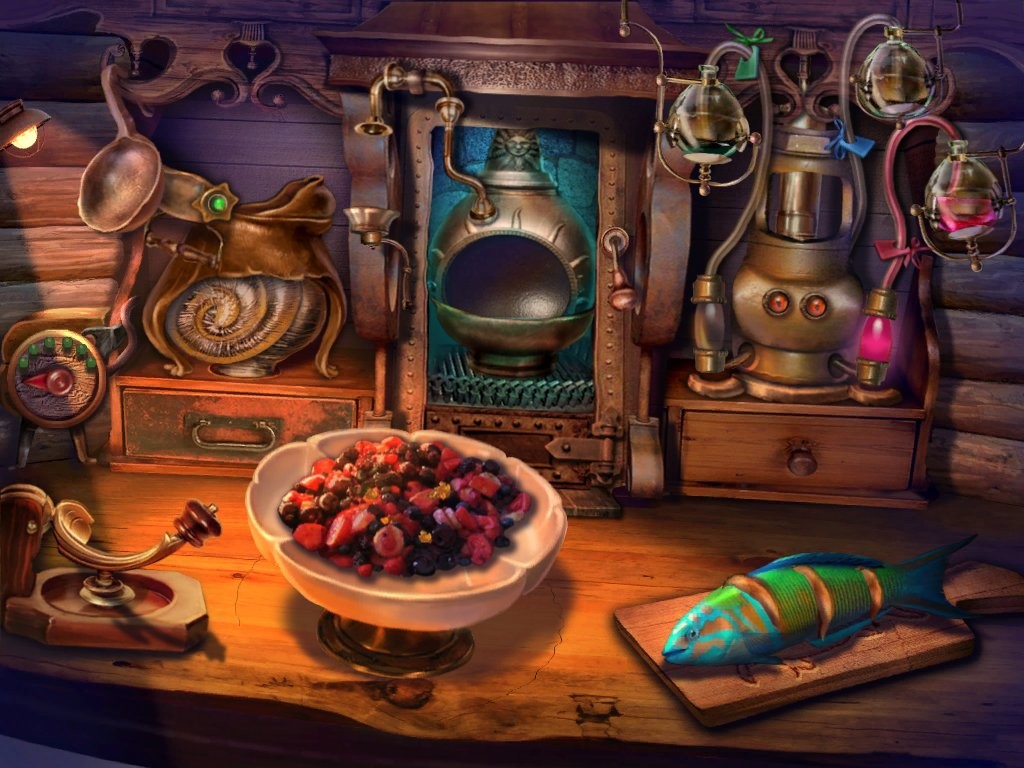
The town is handsomely depicted, though not very memorable, except when it’s beset by a mystical storm that covers it in sand. The town is filled with haunting signs that its inhabitants disappeared quickly: a hotel lobby is strewn with luggage brought in but never opened, and a central square features an elaborate wedding carriage in front of a camera stand, paused forever on the edge of a captured memory. A good amount of ambient animation adds both depth and challenge to the main environments and hidden object scenes alike. Grass waves at the foot of an imposing bronze statue, and light streaming into a tool shed will flicker as if clouds were passing over the sun, sometimes obscuring objects that you need to find. The game makes nice use of background sound as you hear the clickety-clack of train wheels or the tinkle of rolling broken glass when the train comes to a screeching halt. The music is epic at times with soaring melodies, but turns dark and creepy in certain parts, adding to the atmosphere as you begin to uncover the town’s secrets. In a spooky clock repair shop where all of the clocks have stopped, the chittering sound of violins is sure to creep up your spine.
The tangled love story in Timeless: The Forgotten Town makes for an intriguing detour from your intended destination (which you strangely never reach), though it doesn’t quite wrap up completely in the nearly three-hour main game. The hour-long bonus play in the Collector’s Edition has you still trapped in the frozen town, but now set in the count’s mansion, which he and his love still haunt as ghosts. There isn’t too much to do and explore in the bonus section, unfortunately. You’ll investigate a few rooms in the castle, as well as the front courtyard and an inner garden. This extra storyline is a rather silly one involving getting one ghost to talk to the other, clearing up a miscommunication that has lasted for more than a hundred years. It’s not a particularly compelling addition, but the main game has plenty of exploration and engaging puzzles in its own right. You’ll certainly feel like you’ve been here and done all this before, but it’s entertaining enough that this is one town you won’t mind being stuck in for a while.
Unsolved Mystery Club: Ancient Astronauts
by Jack Allin
After exploring the unsolved disappearance of pilot Amelia Earhart the first time around, Freeze Tag set their sights even higher for the sequel – quite literally, as they looked to outer space as the inspiration for Unsolved Mystery Club: Ancient Astronauts. The same can be said figuratively as well, as this “fictional dramatization” tells five stories instead of just one, has considerably improved production values, and is designed far more like a fully-integrated lite adventure than its largely traditional hidden object predecessor. Unfortunately, the increased ambition has led to overshooting the mark on numerous occasions, resulting in a game that feels far less focused and is somewhat more frustrating because of it.
The five different storylines are both a blessing and a curse. On one hand, it allows only a shallow investigation of five intriguing mysteries revolving around the possibility of extra-terrestrial contact with ancient races. Just when you’re getting into the Mayan legend of Pacal the Great or the story behind the geoglyphs in Peru, collecting a few written and video factoids about each along the way, the three-objective limit is fulfilled and you’re whisked back to UMC HQ to begin another. On the other hand, it’s a great excuse to go globe-hopping, and the diversity of locations is easily the game’s greatest strength. One minute you’re at a tribal village in Mali learning about the fish-like Nommo, and the next you’re in the Egyptian desert probing the mystery of the Sphinx, though each story must be completed fully in order. There are quite a few screens per location, all of which are nicely hand-drawn, taking you through crystalline caves, ancient temples, and even to snowy Antarctica. The music is pleasant enough, alternating between a generic adventuring backdrop and suitable ethnic sensibilities. While the playable character never comments on your surroundings, the game is fully voice acted by your guide, Henry Hudson, and a representative of each culture you visit once you’ve found the appropriate means of translation.
The bulk of your time will be spent wandering the scenes of each location looking for clues not only to the ancient legends of alien contact, but also the disappearance of five colleagues (a plotline that adds nothing at all to the overall enjoyment). There are some hidden object screens, densely-packed with clutters of area-specific items, but these are few and far between. You’ll spend far more time gathering items to assemble makeshift ziplines and flaming arrows, paint murals, construct juice-powered batteries, and power up generators. This is often far more difficult than in most casual games, as the objective isn’t always clear. Since many puzzles deal with totems and idols and mystical beliefs, it’s hard to predict what solutions are required or what impact they’ll have. Nor can you just follow the trail of interactive sparkles, as no items are highlighted, even on the easier difficulty setting. There is a hint system, but it offers only a sequence of layered text clues, each requiring an inordinately long recharge time. Since you’re unlikely to get stuck on the first step in a sequence, by the time you do need help, you may need to sit through several useless clue-recharge delays just to catch up to where you are. It’s a tedious, extremely un-user-friendly design, making the Collector’s Edition strategy guide more beneficial here than it often is.
There are plenty of puzzles to solve, many of which are common types like Lights Out, various ring rotators, and several kinds of jigsaw. Most of these are solve-because-they’re-there puzzles, though a few are more clever and culturally relevant, like positioning tribal figures correctly or aligning coloured star patterns. It’s a fairly nice mix for the most part, until the game inexplicably falls into a terrible rut of repetition. Late in the game you’ll need to solve three very difficult sliders in a row, a pair of long trial-and-error sequences that will require notepaper before you’re done, and a couple Simon minigames that feel laughably forced. This repetition extends to the Collector’s Edition bonus chapter, which adds less than an hour to the three hours spent on the main adventure, much of that on increasingly difficult tile-swapping Concentration challenges and a higher rate of hidden object searches. This chapter extends the investigation to the Incan ruins in Bolivia, though it adds nothing to the larger story arc established in the main game.
Perhaps the biggest disappointment comes from the resolution of the legends you’re investigating. The first Unsolved Mystery Club posed several different theories and let the player choose which they preferred. Here there is no such ambiguity, as the game blatantly spells out the “truth” for you. I won’t spoil anything by revealing the ending, but suffice to say that some mysteries are more fascinating because there’s no definitive answer, and it’s a shame the designers felt compelled to wrap it all up in such a conveniently contrived way. It’s not enough to detract from your enjoyment, but it does cheapen the significance of the myths the game explores. If you can live with that and some harder-than-necessary gameplay to that point, there is enough to like about this globetrotting lite adventure to merit a look. Just don’t set your expectations too high, or Ancient Astronauts will bring them tumbling back down to earth.
Latest Gaming Articles
All Articles