



Casual Collection – July 2011 releases


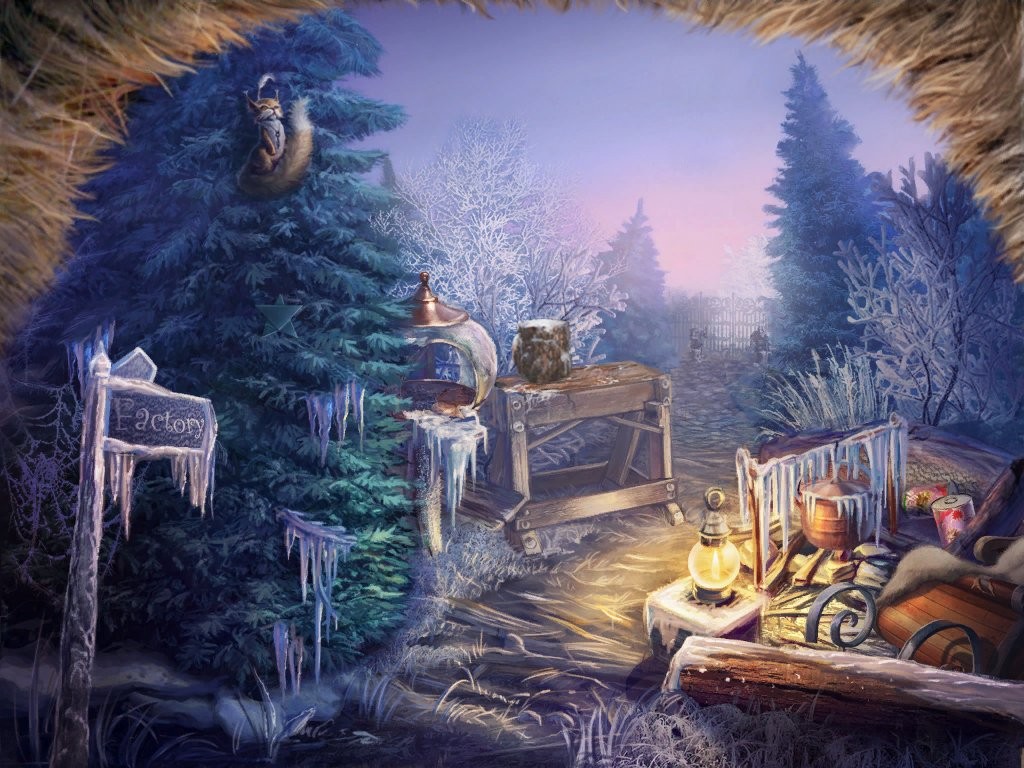
Macabre Mysteries: Curse of the Nightingale
by Jack Allin
Note to adventure game protagonists: if you get invited to an old theater that has been closed for decades and is rumoured to be haunted…don’t go! Subsequent note to players: since adventure game protagonists will inevitably ignore all warnings (including blood-red signs on the front gate urgently declaring “Stay Away!”), such invitations are usually good for a solid romp through eerie, surreal environs. This generally holds true for Blue Tea Games’ fragment object adventure Macabre Mysteries: Curse of the Nightingale, which is nearly a carbon copy of the studio’s previous Dark Parables series set in a new locale. It relies a little too much on repetition and its outcome is obvious very early on, but there are plenty of obstacles awaiting in the Nightingale Theater, and not all of them are puzzles.
After receiving a 30-year old letter from your missing grandfather asking you to meet him at the site of his final performance, you arrive just in time to see a tormented ballerina ghost outside the gates. Closed since a blazing fire ended in tragedy, the theater soon reveals a tangled web of love, jealousy, betrayal, and remorse among its former cast of characters, including the strongman, a singer, two dancers, and your grandfather, the director. Along with lingering spectres, a savage humanoid beast also roams the building, while a young journalist is snooping around for a story and the town mayor arrives to pay her respects to the dear old landmark a week before its demolishment. Before the night is out, however, each has a crucial role to play in uncovering the theater’s dark secrets, as does your unexplained ability to see into the past at predetermined times. It’s a premise rife with spooky possibilities, though not nearly enough is done with it. Conveniently revealing notes and visions suck most of the mystery from the game an hour in, and for a haunted old building with a tragic history, it’s surprisingly well-kept, brightly lit and perfectly accessible to visitors…
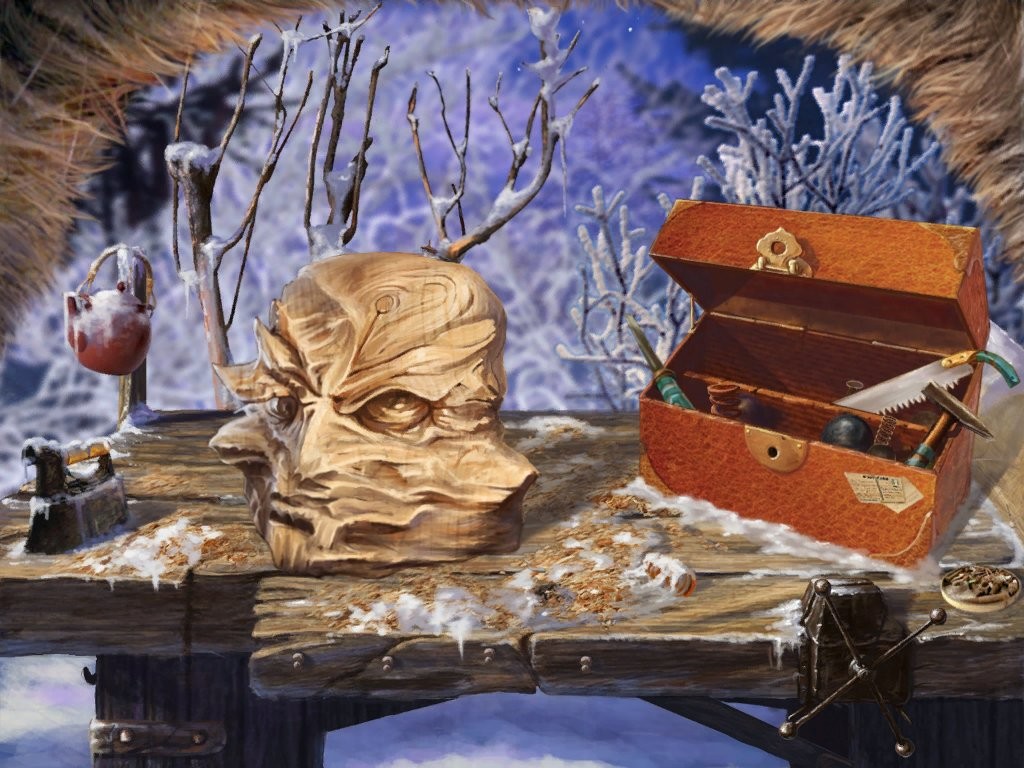
Except, of course, for all the bizarre puzzles impeding your progress. You’ll need various tickets to enter the music, magic, and other theatrical stage shows, and finding those often involves completing puzzles that themselves require collecting sets of Oriental masks, clown dolls, dancing figurines, and crystal balls. Once gathered, arranging them in sequence is an extremely simple task, but finding them in the first place is much more challenging. Some of them, plus other keys, tools, and functional inventory objects, are acquired through the many fragment object searches. Instead of collecting whole items, you’ll usually (with a few rare exceptions) be hunting for bits and pieces of objects that combine to form a whole at the end. Fragment images are displayed on screen, which sounds easy, but the scenes are relatively packed and it’s harder to find nondescript pieces than full items. It’s even harder when some fragments are partially obscured, which left me grumbling a few times, though a rechargeable hint is always there in a pinch. Though you’ll never collect the same items twice, each screen is revisited to pad out play time, and new searches are activated without much notice. The journal does highlight to alert you that its mini-map has been updated with active areas of interest, but it also does that whenever a new character profile or objective change occurs, making it more a nuisance than help.
Hints aren’t very useful during exploration either. Instead of using the standard method of pinpointing interactive areas or even offering text clues of what to try next, here the only help you’ll get is to see where an inventory item can be used. Given the number of objects you collect and the non-linear nature of the game, this can be counterproductive, because you may see clues you really don’t want, including hints to some objects you can’t even use yet. And that’s if you can use them at all. Opting to skip a standalone puzzle locks the feature for five minutes, though once you get the hang of the puzzles, you’ll likely cruise through the rest. That’s because there are only a few different types available. You’ll encounter the odd simple jigsaw or Lights Out sequence, but most of the time you’ll be solving one of two kinds: a themed icon-swapping task to complete a chronological sequence or a slider puzzle to match related objects in rows. Both are quite clever the first couple times around; they’re far less so the fifth time and beyond. A little more variety would have gone a long way.
Still more of those puzzles await in the Collector’s Edition, which adds a paltry half hour of additional game time and a total non-ending (teasing the next series installment instead), then unlocks ten more “bonus” puzzles of the same sort you’ve been solving all along. Yay. You’re much better off sticking with the standard version, which itself provides a solid three and a half hours of play time and answers most of the key questions (with one rather glaring omission). That’s more than enough time to soak in the quality hand-drawn, sombre-coloured visuals and tune out the fairly forgettable musical backdrop that is pleasant enough to listen to but does little to help establish a suitably creepy ambience. Overall, for a game called Macabre Mysteries, Curse of the Nightingale seems short on both mystery and the macabre. But it is jam-packed with item fragments to find and inventory to collect from an intrinsically interesting location, with a few intriguing – if overused – puzzles along the way. If that sounds like your idea of a good time, consider yourself invited.
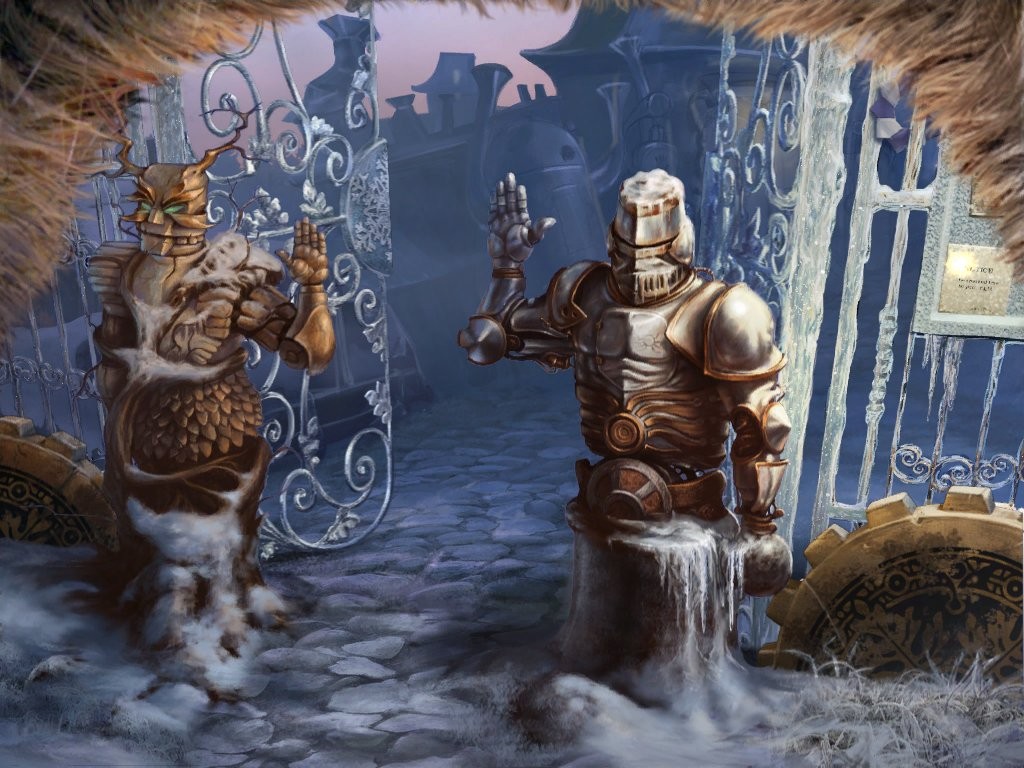
Paranormal Crime Investigations: Brotherhood of the Cresent Snake
by Robin Parker
In Paranormal Crime Investigations: Brotherhood of the Cresent Snake, GI Games take us on a trip down to Louisiana during Mardi Gras to investigate a series of mysterious murders and strange occurrences that have been plaguing the modern day city of New Orleans. As a PCI, players find themselves delving into the shady side of the Big Easy as you try to uncover information about a local snake-worshipping cult, which you believe is involved in the killings. With only the help of a local shop owner, the mother of one of the murder victims, you must probe deeply into this world of magic and danger, as puzzles and hidden object scenes try to slow you up, while someone else does their best to end your progress – permanently!
If you are scared of snakes in any way, this probably won’t be the game for you. There are a lot of slithering serpents in this game, and many of them move and hiss in a manner that’s certainly real enough if you have a phobia. Beyond that, as the subject matter would suggest, this game is very atmospheric. I felt the threat of being attacked by the cult around almost every corner, though there’s no need for concern about actually dying. The graphical style establishes much of this mood, as the nicely detailed world is strewn with voodoo imagery, deathly markers, and ominous mystical phenomena throughout the French Quarter, ritualistic graveyards and the eerie bayou and its danger-filled waters. Apart from the snakes, the animation is disappointing, as characters rarely move and other animation largely consists of cut-outs moving across the screen. However, the music and sound effects really hammer the creepiness home. There is a good variety of musical tracks – all of which are slightly unnerving – and many sounds will put you on the edge of your seat, whether it’s the infernal hissing, chanting of cult members or simply creaking doors. A lack of voices is a shame, but their omission isn’t a big deal, as most of your time is spent alone.
Item hunts are the prime order of the day, with most of the useful inventory obtained through these searches. The artwork for the hidden object screens is very detailed and packed with objects, making some of the listed objects rather challenging to find. There are no difficulty options available, but the hint system does recharge relatively quickly. Recycling of HOG scenes is an unfortunate shortcoming of the game, with backtracking between previously-visited locations occurring frequently. The fact that shortcuts and new passages across the map open up later in the game does speed things up a little, however, and the backtracking doesn’t feel as arduous in this title as in other similar games. You’ll collect some items directly from the environment as you travel, but there are very few actual inventory-based puzzles. Many of the objects you collect combine automatically when you gather all of the required pieces, making this a fairly streamlined scavenger hunt overall.
There are a good selection of logic puzzles strewn throughout, from sliding blocks, numbered triangles, light-reflecting mirrors and sheet-music organ tunes. These are all perfectly logical and can often be completed through trial and error alone, though the charging skip system allows for easy progress past any frustrations. The general hint system between puzzles is rather vague, unfortunately, merely providing a general text hint about your current objective that you probably already know. The PCI briefcase acts not only as your journal but also an analysis tool. By dropping certain items of evidence onto it, you can scan fingerprints to find a match or separate elements of a chemical composition. Several magical concoctions are also created here, requiring you to complete a Bejeweled-style minigame or simple matching exercise in order to successfully progress.
The bonus Collector’s Edition chapter adds a couple of new locations to explore, but most of it consists of re-used screens. The puzzles are new and different than those in the main game, and come fairly frequently, but they are all clearly signposted and you will probably not get more than an hour of play out of the extra section. Several additional HOG scenes are also introduced, including a new area that wasn’t open before, but this is re-used over and over in the bonus chapter alone. The ending reveals a few surprises and wraps up the slight cliffhanger left at the end of the main story, but it all seems rather contrived. Really the main game provides a satisfactory ending on its own, already providing you with three or four hours of play time, serving as an ample distraction dripping with eerie atmosphere. Horror and supernatural hidden object adventures seem all the rage at the moment, but the tension and fear generated in this title do make it stand out above most others, so despite a few presentational weaknesses, Paranormal Crime Investigations may very well become a “cult” favourite.
Latest Gaming Articles
All Articles