



Casual Collection – July 2011 releases



F.A.C.E.S.
By Jason L Blair
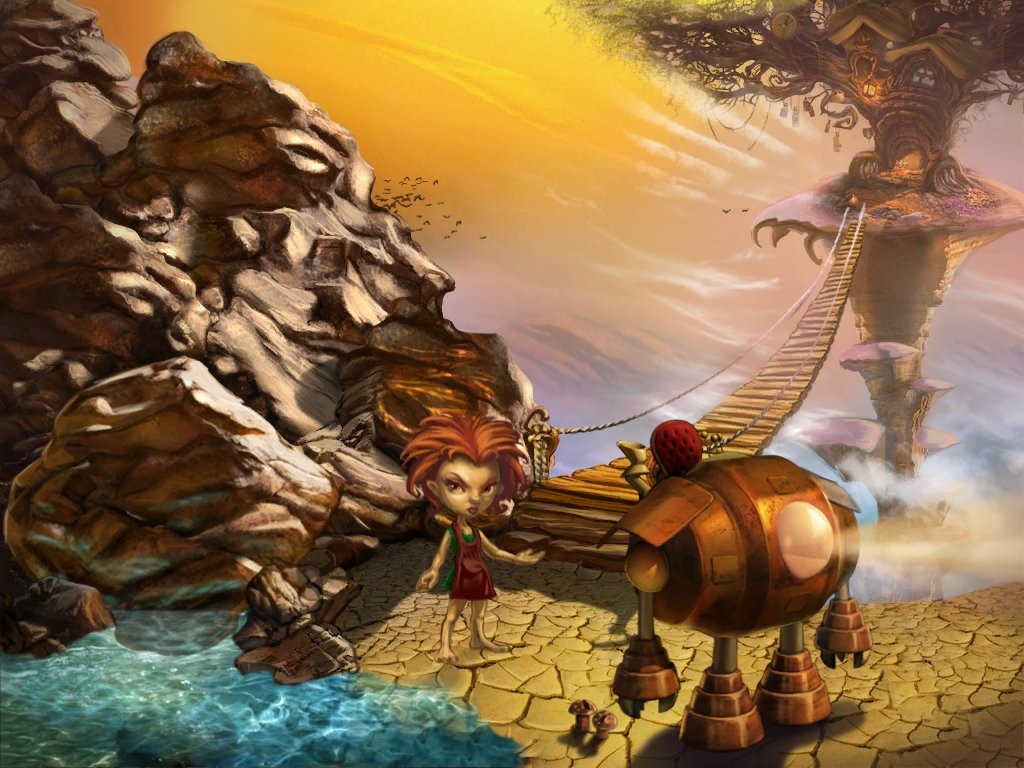
Vogat Interactive’s supernatural thriller F.A.C.E.S. starts with you, as a young woman, being forced to tap into your extraordinary ability to enter photographs and retrieve objects from within. Soon after, you are locked in your room at the Moonlight Asylum and visited by what appears to be a straitjacket-wearing angel, who tasks you with breaking out of your room and getting free of the hospital. You don’t have much time, though, as you are scheduled to be killed the very next day. Before long you are embroiled not only in a tale involving your own abduction and unwilling incarceration, but a wider plot involving a boy who may well possess the ability to fly and a mysterious character known only as Patient X. If that premise, served up in a traditional hidden object adventure, sounds as awesome to you as it does to me, you won’t be disappointed.
The game takes place almost entirely within the sanitarium, where you must piece together the true history of the place as well as the backstories of the patients and doctors, while your angel visits you periodically to encourage exploration and advance the plot. Despite the ominous circumstances and mostly serious tone, the game does crack a few smiles with moments of self-awareness. The main character sometimes questions the roundabout nature of the puzzles and ponders why she went through such elaborate measures simply to get a key out of an object she could have ripped open with her hands. These sly asides don’t come often—the game certainly isn’t a comedy—but they’re fun when they do.

About half the gameplay in F.A.C.E.S. comes from hidden object searches. None of these screens require assembly or secondary screens in order to complete the list, though some do require you to find multiples of a single object. Some items are in plain sight but others can be up to 90% obscured by other items on the screens, showing only the corner of an envelope underneath a book, for instance. While most items are context-appropriate, I was sometimes frustrated by the game not accepting my selection of a millipede over a cockroach when the item clue was simply “bug”, or a human skeleton instead of a yellowed, well-hidden femur when the hint read only “bone.” Items are reused often, not just throughout different HOGs but when coming back to the same screen for a second round. I cleared about half of some screens just by clicking on familiar objects before I had read a single entry on the item list.
Puzzles include some familiar standards, such as sliding bi-directional objects around a board and spinning dials on a disc to line up specific sequences. Some are less standard, such as reproducing drawings as the source image changes orientation or untangling a bunch of lines that overlap. There’s a good variety, and aside from one particular puzzle needed to light up different areas, none appear more than a couple times. The overall difficulty favors the tougher end, sometimes through well-crafted puzzling but a couple times due to unclear instructions. The thread that ties all the standalone puzzles together is good old inventory work with fairly straightforward item use. If needed, the hint option either highlights an interactive area on the current screen or directs you to your next step with rather explicit text instructions.
The main conceit of the game, the protagonist’s ability to enter photographs, is an inventive way of getting more screens out of a limited locale, but this small twist of assembling photos and psychically entering them is an imaginative touch. Many are used to show how you arrived at the asylum in the first place, taking you through such locations as an old store and an underground train station. The theory is that by retracing your steps you will be able to discover how to get out. The story itself unfolds through sequences of animated stills. No one is voiced, even in cutscenes, but the game lets you control transitions between stills, allowing you read at your own pace. The music and sound is excellent, with soft screams and the scraping of metal against metal popping up at particularly tense sequences. These effects serve to really turn the screws at the right moment, and along with a score centered on melodic piano, build a really intense atmosphere.
As well done as most of the game is, it falls short in its user interface. The game features a bar along the bottom with a very familiar set-up: the journal sits to the left, the inventory in the middle, and a hint button on the other side. The problem is that the inventory bar is easily activated, and when it pops up it covers a fair bit of real estate. This interfered with navigation at times when I’d try to go back a screen only to bring up my inventory instead, while during hidden object searches the bar overlapped some of the images I was hunting. Given the rather obscured concealment of many items, this made finding them doubly frustrating. There are also moments while exploring when the cursor will bend, implying a new area to visit, but offering nothing to actually click.
Minor flaws aside, F.A.C.E.S. is an engaging and immersive game. Supernatural horror is a popular genre for casual games, and spooky hospitals are second only to haunted houses when it comes to popular horror locales, but this game stands out with a unique mystery and an inventive photograph mechanic that had me racing through the game’s four or so hours to the rather brilliant cliffhanger ending. The Collector’s Edition includes a bonus chapter that adds about another hour to that, picking up right where the first story ends. The extra chapter employs the same mechanics but is set within your childhood home, providing an emotional backstory to the main game and filling in some holes while leaving just enough so fans will crave a sequel. In either version, F.A.C.E.S. has plenty of high points to more than compensate for its occasional blemish, so if you’re a fan of supernatural horror games, get ready to face one of the most compelling casual adventure stories available today.
The Missing: A Search and Rescue Mystery
by Shuva Raha
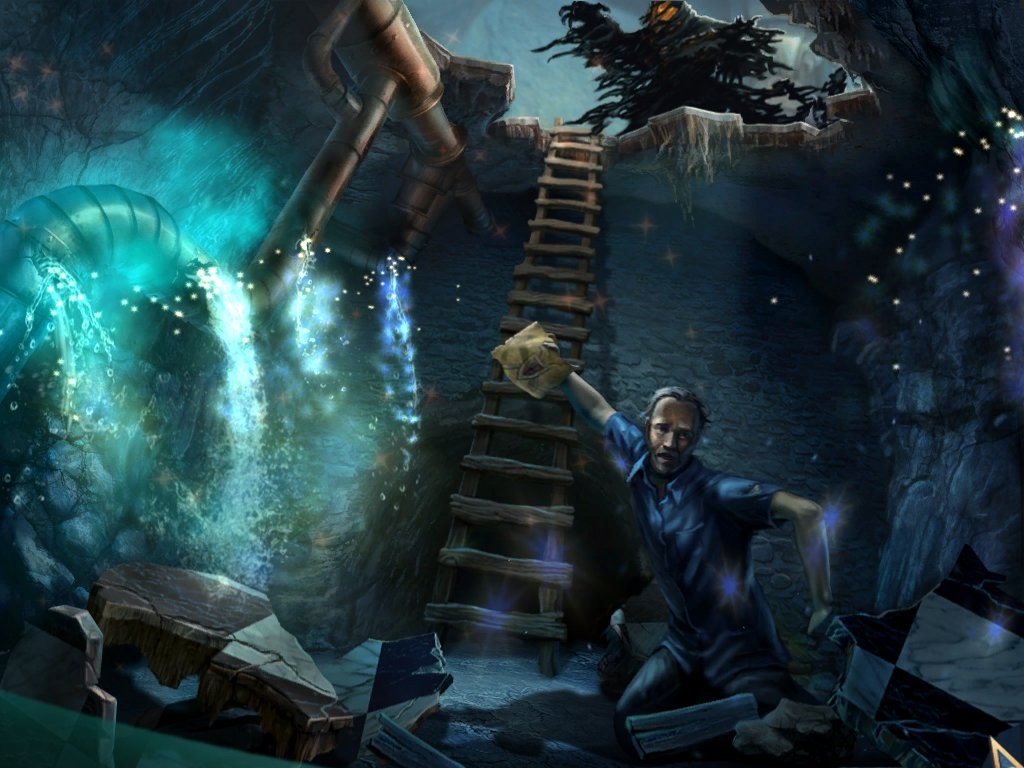
Buffeted by gale force winds and blinding rain, a seaplane struggles to land on an isolated island, from which meteorology professor Kelvin and four students have gone missing after sending out a distress call. Matters quickly turn as murky as the weather after landing, when the search-and-rescue pilot discovers a heavy-duty cage from which something clearly powerful – and non-human – has escaped. Playing as the pilot in Sulus Games’ hidden object adventure The Missing: A Search and Rescue Mystery, it’s your job to decode the clues left behind by the missing people in the form of notes, instructions, photos and radio transmissions, in an effort to trace their whereabouts before it is too late.
The mission starts well, ominously bringing to life the desolate and menacing, yet undeniably beautiful, islands with a real sense of urgency. Unfortunately, instead of weaving it into a tight, multi-pronged mystery, the developers ingloriously demystify the story by simplistically revealing the villains – both supernatural and human – within the first half hour of the game’s almost four-hour duration, though inexplicably, neither inflict any damage on our protagonist despite multiple opportunities to do so. The secret of Kelvin’s research into harnessing the energy of meteorological phenomena – the cause of the chaos – is exposed all too soon as well. This reduces the challenge to a perfunctory expedition through the tropical isles in vicious weather, collecting tools and solving elementary puzzles to unlock containers, entryways and machines in order to find the science crew and, eventually, defeat the inefficient baddies.
Toto and Fog, the two islands, were once inhabited by an ancient tribe, creating a mélange of aging scientific paraphernalia and indigenous structures adorned with codified hieroglyphs. The newer constructions, which include accommodation camps, a bunker, lighthouse, weather station, an undersea port, a rambling mansion with an antique cannon, and even an incongruous ice station (explained via the ‘control nature’ theory), serve as the setting for the straightforward quests – inventory tasks, hidden object searches, and logic puzzles. As you explore the 100-plus screens, the main focus lies heavily on the search and use of interactive items to solve practical problems. But while these tasks are well-integrated into the story, they are also repetitive and obvious, never taxing your imagination in the slightest. Onscreen hotspots sparkle frequently, further simplifying the process.
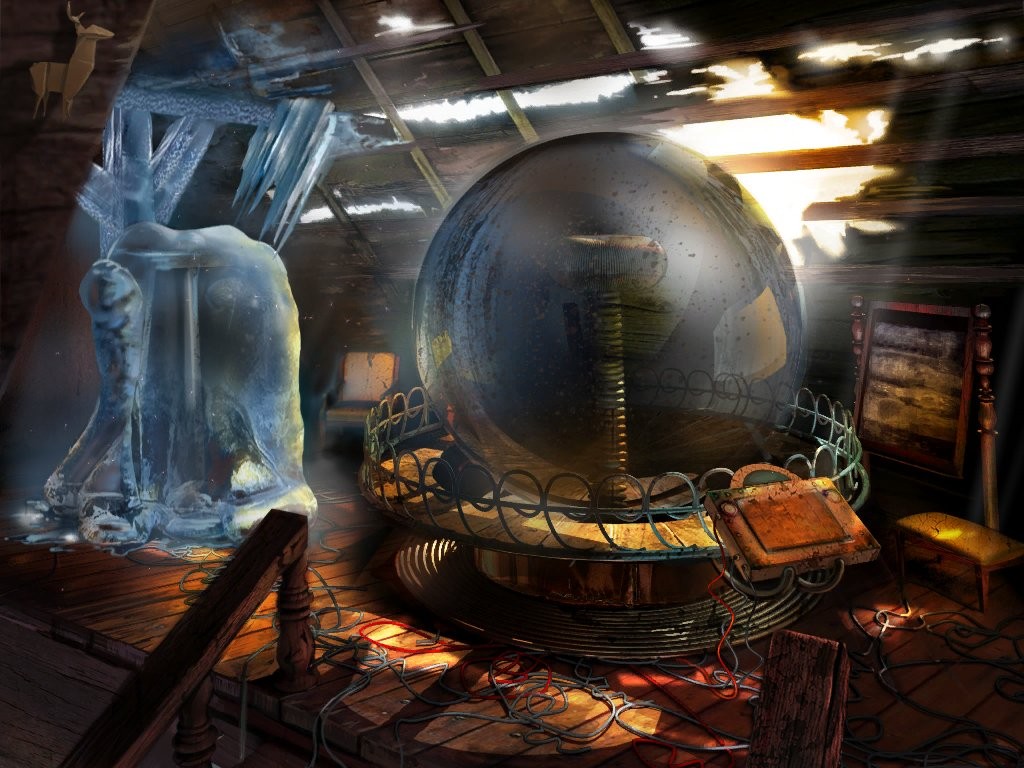
There are only fourteen hidden objects screens in the main game, and though they aren’t repeated, they keep regurgitating the same drab items like drills, wrenches, binoculars and hammers. In a slight twist, some of the screens represent dark areas that have to be partially lit using a flashlight, while some have objects displayed as silhouettes instead of words. The dozen-odd standalone puzzles, comprising pattern and number matches, rotator jigsaws, sequencing tasks, gear alignments and pipes variations, are rendered thoroughly undemanding by obvious clues and easy mechanics. Most use codes found elsewhere, and only one – creating a key using a mirror image – poses a genuine challenge due to its visual complexity. Puzzles can be skipped, though it likely won’t be necessary. The rechargeable hint button either marks out onscreen areas where tasks are pending or picks out a random hidden object from the list. You also have to collect 56 energy crystals strewn about the islands to power Kelvin’s invention, but that’s not difficult either.
Though linear in logic, the game offers multiple areas for exploration at all times, each requiring repeated visits, though the smart placement of locations and sound rationality of the tasks prevent backtracking from becoming tedious. A journal records broad objectives and discovered clues, and maps out the islands and your current placement. While areas aren’t explicitly marked off as ‘completed’, at key junctures cleverly designed events cordon off places where no activities are left.
Despite the simplistic gameplay and non-mystery of its plot, The Missing manages to hold your attention due to its sleek, intricate production. Realistic art, graceful ambient animation (lightning, wind tunnels, swinging doors and lights), relevant sound effects, and an intense but soulful soundtrack generate a fair bit of drama, often creating the illusion of actually exploring the drippy, forested islands. The first-person perspective is underlined by bordering the screens with the edges of scuba goggles or a fur-lined jacket hood when worn. Several fully-animated cutscenes intersperse the proceedings, and some, like the sequence of the seaplane crashing into the ocean, are spectacular. There’s no voice acting, but given that most of the adventure is solitary, that’s not a critical omission.
The main game wraps up with an all-too-convenient but conclusive finale, so the Collector’s Edition provides an hour-long unnecessary prologue of how Kelvin discovered the islands in his youth and thought up his project. The six hidden object screens are repeated once each, and yield mundane tools from random collections of Mayan statues, Indian figurines and gothic gargoyles. The half-dozen watered down standalone puzzles require you to manually note some of the code patterns to avoid backtracking. This chapter emphasizes inventory quests built around Kelvin’s escape from an indigenous temple, and the clever interplay of natural elements make the final half-hour almost worth the extra investment.
Despite starting with the strong premise of a search-and-rescue operation gone wrong, set against a visually arresting backdrop bolstered by superior production quality, this game quickly loses its way and ends up in hackneyed territory. It pointlessly overloads the sensible plot with diverse topics such as the pitfalls of human greed, environmental consciousness, and marvelous anthropological legacies, and tries to intimidate with two namby-pamby villains instead of the true obstacle to any rescue effort – the uncontrollable forces of nature (ironically, just what it’s preaching about). The tried-and-true casual gameplay still holds up as moderately entertaining, but ultimately, The Missing: A Search and Rescue Mystery misses its landing on the shores of greatness and skids into the dreaded so-so zone.
Latest Gaming Articles
All Articles