



Lamplight City hands-on

Accompanying the press demo was a link to a key blog post about the game’s development. Fair warning, the article does contain a few early game spoilers, which I shall not repeat here. The key takeaway, however, is that this adventure was set up, in theory, to place the onus of solving crimes on the player. The full game will comprise five different cases, with decisions you make early on impacting your later investigations. I was a little apprehensive about how difficult the cases would prove to be. In other storytelling mediums – novels, television shows, movies – we marvel at the detectives who have those brilliant moments of insight that allow them to crack cases and put all the conundrums to rest. It’s hard to replicate that in a game, which is why many mystery adventures take players along an overall linear course that leads them to the right answer whether they’ve made the intuitive jump to get there or not.
The preview only featured the introduction and first case, so I can’t speak for the entirety of the game. However, within the initial main case it’s quite easy to figure out who the real criminal is, as one of the first things they do when you meet them is to confess to the crime. Even so, through your investigation it’s possible to discover the means and motive for another character as well, giving you the option to choose which of the two suspects to accuse. My sense of potentially blowing this decision wasn’t that I might misinterpret evidence and accuse the wrong person while thinking I’d solved the case correctly, but rather that if I really wanted to, I could choose to knowingly accuse the wrong person. A curious approach to the concept of failure indeed. That said, I would assume that the actual criminal doesn’t just confess in every case and that, hopefully, the cases become more challenging as the game progresses.
With the limited scope of what I experienced, I also wasn’t really able to judge the “reactive world” being promised. There were a few places where I could make choices on how to proceed, which mostly just altered one or two lines of dialog, or in a couple of instances removed locations from the map where characters no longer welcomed my presence. Perhaps such choices have more lasting effect later on, but even in solving the first case my decisions didn’t seem to really register. I first named the correct suspect and then reloaded and wrongfully accused another. Miles and Bill had no problem pointing the finger at someone else… using exactly the same lines as when I chose the right criminal. It remains to be seen if the full game will deliver more in its handling of both unintended failure and the consequences of choices.
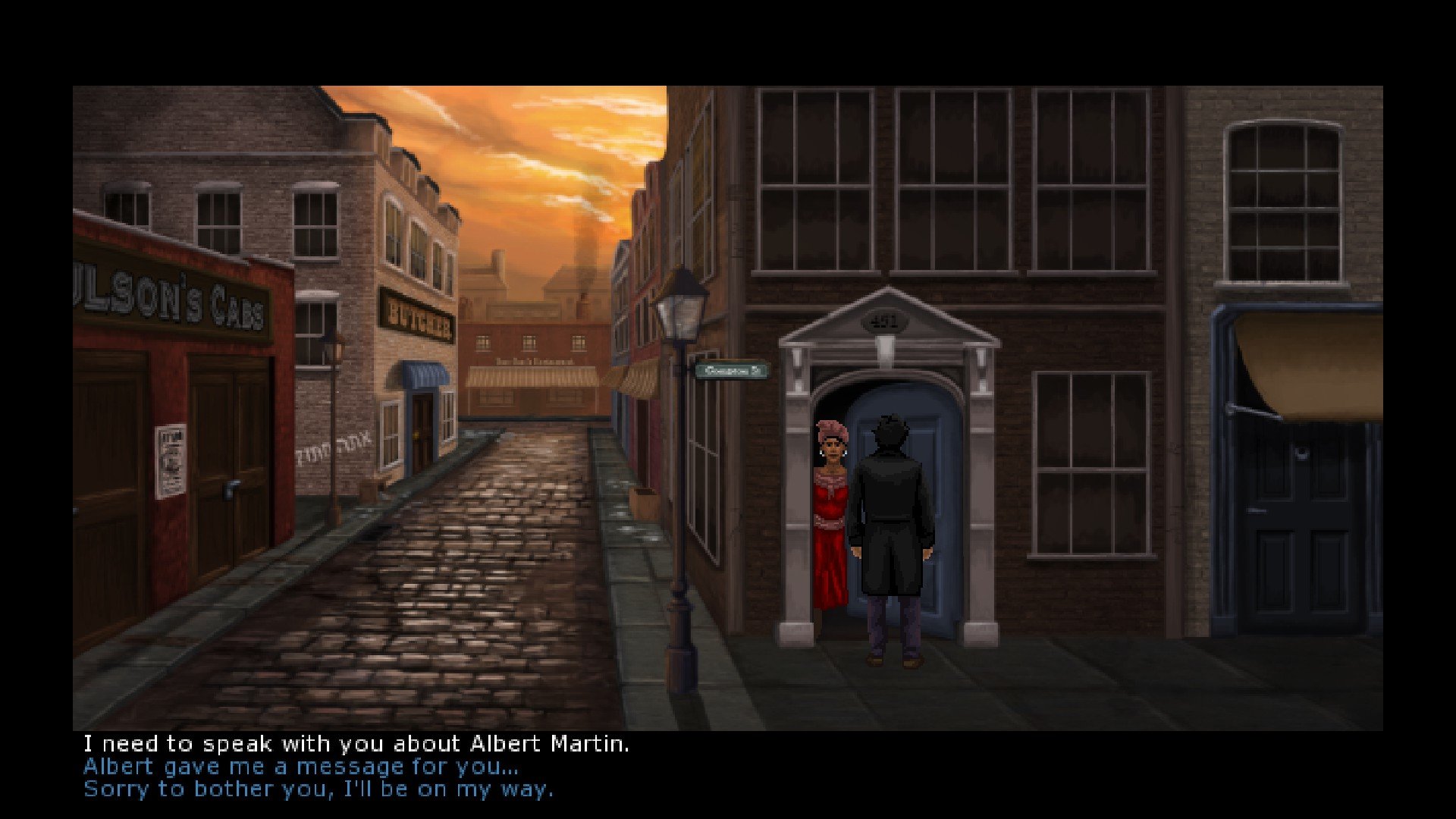
Decision points aside, the rest of your investigation consists primarily of talking to suspects. Occasionally conversation choices are presented as dialog options at the bottom of the screen. However, most of the time you switch to the detailed character portraits and are given a list of topics to choose from. Subjects are removed from the list once you’ve used them. Every now and then a topic will unlock a new location or add an important detail to your notebook, which is accessed by right-clicking or through a button on a hidden menu bar that displays when you move the mouse to the top of the screen.
This is a dialog-heavy game, and those who appreciate such experiences will enjoy the character and world building that’s nicely woven into the conversations as background detail. With so much dialog, I’d have appreciated the opportunity to save between options, but being able to play a game that otherwise allows free saves anywhere is quite refreshing at a time when more and more adventures are moving towards single-slot checkpoint saves. Besides, it’s easy to leave a conversation between dialog options in order to save before speaking to the suspect again to continue. After all, real life does sometimes intrude on playing games.
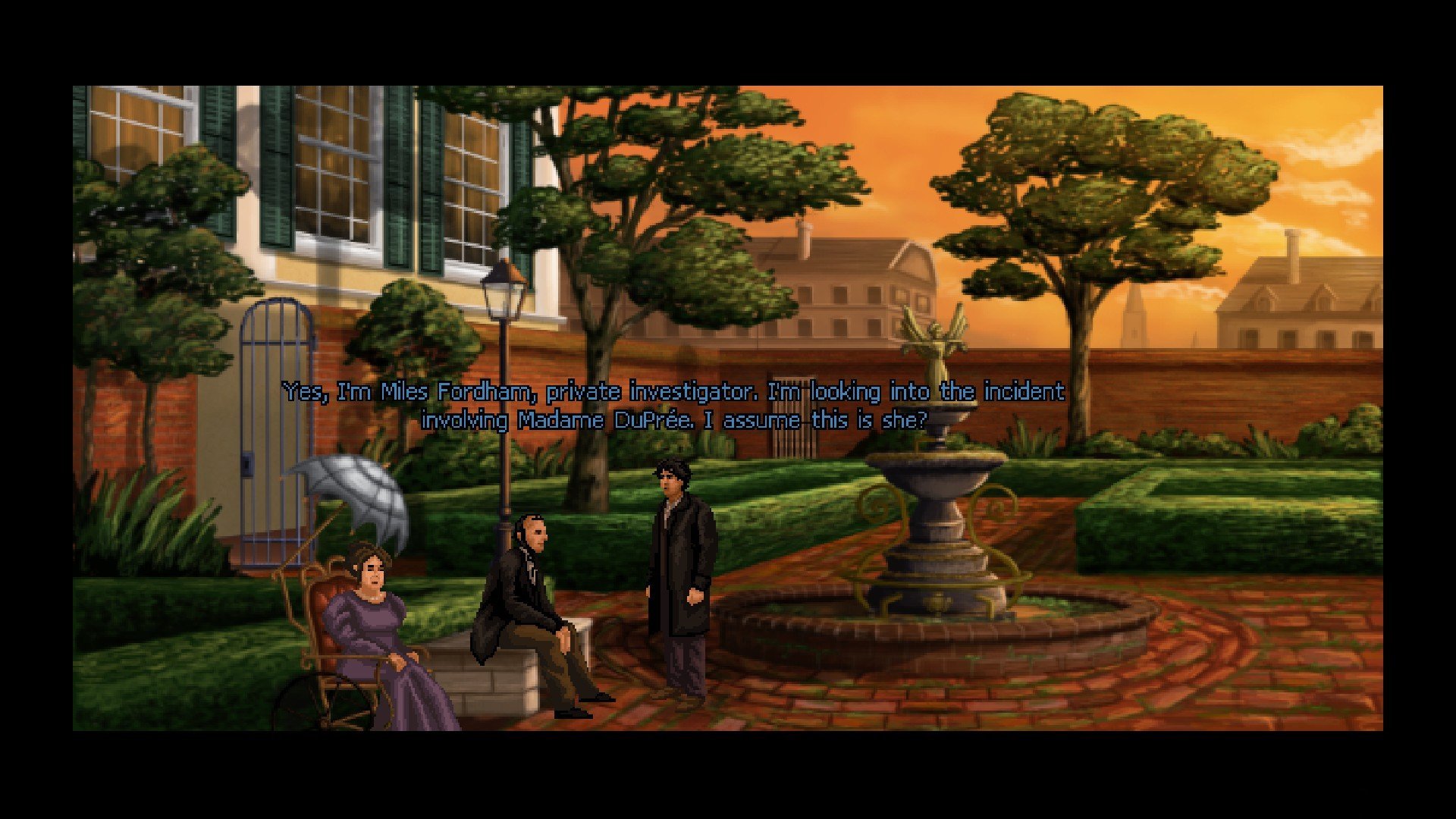
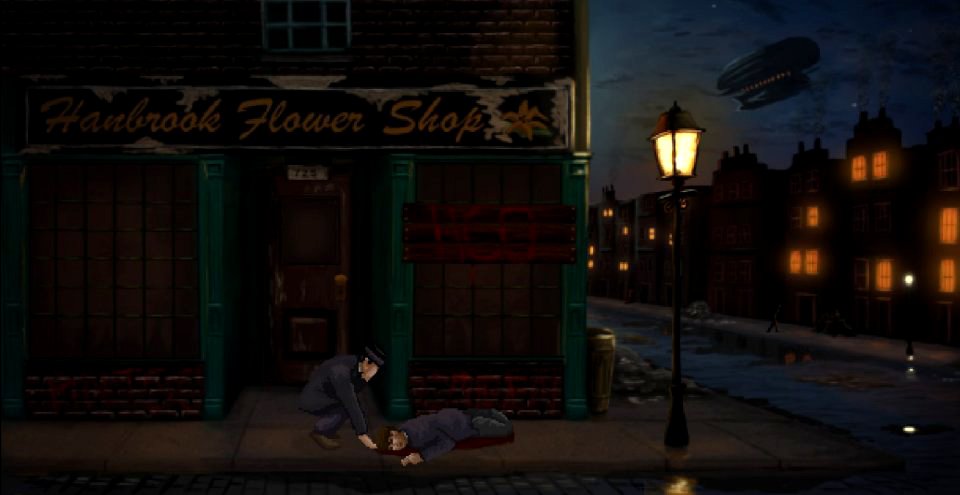
Lamplight City eschews inventory puzzles and in fact does not give you access to an inventory at all. You can pick up some items in your investigation but once you have, Miles will automatically use them if appropriate when you click on a relevant hotspot. For example, during the tutorial section you have to determine if a window at the flower shop could have been unlatched from the outside. A hanger from the store is needed to conduct an experiment, which Miles uses without prompting when you click on the window in question. On occasions such as this, you are then typically taken to a close-up view of what you’re interacting with to do more direct manipulation. In this particular instance, you have to carefully drag the hanger around the edges of the window to see if you can unlatch it. Throughout the first case I encountered a small handful of these sequences, which form the only interactions you have other than talking to characters and traveling from place to place.
When interrogating suspects, even the bit characters are all fully voiced, with acting that ranges from acceptable to quite good and nobody delivering a poor performance. I found the interplay between straight-laced Miles and rough-around-the-edges Bill to be especially enjoyable. An attentive ear will pick out some Wadjet Eye voice regulars, which is unsurprising given the developers’ past association.

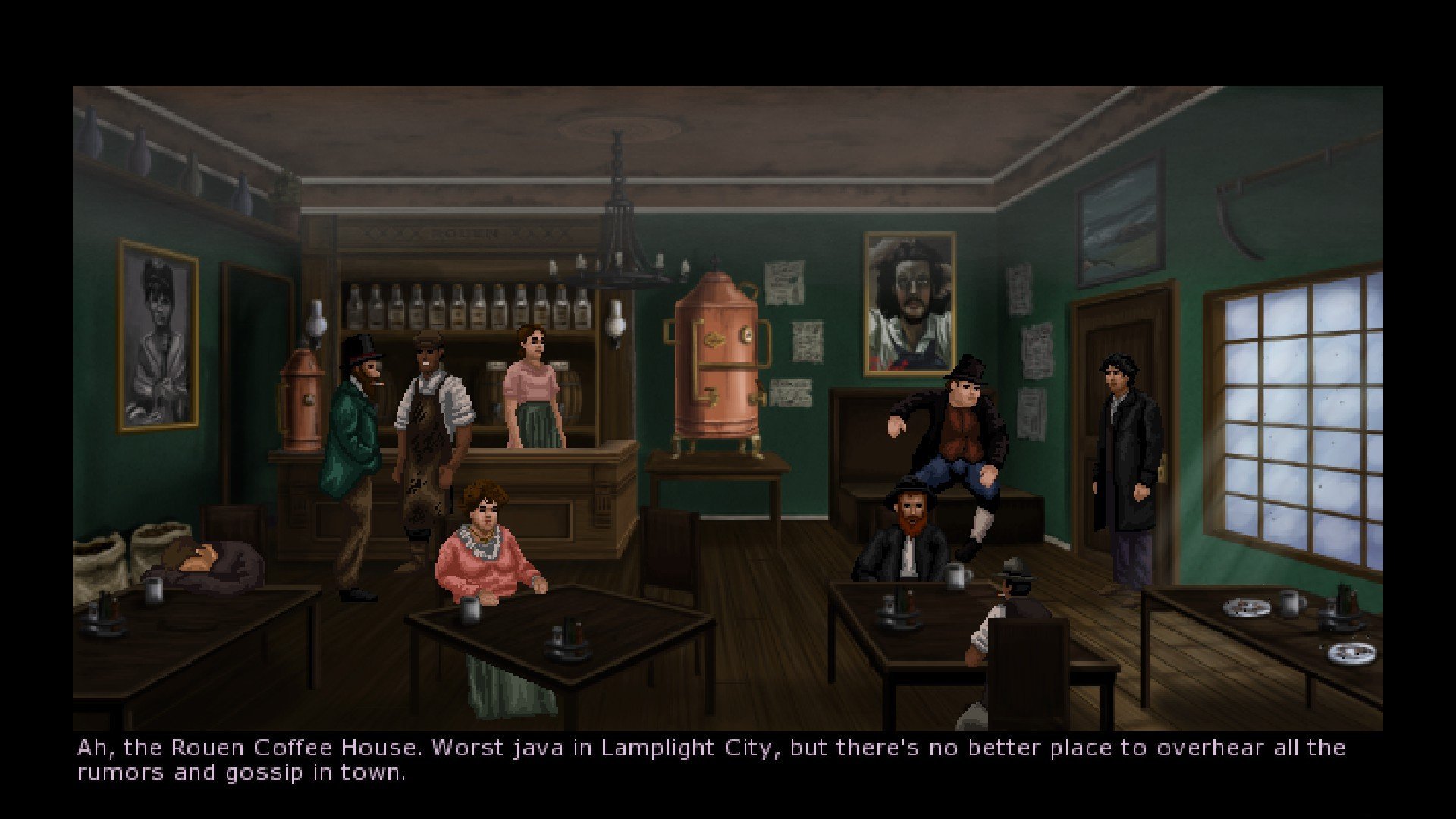
The rest of the soundscape is filled with other nice touches. Footfall varies with the surface being walked on, such as concrete, wood, or carpet. Birds chirp and pedestrian traffic can be heard in outdoor scenes, while the walla of a crowd can be heard in the coffee shop. The musical score also pleasantly accompanies the investigation, feeling classical but with just a bit of an edge to match the more steampunk elements that have been introduced.
The demo clocked in at half an hour for the intro and three hours for the first case proper. If that’s representative of what to expect throughout, then the full five cases should provide a quite substantial play time indeed. While the lengthy dialogs I encountered did grow a little tiresome, the lush artwork, intriguing world of New Bretagne, and promise of a sizable adventure have definitely caught my interest. In particular I’m looking forward to seeing more fully how the promise of a game where it’s fine to fail and where the world reacts to my decisions plays out, as it’s still too early to tell after just one case. The investigating I’ve done so far has been suitably intriguing, and I’m anxious to see how each of the different cases ultimately ties into the overarching plot that is only thinly hinted here. Fortunately, there isn’t too much longer to wait, as Lamplight City is currently on track for an August release.
Latest Gaming Articles
All Articles