


Eye on iOS: Volume 3

Gobliiins and Gobliins 2: The Prince Buffoon
Growing up as a Sierra fan whose game purchases were limited to what I could afford on my weekly allowance, I admired the Goblins series from a distance. These creative puzzle games were developed by French studio Coktel Vision, with Sierra as the publisher, so they’re totally different than the classic Quest series. Though I never got to play the originals, from what I can tell very little has changed in the recent iOS ports published by BulkyPix. The games have the same cartoon graphics, logic puzzles, and bizarre humor the series is known for—along with some unfortunate annoyances.
In these games, you control a team of goblins (three in Gobliiins and two in Gobliins 2, as represented by the number of is in the title). The goblins are on a quest, first to save the king from a voodoo doll-wielding adversary, then to rescue the king’s kidnapped son. The scenarios are less important than the puzzles, which mainly involve using each goblin’s special abilities to bypass obstacles and progress through the levels. For example, simply handing a diamond to a wizard who’s sitting at a high table involves a complex sequence of manipulating nearby items (such as carnivorous plants) to get a boost onto the table, and once you’re up there, getting the wizard to stop swatting you off again. Then, rather than launching into an interactive dialogue with the wizard whose attention you’ve worked so hard to gain, you’re whisked to the next scene where new obstacles awaits.
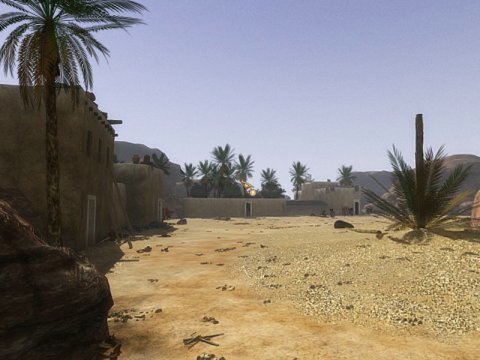
The games’ cartoon graphics have golden age nostalgia, with hand-drawn backgrounds that look great on the small screen. The sprites are a bit blocky by comparison, so it’s fairly obvious at a glance what’s part of the background versus what you’ll be able to pick up and move around. The goblins do have a number of amusing animations, with the characters jumping around, making faces, and doing funny things when something unexpected happens (or sometimes just because they’re bored). These are well done but the slapstick can quickly become tiresome, no thanks to the goblins’ babbling nonsense language and the oh-so-wacky soundtrack looping in the background. A few puzzles in, I was staving off a headache.
In Gobliiins, you can switch between touch control and cursor control; in Gobliins 2, only the cursor mode is available. This was an odd choice, since interaction is much more cumbersome when you have to drag the cursor across the screen to “point,” then tap to “click,” as opposed to the single tap provided by touch control. I had problems with my finger covering up hotspots, accidentally opening the inventory, or being physically incapable of positioning the cursor where it needed to be, especially with hotspots near the screen’s edge. In the first game, a goblin standing too close to a hotspot or his comrades would stand there doing nothing as I tried in vain to make him go, while in the sequel, text displays stating that the goblin is too close and to move him and try again. (When the goblins need to be near each other to solve a puzzle, that’s easier said than done!) I suppose the error message is better than nothing, but it would have been better still for the developers to resolve the problem. Such glitches serve as constant reminders that these are computer games that were simply shrunk down to the small screen.
To make matters worse, the controls are frequently unresponsive. The goblins don’t always go where you tell them to or engage with the hotspots you select. Puzzles in both games require teamwork among the playable goblins, but it can be very hard to get the timing right for activities that require synchronized actions. An icon can be tapped to easily switch between the playable goblins, but this is buggy; sometimes the goblin responding to your input is not the one displayed.
In Gobliiins, your team includes a magician who can cast spells, a warrior who can punch things, and a technician who can pick up and use items, while in Gobliins 2 you have one goblin who’s more mischievous and daring, and another who’s more practical and careful. Since the world has its own unique logic, it’s impossible to anticipate how the situation will play out differently using different goblins. This is part of the game’s challenge, but since the finicky iOS controls aren’t well suited to trial and error, I wanted to have an idea of what my efforts would yield before going to the trouble. Compounding this, in Gobliiins the trio has a health meter that depletes as you try certain incorrect solutions, punishing the very trial and error the gameplay requires. After a few wrong moves, you die and the level restarts. Thankfully this “feature” is absent in Gobliins 2.
The first game’s puzzles are contained in a series of single locations, essentially making them “escape the room” scenarios. Once you solve a puzzle you progress to the next screen, with no opportunity to wander and explore at your leisure (and no real reason to, since all interactions are directly tied into the puzzles you’re trying to solve). In the sequel, puzzles sometimes span a few locations and you can travel between these at will, either by exiting at the side of the screen or selecting the location you want to visit from a “Move To” menu. But moving around is still pretty limited, and once you’ve completed a level, you progress directly to the next.
The games have built-in help systems that provide three levels of tiered “hints” serving more as blow-by-blow instructions. Some in Gobliins 2 assume you’ve already completed a sequence in another location, thus inadvertently spoiling puzzles you didn’t ask for help with. Even so, it’s a nice addition that makes the game somewhat more palatable for a modern audience. Without the hints, I would have quit out of frustration in the first few minutes. Gobliiins has an auto-save that allows you to continue from the screen you were on when you quit (but not the state you left it in) as well as traditional save slots. Gobliins 2 lacks the auto-save, but it does prompt you to save your game before quitting.
You can find Gobliiins and Gobliins 2 in the App Store for $2.99 each. At that price, it’s hard to go too far wrong, but since I’d always been curious about them, I was disappointed by the iOS execution. Those who played and enjoyed the Goblins series in the early 1990s might fare better than I did, but for a first-timer playing the originals on PC is probably a better way to go, since GOG.com has them bundled, along with the third Goblins game, for $5.99.
Latest Gaming Articles
All Articles