



Eye on iOS: Lost Phone edition

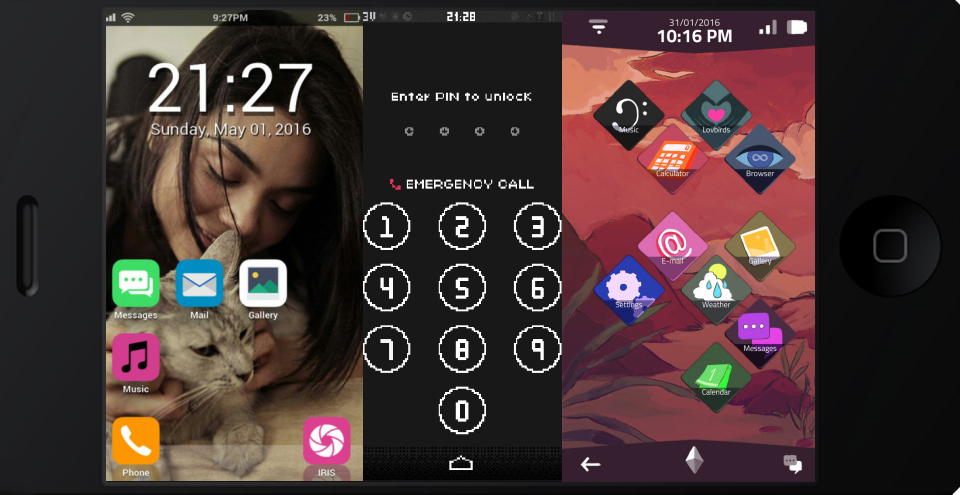
It’s kind of fun at first, but at its core, gameplay that involves snooping through texts and guessing passwords is not all that compelling, especially when it’s so similar from one game to the next. That’s where the framing stories come in—the bigger picture narrative that motivates you to do all this digging. A Normal Lost Phone’s is very straightforward: a stranger dropped a phone and you picked it up. Nothing links you to the phone’s owner, and you can put it down again at any time. Your only motivation, therefore, is your desire to stick your nose in Sam’s business. Sara Is Missing gives you a more active role by suggesting that Sara will be harmed if you don’t figure out how to help her. And in Replica, you’re constantly reminded that your own freedom and wellbeing depends on how successful you are at hacking into your classmate’s phone.
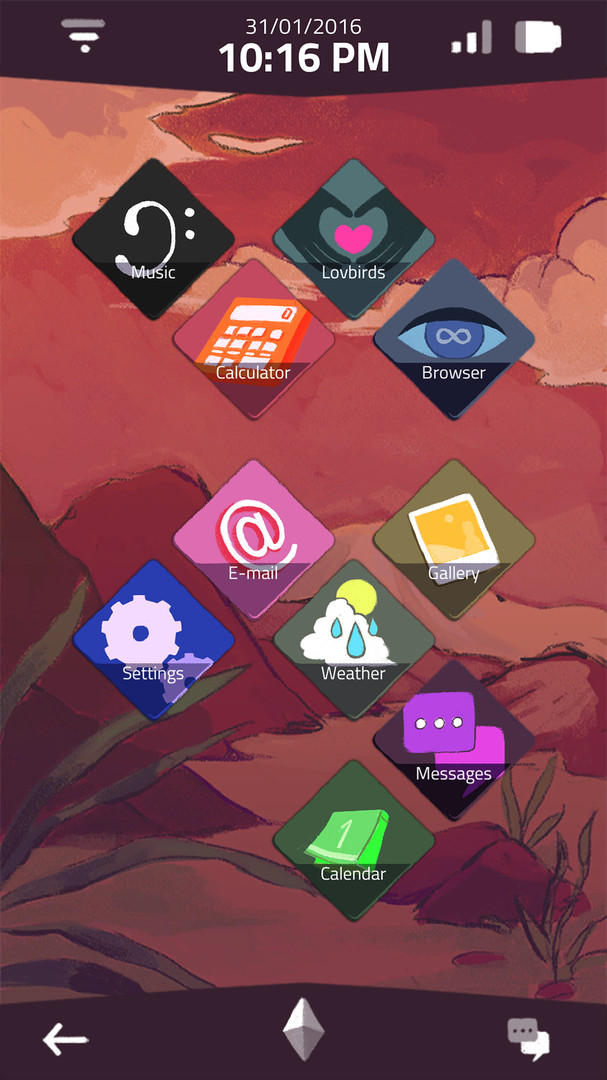
I appreciated the framing stories in Sara Is Missing and Replica because they gave me a “good” reason to be nosing around in someone’s private information. ANLP is more problematic, because there’s really no excuse for poking around in a stranger’s phone to this extent. Of course, in adventure games we’re always reading notes meant for other people and pocketing items that don’t belong to us, so when I first played ANLP I didn’t think anything of hacking into the owner’s personal information. This phone was ostensibly left for me to find, so that makes it okay, right?
The problem is, ANLP has a very realistic depiction of a teen struggling with complicated questions of sexual identity—so realistic that the more I poked and prodded, the more uncomfortable I felt about my role in the violation. I remember chatting with Gone Home’s designer Steve Gaynor about the importance of the protagonist in that game being a family member rather than a detective. The Fullbright Company made that decision because a sister would have implicit permission to rifle through her parents’ papers and look in her sister’s closet. In A Normal Lost Phone, I’m the protagonist, and I do not have permission to look through Sam’s phone. Combined with the sensitive subject matter, this leaves me feeling conflicted about the game’s core premise and my involvement in it.
In Sara Is Missing, my “snooper’s remorse” was greatly minimized by the idea that I was helping someone in imminent danger. Still, a line is crossed when the perpetrator of that danger makes contact. (The right thing to do in this scenario, of course, would be to take the phone to the police!) As the stakes were raised, I was faced with a couple of uncomfortable choices underscored by graphic photographs of the people in danger. Because ANLP and Replica have stylized interfaces, I was always subconsciously aware that I was playing a game. But in Sara Is Missing—a game you play on your phone, tapping icons that look something like the icons on your phone, and seeing photographs of real people (actors, but still) suffering the violent consequences of your choices—it’s unsettling, to say the least. This is a horror game, and its slick presentation makes it very convincing. But while it may be effective, I wouldn’t call Sara Is Missing a fun experience. Even knowing I probably missed some of what this game has to offer, I was too disturbed by it to want to play a second time.
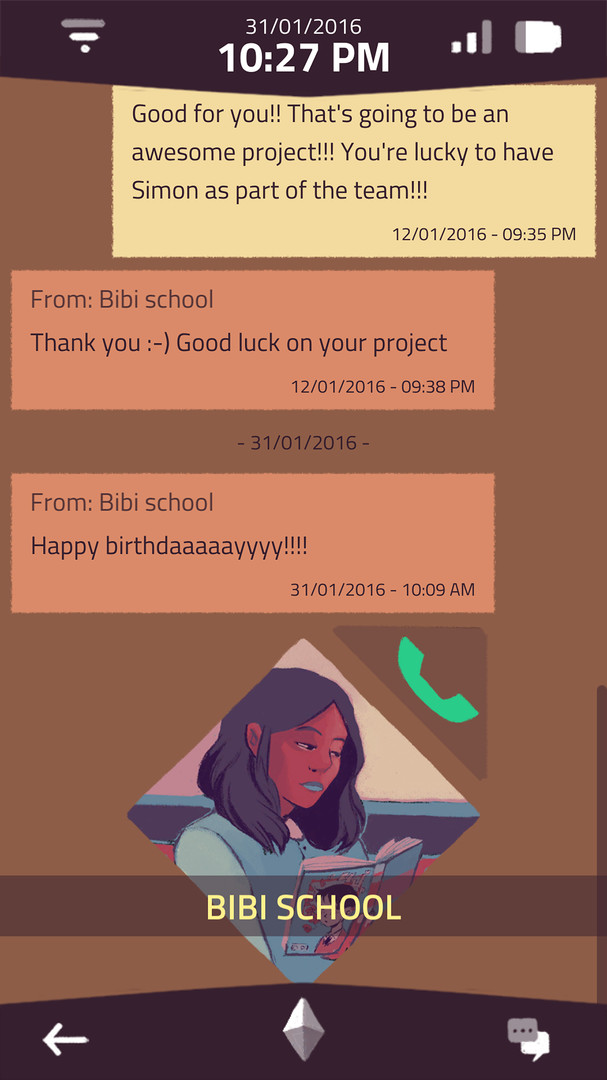
From a gameplay perspective, I enjoyed Replica the most of the three. I think that’s partly because by playing as someone who clearly wasn’t me, I could shrug off the guilt of messing around with someone else’s private information. That’s not to say that Replica is a guilt-free experience—it also involves some serious moral gray areas—but that’s the point of the story. Replica also has the most replay value, with up to 12 endings determined by how you use the phone. In addition to frequent text conversations to keep the pace moving, Replica includes a to-do list and your contact at Homeland Security feeds you hints. This sort of guidance would have come in handy in A Normal Lost Phone, where one password that didn’t follow the convention of the others had me completely stumped and unable to proceed until I checked a walkthrough. From looking at a Replica guide after I found a few endings on my own, I know that this game also has some “how on earth was I supposed to guess that?” puzzles, but at least those are optional, providing extra challenge for completionists instead of obstructing a first-time player’s progress.
These aren’t the only games exploring how a phone interface can be used in interactive storytelling—the Lifeline series, the Mr. Robot mobile game (developed by the studio behind last year’s Oxenfree), and the WarGames-style KOMRAD are some others that I know of. While I enjoyed exploring A Normal Lost Phone, Sara Is Missing, and Replica, the gameplay does start to get repetitive. If you’re interested in the premise, my advice is to pick one with the story that most appeals to you instead of playing them all in a row. If this format is around to stay, then hopefully developers of future games will rely less on the reading of texts and cracking of passwords and start to come up with new ways to make the format engaging. Real-time, natural language chats with AI-driven characters would be really cool in this type of game. Just saying.
Latest Gaming Articles
All Articles