



Chris Bateman – Discworld Noir

[b]Stefan[/b]: Whilst the first two games liberally borrow plot elements from the books, Noir is its own original creation (references to noir film culture notwithstanding). Did this affect your approach of how you developed the story?
[b]Chris[/b]: Absolutely! I was given a lot of rope and I played it all out before Greg reeled me back in. But it was a very careful process of composition, because I had to be true to all the different layers of source materials – Discworld and the fantasy megatext it draws against on the one hand, film noir and the hard-boiled novels they draw against on the other. I was threading a needle… and I would have been devastated if I couldn’t get it at a comfortable balance between the two sides. But Discworld is a wonderfully absorbent setting – it can take tremendous abuse and still keep ticking!
[b]Stefan[/b]: Was it more difficult to effectively start from scratch, or did you find the freedom of creating scenarios and more original characters than previous titles a breath of fresh air?
[b]Chris[/b]: Well, I was never starting from scratch, because there is a shape to a hard-boiled detective story and there is a tone to a Discworld story so I wasn’t starting from nowhere. Honestly, I was channelling a process and watching it develop through my work, and that of the incredible team at Perfect. There was never a point that I felt what I was doing was difficult… which isn’t to say it was easy. But I’d spent more than a year preparing. By the time we got going, I just let it sweep me along!
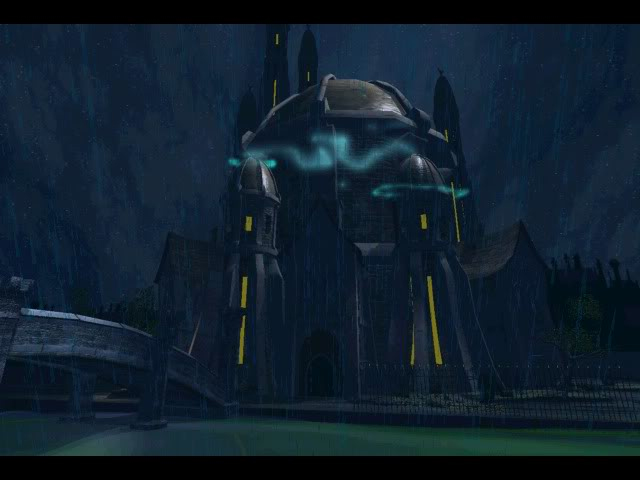
[b]Stefan[/b]: Getting into the thick of the story; whilst Noir takes pages, quite literally, from narratives of various films (lovingly), the plot is very detailed and elaborate and creative in its own right. How long did it take to write up the entire script? Considering you had to take into account references to films AND combine a dense level of Discworld lore, all whilst keeping things knee-deep in humour, were there any issues or hurdles during the writing process?
[b]Chris[/b]: I’m not sure how long narrative design took; that was a process with a lot of discussions between myself and Greg. But I can tell you exactly how long it took me to write the script: one month. I had a laptop and I worked ten or twelve hours a day, cranking out page after page based on the narrative design. I couldn’t tell you anything that happened that month that wasn’t the script. And then it was done, and it was just a matter of waiting for Terry to edit it.
[b]Stefan[/b]: How did it become to be a detective game? Was it a slow transition away from pure fantasy, or did you decide very early? I read the initial idea was to base the game on an assassin from one of the books?
[b]Chris[/b]: Yes, I had surveyed Discworld fans who wanted a Teppic game. So I designed one. Gregg came down hard on me about that and put me in my place, because I had gone off half-cocked on that one. We scrapped the whole thing and made Noir, which was totally Gregg’s concept (and was far better than what I’d sketched!) but he let me do all the work constructing the story. He managed me, guided me in precise ways, but gave me tremendous creative freedom. I learned an immense amount working with him. He was very much my mentor.
[b]Stefan[/b]: The puzzle design between each instalment in the series was different. The first being brutally hard, the second being on the easier and arguably more logical side (or as logical as one could expect from Discworld), whilst Noir took a completely different approach with a much larger emphasis on the notebook clues and dialogue, much less in the way of item-based puzzles. Whilst we can easily deduce a lot of this was due to the nature of it being a detective story, were there any other forces at play that had you choose to make the puzzles and gameplay more dialogue-based?
[b]Chris[/b]: It was my design. The first game had evil puzzles because Gregg is Satan himself when it comes to puzzle design. So many players bled from the ears trying to solve the first game that Gregg took mercy upon us for number two. My first task at Perfect was to completely play through the original Discworld, then as an encore I had to help them complete making Discworld II…. and having done so, I really didn’t want to do more insane object puzzles. I wanted something completely different, and the hard-boiled detective was tailor-made for doing so.
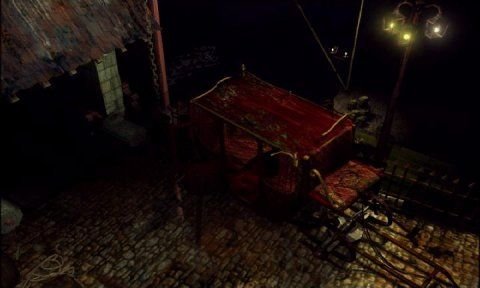
I designed the notebook, which is (I think) the first hypertext inventory in games – although most players may not realise it. Gregg made the decision to favour visual presentation over useability, so it didn’t show you which were ‘hyperclues’ (that you could click through) and which weren’t. I still use the notebook and the dialogue engine that goes with it in my narrative design classes at LCAD [Laguna College of Art and Design], and have done at the University of Bolton. I’m very proud of the design work I did on that game. It was entirely original but it felt familiar. That is not that easy to achieve.
However, Gregg was very exacting on my puzzle design – a harsh taskmaster in that regard. Key puzzles (like murder solutions) were revised again and again to ensure they were challenging enough. I was more interested in making the narrative as dynamic as possible – every plausible way a clue could have been encountered was supported. There were even some solutions I didn’t even realise were possible, which I love about the game.
[b]Stefan[/b]: What are your general thoughts now about the puzzles in all three games? For example, do you reflect upon them being too difficult or obtuse, or proud of having made games that, whilst hard, were more on the creative side than most stuff made nowadays?
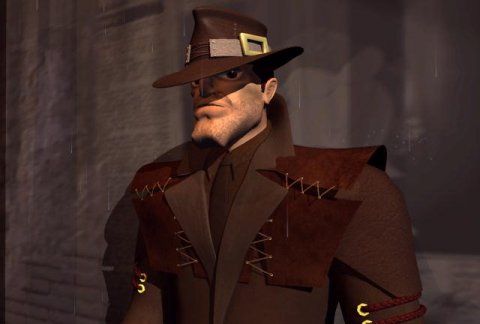
[b]Chris[/b]: I never liked working on puzzles, to be honest. It was some of the toughest work I did producing puzzles for Gregg, and like the kid who’s caught smoking and made to smoke a whole carton, I can’t face playing games with puzzles in them now. I have a lot of respect for great puzzle design, but it’s not my strength as a designer and I have lost my taste for it as a player. I’m glad I did it though… I learned so much from Gregg on the two Discworld games I worked on.
[b]Stefan[/b]: Whilst Noir wasn’t as devilish as the first Discworld, it still has its share of obtuse puzzles. I could name a few examples, but I’m sure you know. In hindsight, would you have constructed any puzzles differently?
[b]Chris[/b]: Gregg is a demon in human form. He was determined that you should suffer. Blame him!
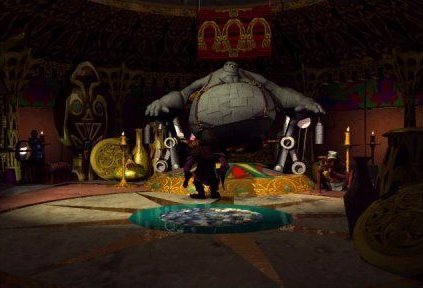
[b]Stefan[/b]: I found what I think was a small Easter egg in Noir. If you complete the game at least once, and then play through the game again, every time you click on a location on the map screen, you’re greeted with a high-pitched ‘Righty ho!’ soundbite.
[b]Chris[/b]: Ha! I did not know that. I wonder if that was intentional? If it’s a bug, it’s a very weird one!
[b]Stefan[/b]: Were there any other Easter eggs hidden away in Noir that you can remember?
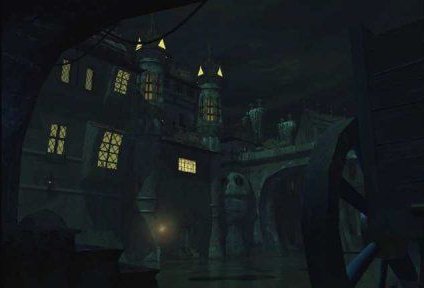
[b]Chris[/b]: Yes, I think so… But boy, I don’t remember what. I’m sure the lead programmer, Mark Judge, had hidden something in there. Maybe it was the Easter egg you found!
[b]Stefan[/b]: I hate myself for asking this, but… the first two titles are a little infamous for secretly including a rather naughty word, which at some point allegedly resulted in some trouble, maybe even from a legal perspective. Did anyone ever suggest secretly including a naughty word in Noir?
[b]Chris[/b]: No, I can’t say that was ever on the table!
Latest Gaming Articles
All Articles