



Casual Collection – January 2011 releases


Treasure Seekers: The Time Has Come
Shuva Raha
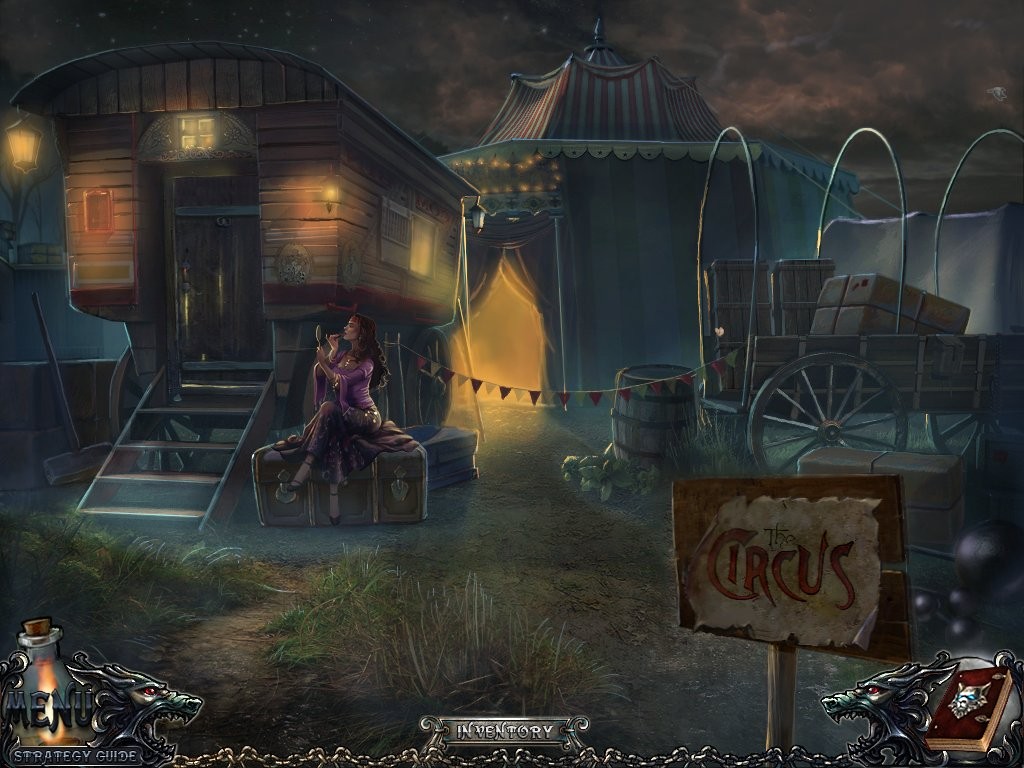
Artogon’s Treasure Seekers series, featuring the brother-sister duo of Tom and Eleanor (aka Nelly) Lonsdale, debuted as a hidden object game sprinkled with a few puzzles. Its watershed year was 2009, when the sequel was released. The Enchanted Canvases seamlessly integrated hidden object searches, inventory management and logic puzzles with an engaging story, superb production quality and lengthy, tight gameplay, establishing itself among the pioneers of casual adventures. The fourth installment, The Time Has Come, is rather topical, being based on the Mayan prophecy of the end of the world. It’s March 2012, and übervillain Totenkraft, a veteran of the series, stands atop a rain-swept rooftop, declaring his plans to unleash himself on the unsuspecting denizens of the planet. Just then, the scene shifts to 1932, to a French news report about Nelly having decoded a Mayan stone forecasting doomsday, then pans to Totenkraft stalking her as she window-shops in Paris. A month later, Tom learns that Nelly is missing, and with nary a thought for his poor hamster, sets out on a quest to save his sister.
Not content with such a simple premise, the developers have piled several adventure game staples into the story: the Templars, the Crusades, dead knights, living demons, politically-correct vegan sacrifices, the Holy Grail (yes, the Holy Grail), time travel, actual travel (Paris, Jerusalem, Scotland, Mexico and a parallel universe, if we include the Collector’s Edition bonus chapter), plus a Star Wars-style finale – it’s all there, linked to the ‘Great Catastrophe’ of the world colliding with an asteroid. But while Totenkraft fine-tunes his world domination plans, Tom’s life is an endless nightmare of locked doors, lost keys, stuck panels and dark rooms. But he chips away diligently at crumbling plaster and choked chimneys, flitting between the past, present and future with dizzying alacrity using a magical ring. In theory, time travel can be a potent tool if wielded correctly, but here it’s reduced to a mechanism to locate banal inventory items. (Um, need tomatoes for the soup – I mean, the sacrifice? Let’s go back 700 years and get them!) To be fair, it’s visually interesting to compare scenes then and now – for example, a statue outside a church in the past is now reverentially enclosed in a small chapel of its own – but because the locations are so isolated and the difference is mostly in aging, not modernization, it’s not even always clear which era Tom is in (not that it matters to the plot).
Despite its time travel, the game is very linear, as Tom must solve a specific sequence of inventory-related tasks in order to proceed. Sometimes only one item is needed, but many puzzles require a combination of several objects together. These are displayed in rings around the puzzle, so you don’t actually have to think about what’s required, merely find the necessary items. Single item quests are stretched further with gratuitous interactivity, as they must often be assembled from parts lying next to each other. There is also repeated hacking at foliage, brushing off dust and hammering things, not to mention tapping an egg several times to crack it. On the easier difficulty setting, interactive items are either tagged on mouse-over or highlighted with a ‘hand’ cursor. Both the easy and advanced modes have a rechargeable hint option which gives you further assistance if needed. Some items can only be found through traditional hidden object searches, but this episode lacks its predecessors’ discretion in stocking such screens – a church shed hides a propeller and a crash helmet amongst other generic items – which reduces its credibility. There are a couple of interesting additions to the basic formula, however. The first, an X-Ray glass, can ‘see’ objects literally hidden underground, behind walls, inside storage units, and even in another era. Besides breaking the monotony of object searches, it moves the story forward by revealing mission-critical items that require toggling between the past and the present. The second is the need to perform actions like moving aside curtains and opening boxes to find items or meet certain requirements. The few standalone puzzles are extremely simple for the most part, though any can be skipped. Among them are jigsaws, directing light rays with crystals, trial-and-error sequencing games, and pattern-painting. Notable exceptions are a logic-and-inventory puzzle that requires making crystals to decode a map, and another that involves alternating between day and night to solve.
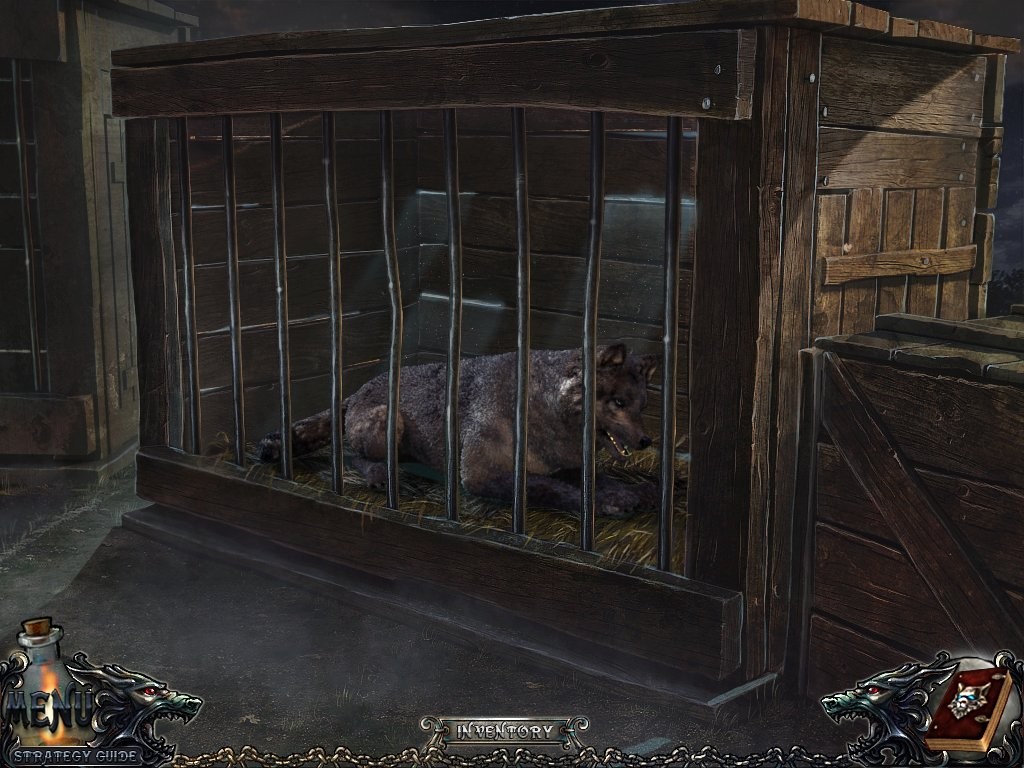
The action is all set against decent looking scenes with standard animation – some dust motes, a few swinging censers and chains, a bit of falling water here and there – though there are occasional moments of brilliance, such as when an hourglass turns day into night for the first time. The music is similarly good but not special, though there’s no voice acting of any kind, including during cutscenes. Thankfully, what appears at first to be the game’s Achilles Heel – its inexplicable story hurtling towards ridiculous with each new revelation – suddenly snaps into gear, doing a u-turn just short of doom to wrap up with a genuinely clever twist. This leads to the most interesting part of the game, the ‘secret’ bonus play available only in the Collector’s Edition that’s unlocked once the main quest is over. It allows players to roam a limbo-like alternate universe as the three key characters, and as the world reshapes itself around them to reflect their professions, they must work in turn and in sync to escape it. This small but sharply designed segment is a gratifying reward, though it does earn The Time Has Come the dubious distinction of being grossly outclassed by its own extra. The main adventure certainly isn’t bad, as it’s ambitious in scope and substantial in length; it’s just a little too bloated with story clichés and gameplay filler for its own good, at times making you wonder if the time to finish will ever come.
Murder Island: Secret of Tantalus
Jack Allin
When the creative minds behind Tex Murphy launched their 3 Cards series at Big Finish Games, the plan was to introduce a new level of storytelling into casual gaming. Public reception was mixed, however, so the developers turned their attention to a more traditional hidden object hybrid for their next game, Murder Island: Secret of Tantalus. Eight people are invited to the exotic resort on Tantalus Island for a high school reunion, but instead of a dream vacation, players soon find themselves scrambling for their lives, as someone disguised in a mask and robe is threatening to kill you all. Could it be one of your fellow classmates with an unknown grudge? Or maybe it’s the only other island resident, who just happens to be a suspected former Greek mobster. The higher the body count rises, the more you’ll need to keep a good head on your shoulders (literally), as the killer has sabotaged the boat and radio equipment that could lead to your escape. Unfortunately, despite the promising dramatic buildup, all this intrigue ever really amounts to is performing numerous HOG searches and solving the odd loosely-integrated puzzle that has little connection to the mystery at hand.
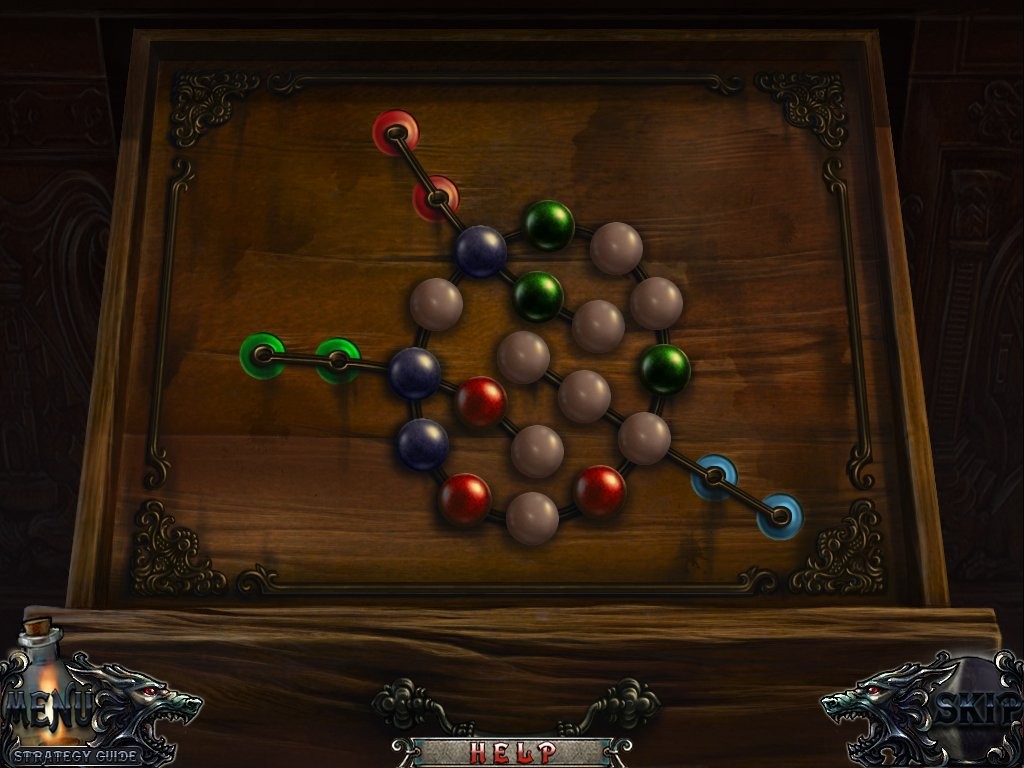
At first the game feels much like a standard adventure, as you’ll need to roam the island’s beaches, bathhouse, villa, and damaged yacht in search of clues. Hotspots don’t sparkle, so you’re on your own for collecting inventory needed to smoke out bees or distract poisonous ants and snakes, though the rechargeable hint option will highlight interactive objects on screen. Many items lead to logic puzzles, which are sometimes quite clever – a three-dial safe clued by Greek myth is a nice variation of a common challenge – but many feel shoehorned in. The killer is not daring you to a battle of wits, so there’s no real reason given for the various sliders, coded symbol locks, and misaligned ring puzzles (among others) in your path. All can be skipped, but few will slow your progress down for long. Your current objective is always clear, displayed rather intrusively each time you change scenes. The map shows locations with active objectives and allows you to quick travel between them, which is useful, though there’s a recharge time between uses, which is not. There’s a fair bit of backtracking involved, as you’ll often need to retrace your steps, usually to find new hidden object scenes that have popped out of nowhere, even if you’ve cleared them before. These screens are largely standard lists of random items, though you’ll often need to collect multiples of the same thing. Some can only be achieved by combining two or three objects together, and others are posed as word riddles to deduce. Each search also contains a jigsaw map piece that will need to be assembled by game’s end.
Along the way, you’ll also collect mosaic tiles that offer bonus facts about such things as Greek myth and culture. These can be completely ignored, but you’ll probably want to collect them just so they’ll stop cluttering up the scenery. Unfortunately, Tantalus Island isn’t much to look at anyway. The locale is great, with its sunny skies, inviting seas, and distinctive stone architecture, but the lo-res graphics do the landscape no justice at all, offering only blurry views of this secluded paradise. Live actors are used, all fully and capably voiced, to portray everyone but yourself (who remain off screen and mute throughout). You’ll meet up with the school snob, the gabby gossiper, and other assorted friends at one point, and possibly again if they happen to turn up dead. Your interaction with them is limited to the occasional paneled cutscene, however, as the bulk of your time is spent entirely alone. Much of the plot is learned through notes scattered about, which leaves you feeling more like a spectator than an active participant in discovering the killer’s identity. And really that’s the biggest disappointment here, as there’s an interesting enough story being unraveled, but it happens largely independently of your efforts. True to the developer’s name, the game delivers a big finish, but it feels disproportionately rewarding for the amount you’ve actually contributed to it. It’s still a mildly entertaining adventure to that point, but it’s a shame that so much of it is spent not asking “whodunit?” but “whereisit?”
Latest Gaming Articles
All Articles