



Casual Collection – January 2011 releases


Phantasmat
Merlina McGovern
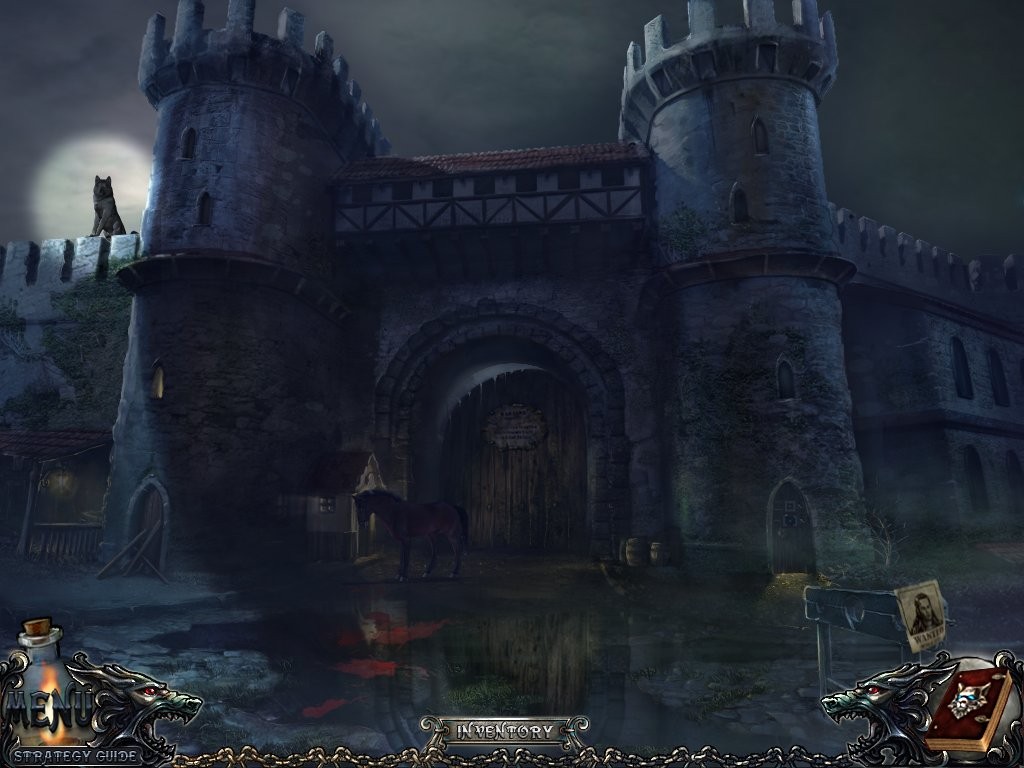
It’s your run-of-the-mill dark and stormy night when you take a wrong turn and crash your car. As you attempt to escape from downed electrical wires and make your way through a misty wood, you stumble upon a mysterious young woman who seems to be in the same predicament as you, and she needs you to call for help. In Phantasmat, a hidden object hybrid game from Codeminion, you’ll have to use your logic-deducing and item-spotting prowess to make your way to the none-too-subtly named Drowned Dead Hotel overlooking a cliff. Dark green seaweed drips from the eaves and candle light flickers from an upstairs window – is someone watching you? Aside from the dread that fills you when you see this dark, uninviting hotel, the strangeness mounts as you notice a church spire and roof tops poking through the waters swirling at the base of the cliff.
Progression through the game requires a variety of inventory items, including duct tape, jugs of water, gears, and hair pins just to name a few. While you will stumble upon some on their own as you explore, you will find the majority of them in the game’s frequent hidden object scenes. Many of these are only faintly integrated with the storyline, so you’ll find fuses in an old basement, but also roses and ducks. The designers have added a creepiness factor as you find yourself searching for blood stains, spiders, and (gruesomely enough) the sixth finger on a blinking doll. Unfortunately, you’ll have to revisit many of the hidden object areas, with some of the same objects even making repeat appearances from scene to scene. In a unique twist, however, if you don’t want to play any given hidden object scene, Phantasmat gives you an option to play a Match 3 sequence instead.
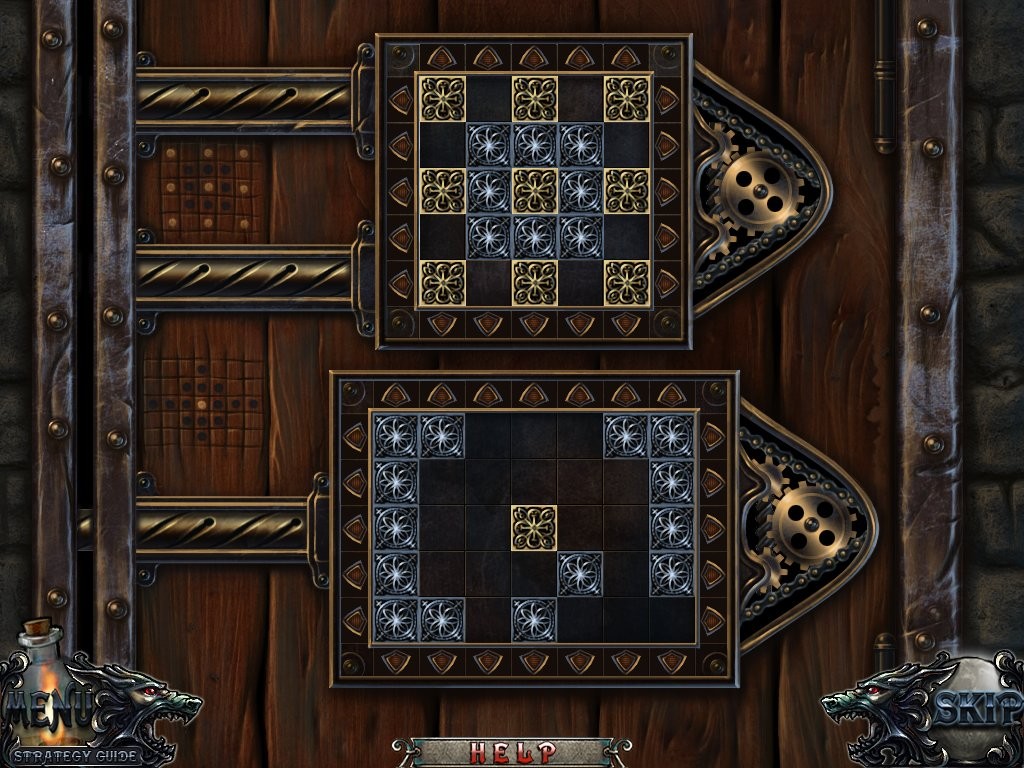
You’ll also encounter a variety of puzzles in your travels which shouldn’t prove too difficult, like filling jugs of water to the appropriate levels or using codes to open locks. There are also a few mazes with easily obtained directions and one music puzzle, which could be a stumbling block if you can’t read musical notes or play by ear. If you find that prospect daunting, the game has three levels of play. On the easiest level, you’ll have plenty of hints and time to solve hidden object scenes, along with a skip button for the puzzles. The middle level gives you fewer hints, and if you click too many times in a HOG scene, you’ll have to wait a few moments before you have control over your pointer again. On the hardest level, you get no hints and can’t skip the puzzles. You’ll also be given a time limit for the hidden object scenes, and if you click too many times, you’ll lose precious time. Fail to find all of the objects in time, and you’ll have to replay the scene again. The Collector’s Edition gives you an integrated strategy guide as well as a fairly extended additional storyline to play, where you’ll learn more about one of the main characters and get a slightly different view of the events leading up to the town’s demise.
You’ll need to do a lot of exploring as well, including several rooms within the dilapidated art deco hotel and the surrounding environs. You’ll also travel down to the little town that appears to have met some type of watery death. The dark artwork is awash in seaweed greens and watery blues. Against this backdrop, the designers have dropped in splashes of neon colors like the signs of an old bar and pet store. You’ll also experience visions in washed-out greys and black and white with splashes of blood red, and meet a limited cast of colorful characters all voiced by terrific actors. The ambient sounds and music are suitably suspenseful, with creaking doors and plucking strings and deep, resonant wind instruments. Together these elements create an impressive atmospheric backdrop, and although the story would have been better served by more integrated challenges rather than repetitive hidden object hunts, this suspenseful tale filled with mystery and intrigue will keep you plunging through to the end.
The Stroke of Midnight
Jack Allin
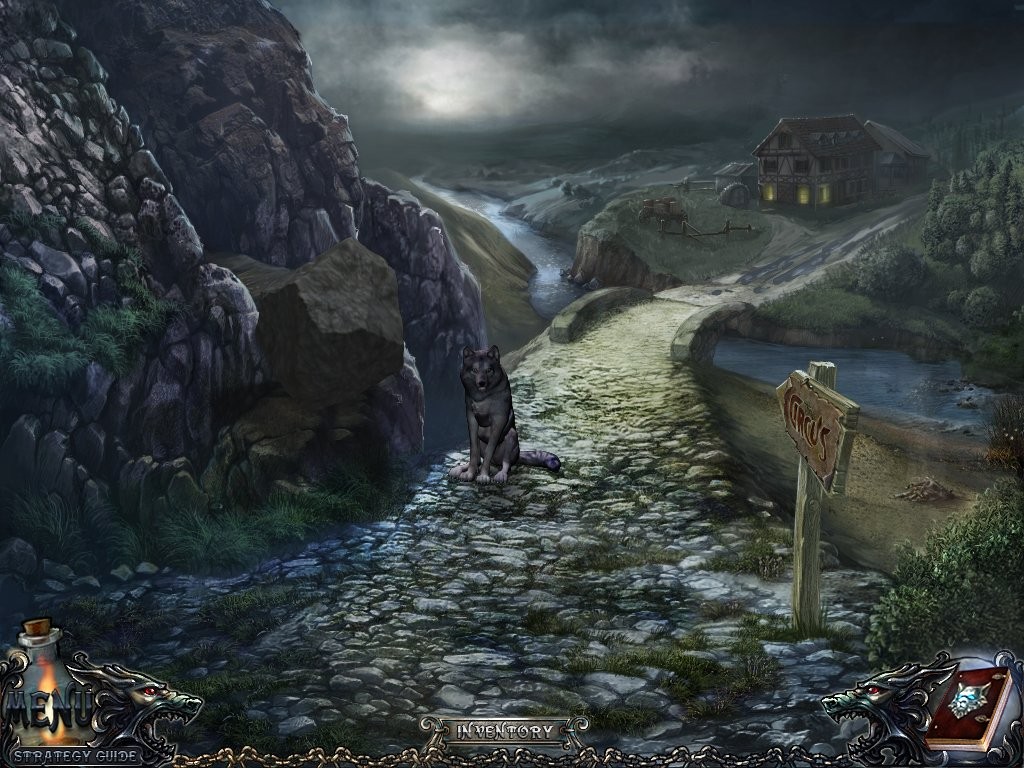
If you’re looking to stand out in the growing crowd of casual adventures these days, it’s probably not the best idea to cast players in the role of a romance novelist seeking inspiration on a dark and stormy night in a haunted Romanian castle, where she must uncover the wrongs of an ill-fated past in order to reconcile two doomed spectral lovers. Been there, done that, got the Harlequin. But while its premise is entirely clichéd, in some respects Nikitova Games’ The Stroke of Midnight is a refreshingly different sort of lite adventure than the standard hybrids we’ve been getting of late. It’s still a combination of item application, scavenger hunting and periodic brainteasers, but its unique presentation is what makes the game particularly noteworthy.
You’ll notice the difference right from the start. Instead of the usual slideshow format, here as you approach the forbidding stone castle, the camera swoops along the path in smooth 3D, depositing you at the locked front doors. While really just a cosmetic change that doesn’t affect gameplay, this kind of dynamic camerawork continues throughout the game, giving the adventure a much more cohesive feel. You can even pan the camera around slightly in each location by sliding the cursor to the edges of the screen. Better still, this fluid perspective comes with no loss of graphical sharpness as you explore the castle’s ballroom, library, armory, and indoor garden, among other rooms, as each are nicely rendered in realistic detail. Using the same engine, the castle’s ghostly residents frequently appear to enact the events of the past, providing a seamless connection between worlds. The developers have made clever use of the camera in other ways as well. Instead of merely carrying around your journal as an ever-present icon, here the journal “follows” you to each new location, reappearing somewhere nearby in each new room. The hint feature is similarly integrated right into the environment, as every stop contains a mirror that outlines new riddle-like objectives. Step forward for a close-up view, and you can click the text for a hint to the current task. It’s never explained how or why these things are possible, but it’s a ghost story, so suspending disbelief a little farther is a fair tradeoff for the variety.
While the camera may be more mobile, however, you are not. Where many casual games offer some freedom to explore, here you’re strictly limited to a single room at a time. Often there are multiple goals to achieve, but even these generally need to be accomplished in order. Whether it’s clearing cobwebs, repairing broken stained glass displays, or rearranging family portraits, it’s always fairly clear what you should be doing. There isn’t even an inventory per se. Instead, after clicking any functional object, it follows your cursor until you left-click on the correct hotspot or right-click to release it. This degree of streamlining does make the game fairly easy, and hotspots sparkle occasionally to make it easier still, but there are some tougher challenges mixed in. You’ll need to solve different types of jigsaws, align imbalanced rings, crack a math-based book code, and even tune a harpsichord. The latter requires at least a reasonable ear, but if you happen to be tone deaf, you can skip this or any other standalone puzzle after a short time. The game’s own music is a fairly subtle blend of haunting piano and violins, but often there is just silence, letting you soak in the ambient sounds of pouring rain, rumbling thunder, and crackling fireplaces. The ghosts are all fully voiced in thick eastern European accents, in stark contrast to the protagonist’s American-sounding narration.
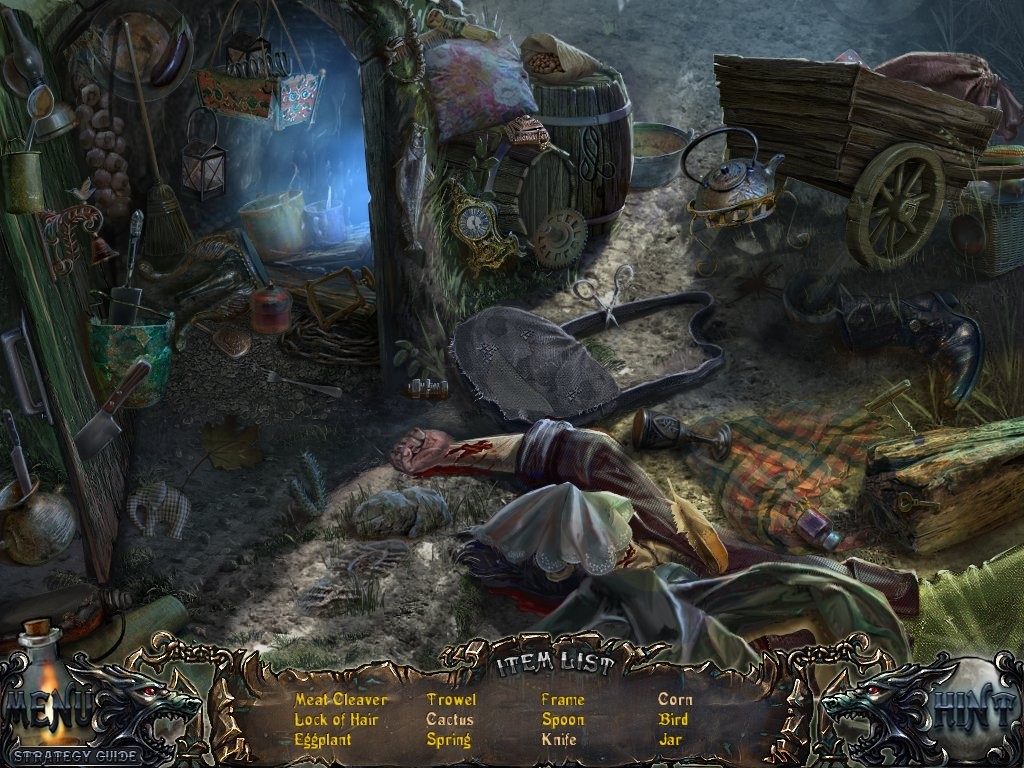
Along the way, several tasks are repeated multiple times, like calculating ingredient weights and concocting formulas in the laboratory, or solving a folded paper puzzle to reveal hidden messages. This repetition extends to the hidden object searches as well. Each location contains a standard list of items to hunt on close-up screens that do not scroll. Most objects are clearly visible, though the occasional word may send you scrambling for the hint button… only to find there isn’t one. Thankfully, clicking any word on the list will highlight it onscreen, though this feature is never mentioned anywhere and can be easily overlooked. You’ll have to search many of the same scenes twice, even looking for some of the same items, as the adventure begins to bog down in the middle by sending you back to all the same locations again. It picks up again in a big way near the end, however, rushing headlong towards the finale as a (non-existent) timer urges you to value each second. It’s never clear what your contribution to the story actually is, but it’s nevertheless worth seeing through its three-hour play time. The Stroke of Midnight sure won’t win any marks for story or gameplay originality, but if you’re looking for something – anything – a little outside the casual norm, this game is worth looking into to see what makes it tick.
Latest Gaming Articles
All Articles