



Casebook Trilogy: Special Edition – Sam Clarkson

Adventure Gamers: Tell us about Areo and how a little indie game company formed itself in New Zealand. What projects were you involved in before Casebook, and how did this series finally come about?
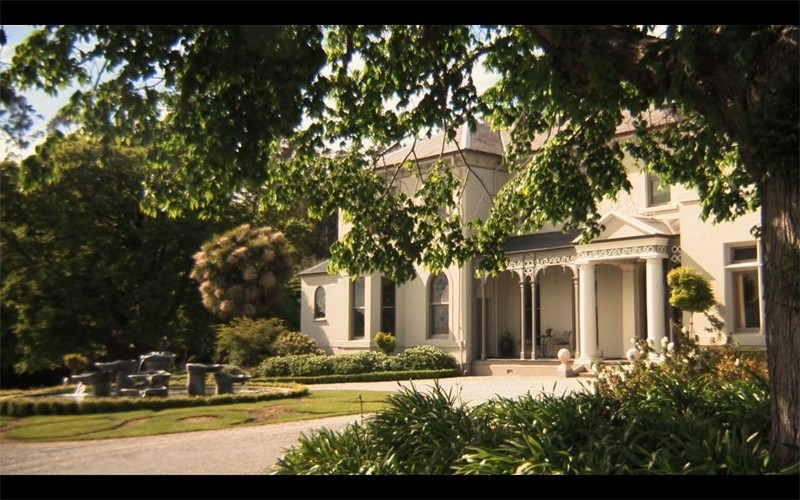
Sam Clarkson: Areo is short for Areograph, which is what we call the process used to create the photo-based environments seen in Casebook – as in, “The crime scene set is prepped and ready, let’s Areograph it.“
My friend Luke Reid had come up with an idea for making games using photography-based graphics, so we formed Clocktower Games (now Areo) in late 2006, and did some local fund-raising (mainly off dairy farmers – we have a lot of cows here). Once we’d convinced investors that our crazy idea would work, the engineers set about building a way to capture the images while the rest of us came up with a game design that would work within the confines of the technology.
My background is in short-films, and I worked on documentaries for National Geographic and the Discovery Channel for about five years, so I was brought on under the broad title of ‘Creative Director’. For a number of reasons we thought a casual(ish) episodic game was the thing to do. This meant we had to keep the game small enough to download, which meant we couldn’t feature many environments, so we settled on forensics as a theme, seeing as you could spend a long time in each environment, scouring every corner for clues.
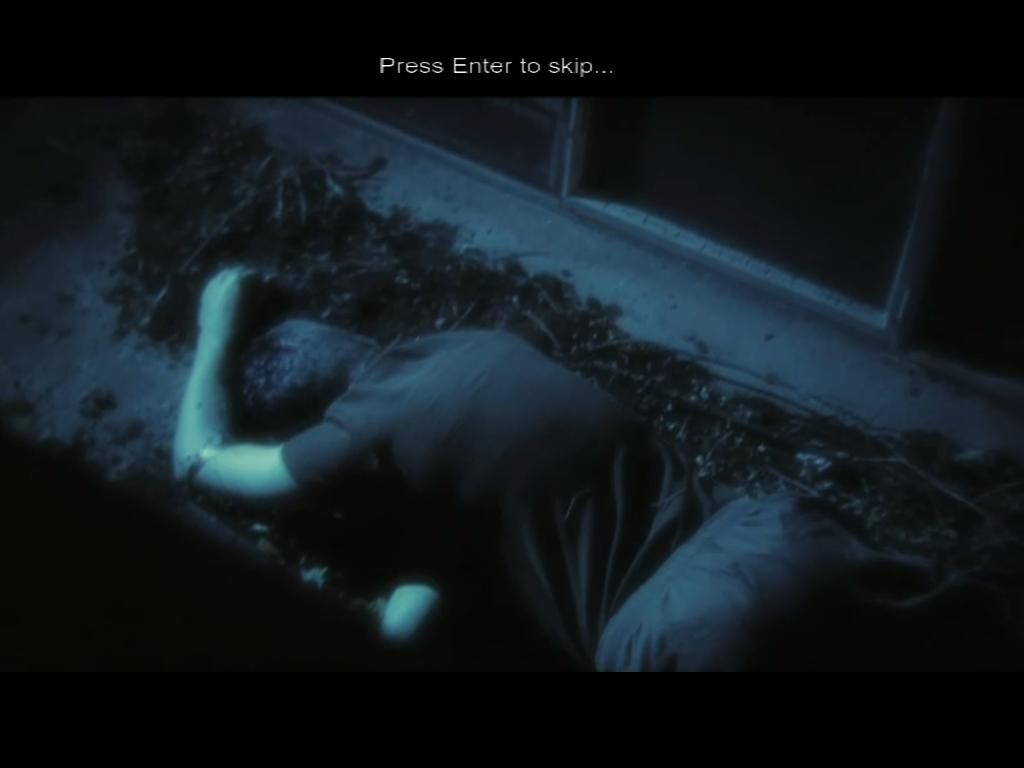
We brought Henry Feltham on board as writer, who like the rest of us had no experience making games, but loved playing them as much as we all did. Henry and I threw around a dozen stories until we settled on a modern riff on Hansel and Gretel (aka Harry and Greta – the kidnapped children in Casebook Episode 1).
Once the game design document was complete, we had a small team of programmers and artists building the game, and a production designer built our crime-scene sets while I planned for the first film-shoot, which I would be directing. We knew that each episode would feature a preview of the next episode, so we had to write and shoot the second episode straight after Episode 1 was shot.
AG: The first Casebook game surprised us with its original use of life-like 3D environments the player could scour high and low. What can you tell us about the Areograph technology developed for this series?
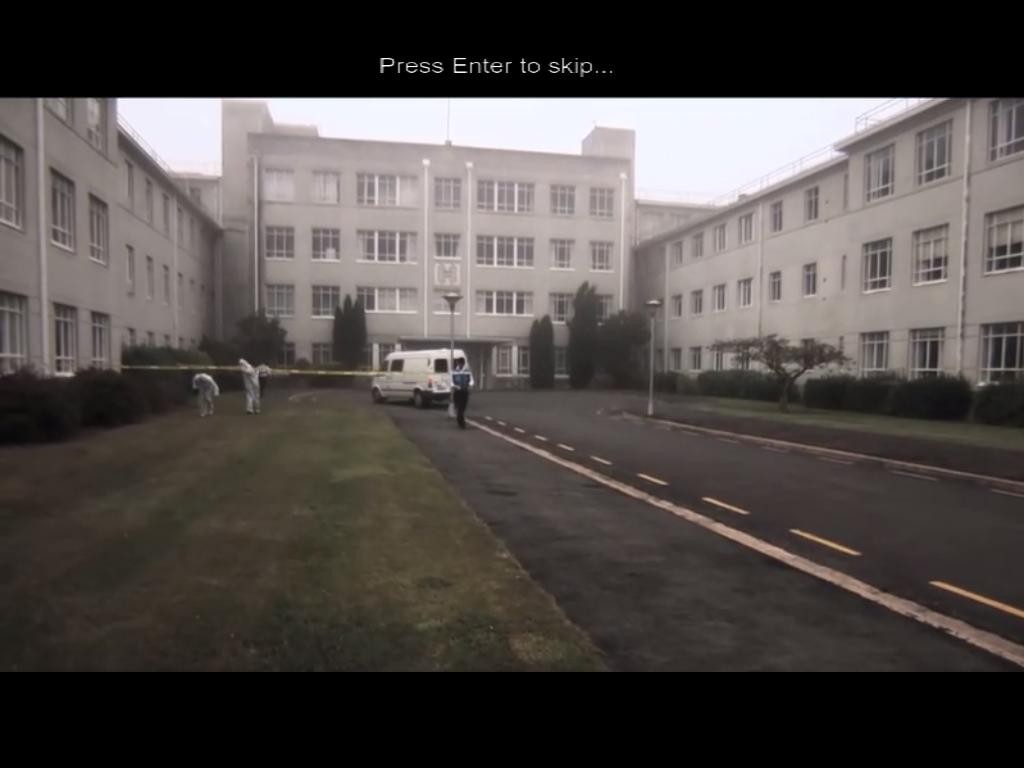
Sam: Over ten years ago, Luke (now CEO of Areo) had a vision of capturing real-world environments for use in computer games. Originally he built a little robot out of a speaker box and attached some wheels to it. It had a camera mounted on it facing upwards, above which was a reflective, curved dome, so that he could move the robot around the room in increments and collect 360-degree photos. I’m not sure what happened to that little robot, but about five years ago, Luke and his brother Justin decided to build a more advanced version of the same concept, and this time he turned out looking more like Number 5 (from the Short Circuit film), due to his tank-like design.
Our robot could be programmed to a grid pattern, and then you’d set it off and a few hours later you’d have hundreds of photos of a small area. Though one major problem presented itself: the robot could see itself. So when you walked around the captured environment, you could see a robot under you if you looked down… clearly this needed some re-thinking, but the general idea worked.
So once we had some funding, we built a massive, grid-like structure which could be lowered down onto the top of film-sets. Attached to the ceiling grid was a camera at eye level. This camera could be set to do a sweep pattern of the room, collecting thousands of photos. The hard part was deciding what to do with all that data once we had it. But eventually the playback software worked nicely, and we were ready to capture our crime-scene sets for integration with the game.
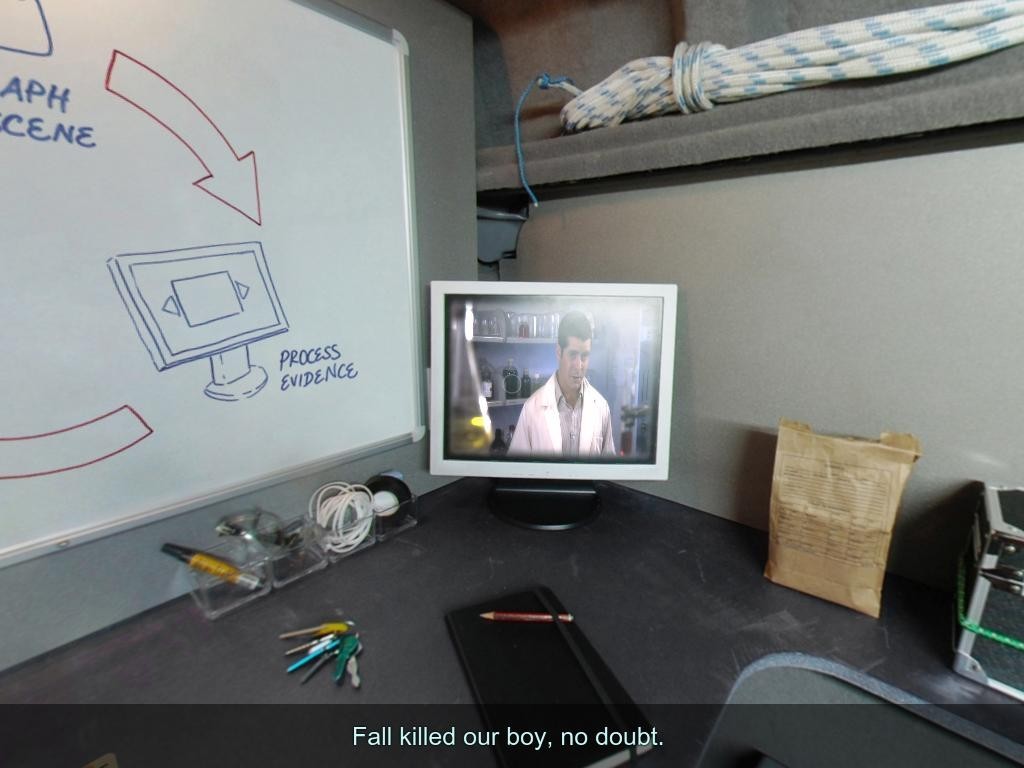
AG: Why did you choose to have the evidence processed via mini-games? Was it a conscious attempt to appeal to casual gamers? What do you think of the traditional puzzle dynamic in point-and-click games, and why did you decide not to incorporate some of those?
Sam: Our approach was to combine two game models that we thought would go together nicely, and which would complement the ‘crime show’ feeling of Casebook; namely the “episodic” model, in the vein of Telltale, combined with a more “casual” play style.
When we looked into forensics, one thing really stood out: it involves a lot of repetition. The forensic scientists working on homicides have a lot of work on their hands when presented with a crime scene, particularly one that has seen a lot of human traffic. For example: if a muddy shoe-print is found, that alone means they have a ton of work to do. In real life this could involve having to collect footwear from everyone who’s a suspect, which could mean photographing and logging anywhere between 5 to 50 pairs of shoes. Obviously we reduced the amount of ‘busy work’ that’s inherent in real forensic investigations, but I thought we should try to reflect the reality of the job, which is all about being extremely thorough. I felt that mini-games best represented this process.
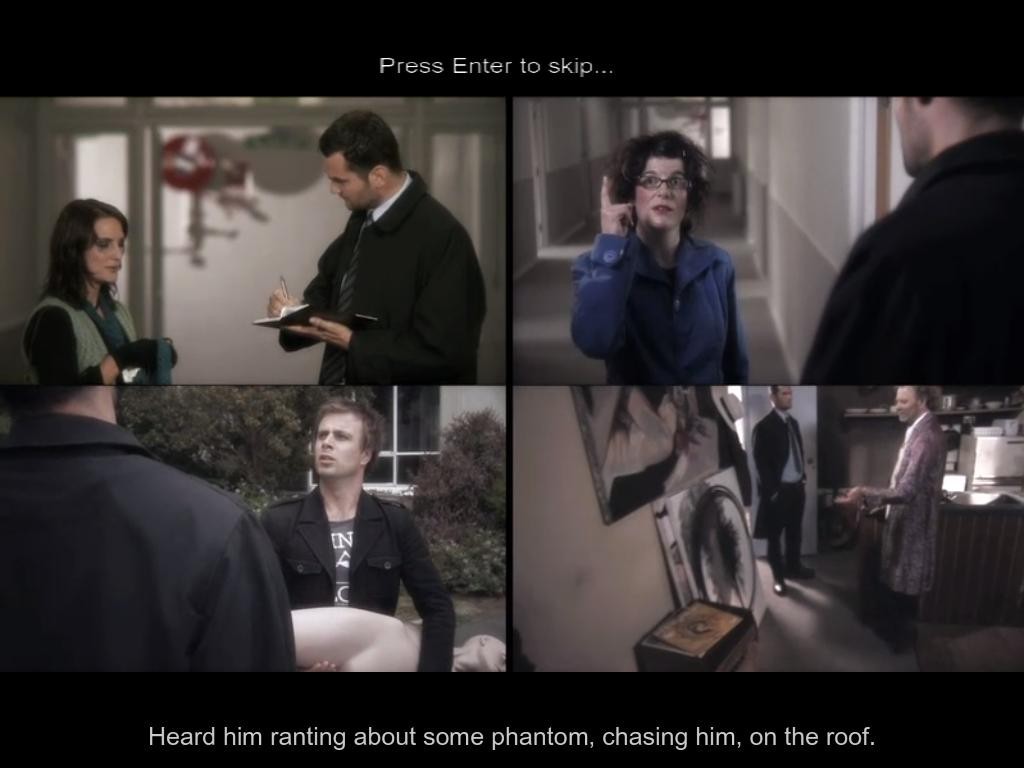
Regarding traditional point-and-click puzzles, we mainly avoided this out of a desire to simplify the exploration and collection of evidence. After playing several CSI-type games, one thing stood out to me: I was spending a lot of time trying to figure out which collection tool I should use to pick something up and it wasn’t particularly fun. So I decided that evidence collection in Casebook would mimic the crime scene photographer’s job. Admittedly, we were taking some artistic licence with this approach, but it meant that the evidence collection process could be fairly streamlined. Then, inside the mini-games themselves, the relevant forensic tool (swab, dusting, etc.) would be automatically selected – because I felt using the tool was far more interesting than choosing the tool.
The Special Edition‘s Evidence Folder (where players link evidence items and suspects) used to be almost entirely automated in the previous edition of Casebook, but the new version is essentially an old-school inventory where you must figure out which items can be combined, which makes Casebook more like classic point-and-click adventure games and encourages more lateral thinking than it used to.
AG: The series walks a thin line between games and movies. What do you think of the ‘interactive movie’ label, and do you think it accurately describes Casebook?
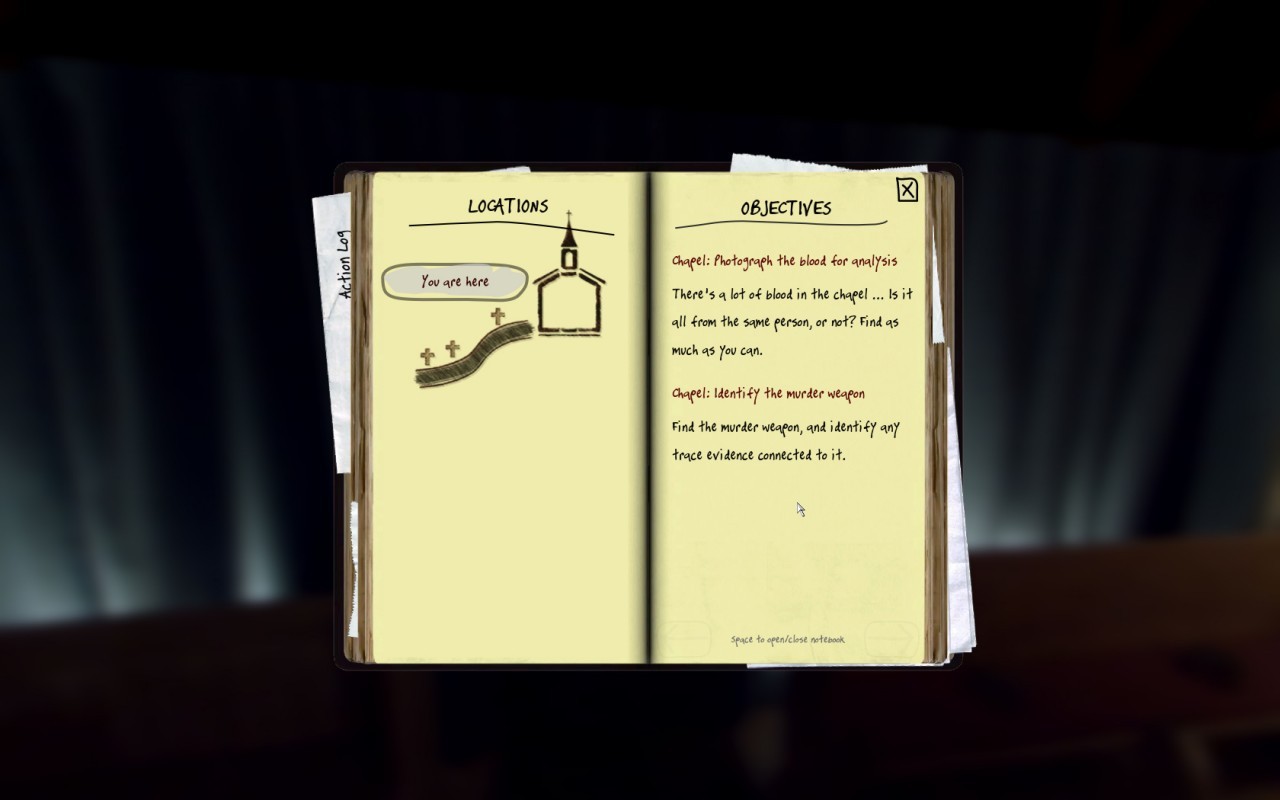
Sam: The idea of ‘interactive movies’ is fascinating, but I’ve yet to play one that truly taps into the massive potential of the merging of games and film. I like to think that Casebook is a step in the right direction, but you need massive resources to record enough diverging story paths to truly create the feeling of an open-ended interactive drama – something which was beyond our means. So I wouldn’t define Casebook as an interactive drama, mainly because your actions don’t often influence how the dramatic cut-scenes play out. I see Casebook as an adventure game which is given its atmosphere and emotional depth through the use of cinematic elements… something which I personally feel can’t quite be achieved with polygon characters just yet – but clearly many gamers wouldn’t agree with that.
Obviously something like Heavy Rain has achieved a very cinematic feeling through the combination of motion-captured performances, combined with a pretty good understanding of film conventions, and I hope this means more developers will explore this game-meets-film territory. However, I still can’t help but agree with some reviewers who felt the action scenes reminded them of interactive animations like Dragon’s Lair. But perhaps Heavy Rain is only limited by the way we interact with games right now, namely with a controller… we may not really experience a truly immersive drama until we can control them in a way that feels more human, but who knows what form that will take.
Latest Gaming Articles
All Articles