



Bob Bates – Thaumistry: In Charm’s Way

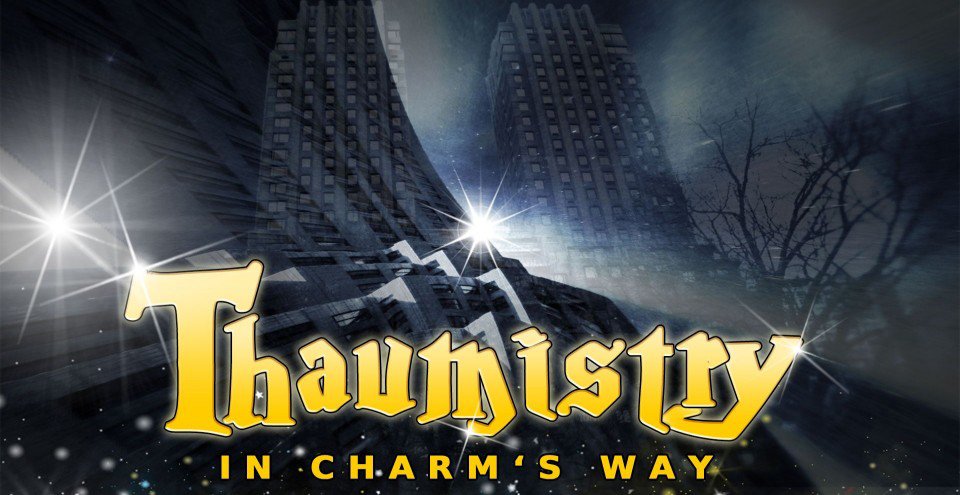
Following our exclusive announcement of his new text adventure game earlier this month, acclaimed industry veteran Bob Bates has now launched his Kickstarter campaign for Thaumistry: In Charm’s Way. Originally called Bodgers, Thaumistry marks Bob’s welcome return to his Interactive Fiction roots and the heyday of Infocom. While our previous interview with Bob contained an in-depth look back at his impressive past, it’s time now to look ahead to a bright future as we discuss his upcoming magical comic fantasy adventure over a decade in the making.
Ingmar Böke: Welcome back, Bob! By the time our readers get their hands on this interview, Thaumistry: In Charm’s Way (formerly known as Bodgers) will be live on Kickstarter. Please describe the game and its story in your own words.
Bob Bates: Hi! Thaumistry is a brand-new, full-sized comedy text adventure game, a game that I think we would have been proud to publish at Infocom or Legend Entertainment. Thaumistry is very much in the style of the games we were doing at that time, so it will be very familiar to the fans of both companies.
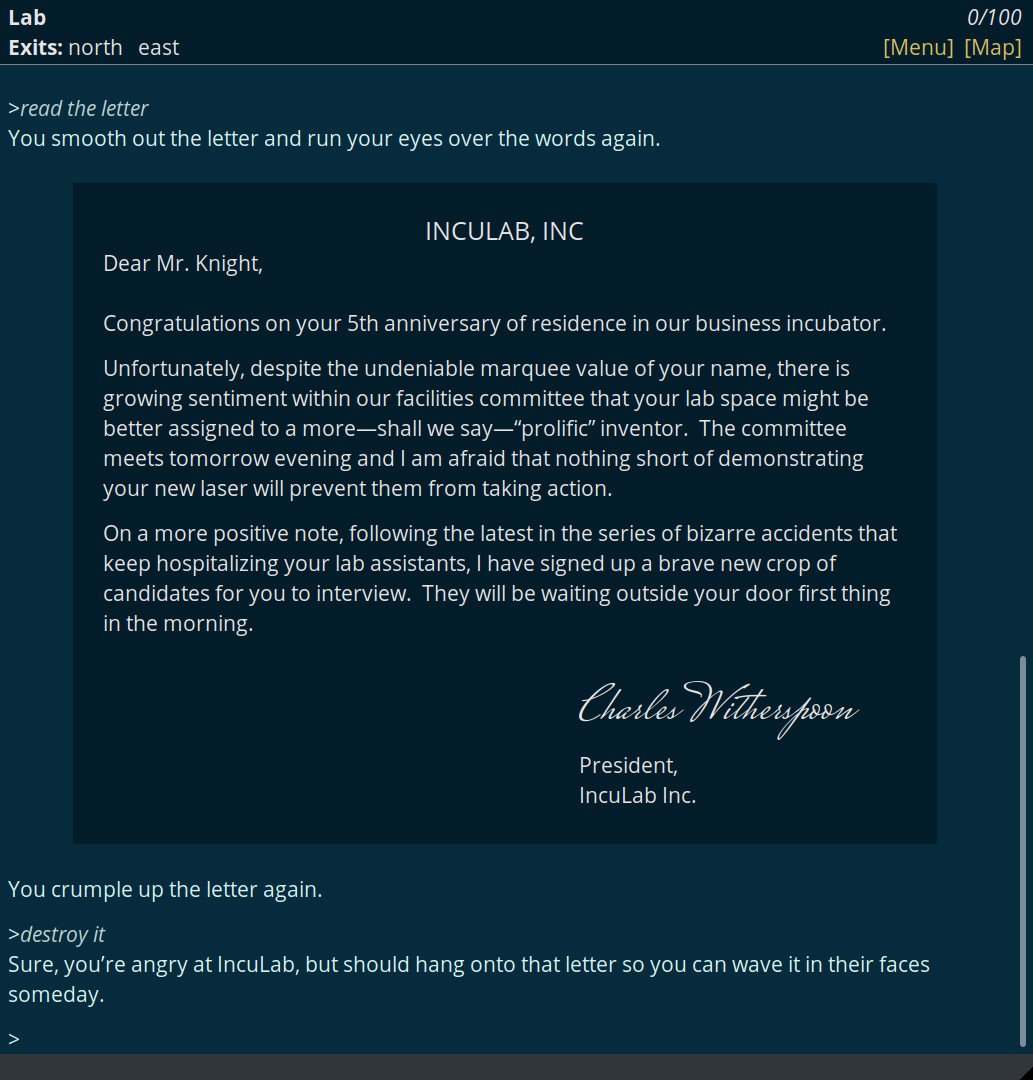
It’s a modern comic fantasy set in New York City. The player character is named Eric Knight, and he is a magic user, but doesn’t know it. Things kind of go wrong when he’s around. Computers turn off when he enters a room or doorknobs fall off in his hand when he tries to use them. Odd things are happening, and in the first scene of the game somebody comes in and says, “maybe this is happening because you may – secretly – be a user of magic.” The other people like you are called Bodgers, and throughout the course of the game you explore your identity as a magic user, and decide whether or not you’re in fact a Bodger or want to be a Bodger.
The immediate threat, though, is that the existence of Bodgers is about to be exposed, which would be a very bad thing for them because people in the non-magic world have traditionally reacted to magic users in very nasty and mean ways, even though Bodgers only use magic for good. A Bodge is like a kludge or a hack, and a Bodger’s goal is to make some small thing go wrong so that some big thing will go right; a small mishap that will turn into something that’s of great benefit for a lot of people.
Ingmar: This might seem like an unusual genre to tackle in 2017 after working on many big projects following your text adventure days. What motivated you to start Thaumistry?
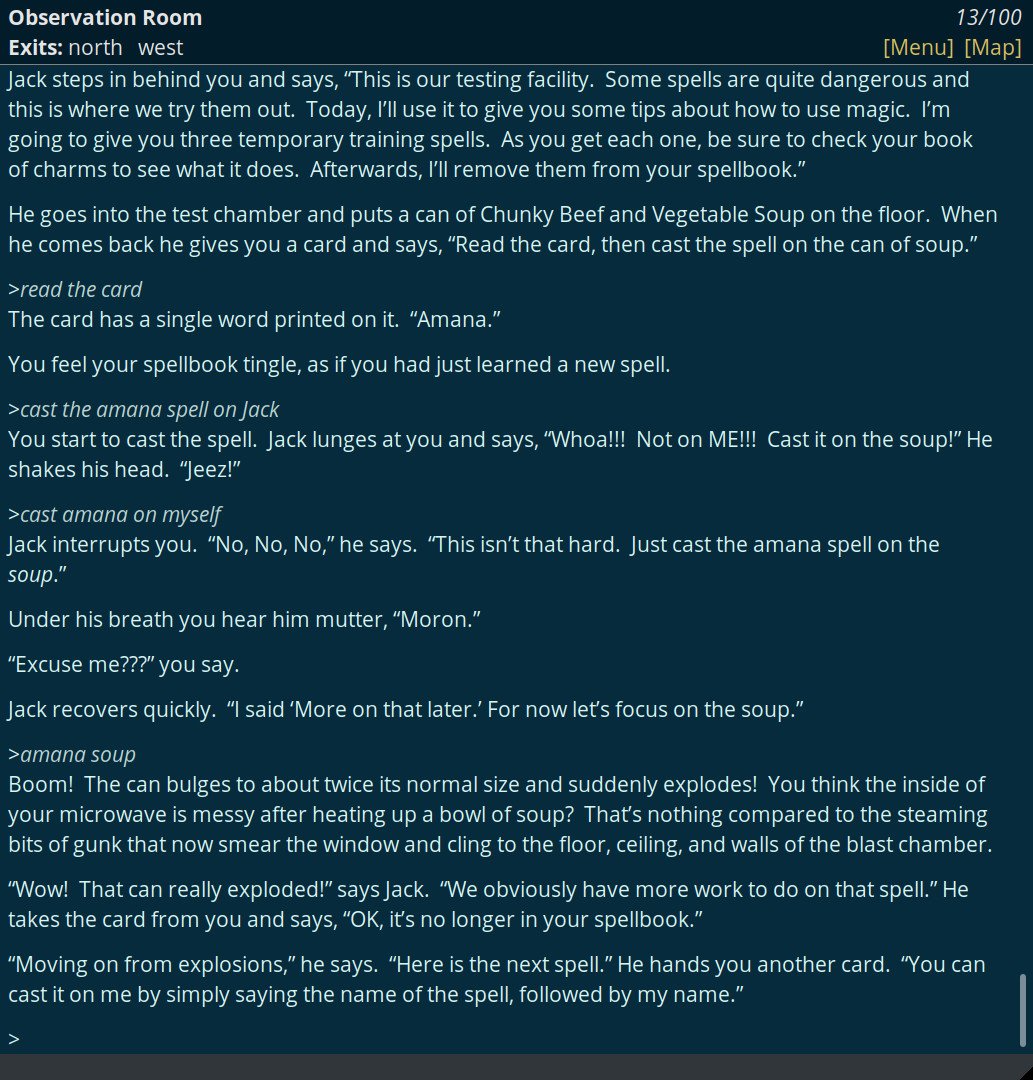
Bob: Parser-driven games have a unique charm to them. They’re fun to play, and fun to make. When you work on a big AAA project, there are potentially hundreds of people working on the game. It’s a huge collaborative process, which has its own joys and rewards, but it’s a very different experience than making a text adventure game. Making a game like Thaumistry is an intensely personal experience. The way I see it is that it’s just me and the player on the other side of the screen, and we’re talking back and forth to each other. I like to think of the player imagining there’s this little guy in the box who’s talking back to him, and that guy is me.
It’s hard to have a personal connection with the designer of a AAA game. You know, when you’re playing Call of Duty, Assassin’s Creed, Battlefield or any of the huge games, as a player you don’t feel as if you’re talking with the designer or as if you’re in the same room with him. A parser-driven game, though, feels very open-ended. You can type anything you want, and create any input you want. Often the fun of these games is that you’ll think of something that’s kind of odd or crazy to try, and you’ll probably expect to get a default reply like “you can’t do that” or something like that. But when you make one of these strange inputs, if the author has anticipated that, and gives you a joke as a reward, that’s a unique and wonderful feeling.
I feel like we lost out in the industry when we went away from the parser. Brian Moriarty, another Infocom designer, used to say that, “in a AAA game you can only write what you can afford to show, and you can’t afford to show much.” So, in a big game, the cost for giving the player rewards for off-beat inputs is huge, while in a text game the cost is slight as you only need a few minutes and a bit of creativity, and suddenly you’ve got an interaction that somebody is really gonna enjoy. Throughout the course of doing all of these AAA games and Facebook games, I found they have their rewards, but they’re different kinds of rewards for me as a game maker. I just love making text adventures, and I just love sitting down, imagining what the player might want to try that isn’t the solution to a puzzle, but that he thinks will be fun, and then to give him that reward of making it fun is something I really enjoy.

There’s one more thing this style of game can have (others can too, but, again, they’re much more costly): there’s a much greater opportunity for depth of character for the non-playable characters. When it comes to non-playable characters in a role-playing game or in an action game, as a game designer you often don’t have the opportunity to give them the kind of depth that you would find in a novel or something like that; in a text adventure you can! You can learn about the backgrounds of characters and find out why they have done what they’ve done, and that’s a qualitatively different experience than a AAA action game.
Ingmar: What you just said brings back some of my earliest adventure game memories. I was born in 1981, and one of my first adventure games as a kid was the original version of Leisure Suit Larry 1, which contained a text parser. Keep in mind that I grew up in Germany, so this was before my friends and I had English classes in school. We were playing the game with the help of a dictionary, you know, and were just trying to type in all kinds of stuff we came up with. I remember some of the most rewarding things for us were responses to things we typed in even though they were not related to the main plot or any puzzles.
Bob: Yeah, and that’s huge fun for the player and the designer, too. You know, I’m sitting there saying, “what are they gonna try?” Let’s say I’ve given them a hammer, and they’re in a room with a window. Somebody’s going to try throwing the hammer through the window. It’s not going to be the solution to a puzzle, but somebody is going to try it, so you want to reward players for it. Especially when there are puzzles in a game, the player is going to spend much more time doing things that aren’t the correct solution to a puzzle than he does doing things that are the right answer. It’s my job to entertain the player while he’s not solving puzzles, and that’s great fun.
Latest Gaming Articles
All Articles