



Casual adventuring: cross-genre franchises


Adventure game protagonists sure have been busy lately. From Hercule Poirot to Sherlock Holmes, from Mata Hari to Leonardo Da Vinci and even Nostradamus, wherever you turn, you can’t help but find their latest exploits in games like Death on the Nile, The Mystery of the Persian Carpet, or Secret Missions…
Oh, these weren’t the games you were expecting?
I can’t blame you if you were expecting such titles as Evil Under the Sun, The Awakened, and Mata Hari. If you tend to follow only adventure game news, you may not realize that these prominent characters have been moonlighting lately in casual games. We’ve seen it once from Sherlock already, and recently the CSI New York crew and Nancy Drew have followed suit. It’s all part of the ongoing casual invasion that’s happening right before our eyes. Or perhaps happening while we’re not looking.
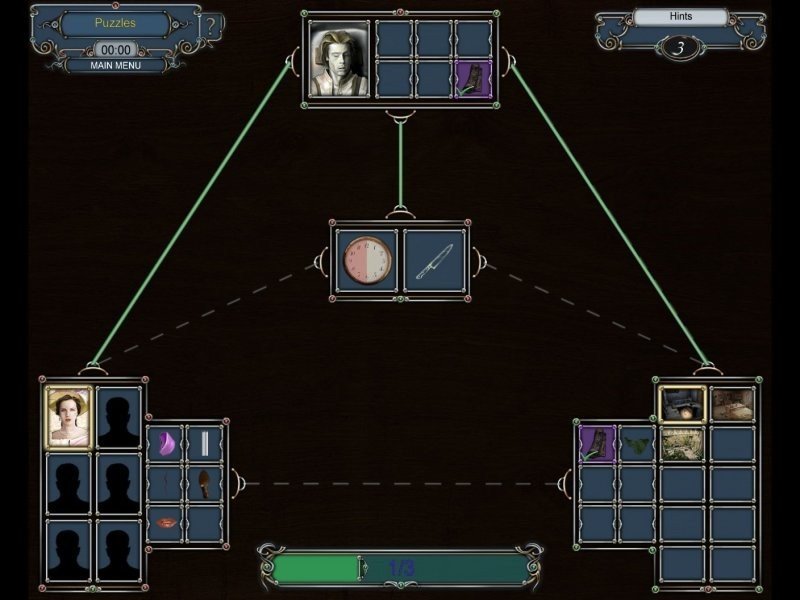
Rest assured, however, that Adventure Gamers has got your backs. In order to avoid further confusion between standard adventures and casual games among popular franchises, it’s time to take a closer look at the various “lite” games that might at first appear to be full-fledged new adventures but really aren’t, perhaps appropriately for the “hidden object” games that some of them actually are.
If you’d like to skip ahead, the following are included in this feature:
Page 1: Agatha Christie’s Hercule Poirot
Page 2: Sherlock Holmes
Page 3: Mata Hari
Page 4: Leonardo Da Vinci
Page 5: Nostradamus
Agatha Christie
And There There Were None: 2005 Adventure
Murder on the Orient Express: 2006 Adventure
Evil Under the Sun: 2007 Adventure
Death on the Nile: 2007 Casual
Peril at End House: 2007 Casual
Last year was the first since 2005 that we haven’t had a new Agatha Christie adventure whodunit. That void was quickly filled by Death on the Nile, the first of two Hercule Poirot hidden object games developed by Floodlight Games and published by Oberon. Originally released for download in 2007 and followed by Peril at End House, the subsequent boxed version of Death on the Nile can easily be mistaken for a new full-fledged adventure. It’s not.
Death on the Nile sends players aboard the S.S. Karnak, a luxury ship travelling the famous river in Egypt. Poirot’s knack for being in the right (wrong?) place at the right (wrong?) time prevails once again, as a jealous wife wounds her husband with a gunshot before being killed herself in her cabin that night. Being a Christie yarn, naturally your fellow passengers are an oddball sort who all have something to hide, and so it’s your job to scour the various areas of the ship in search of clues.
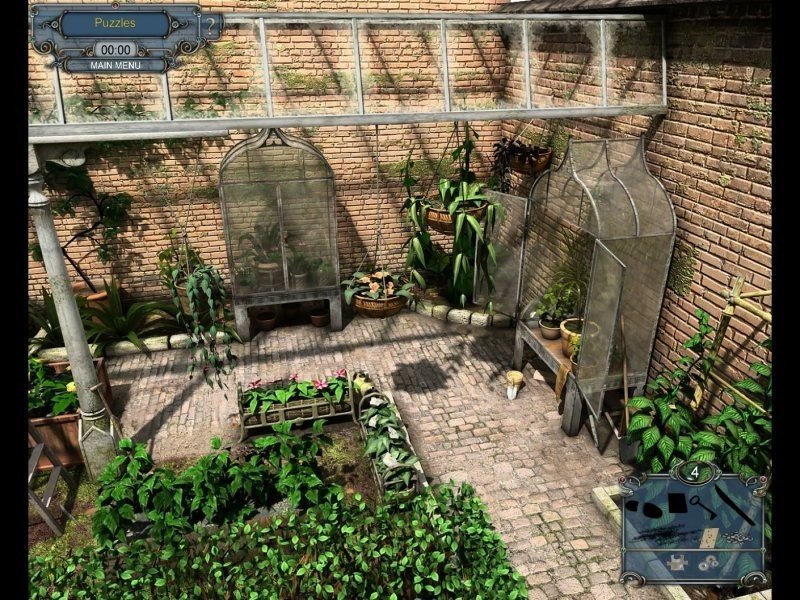
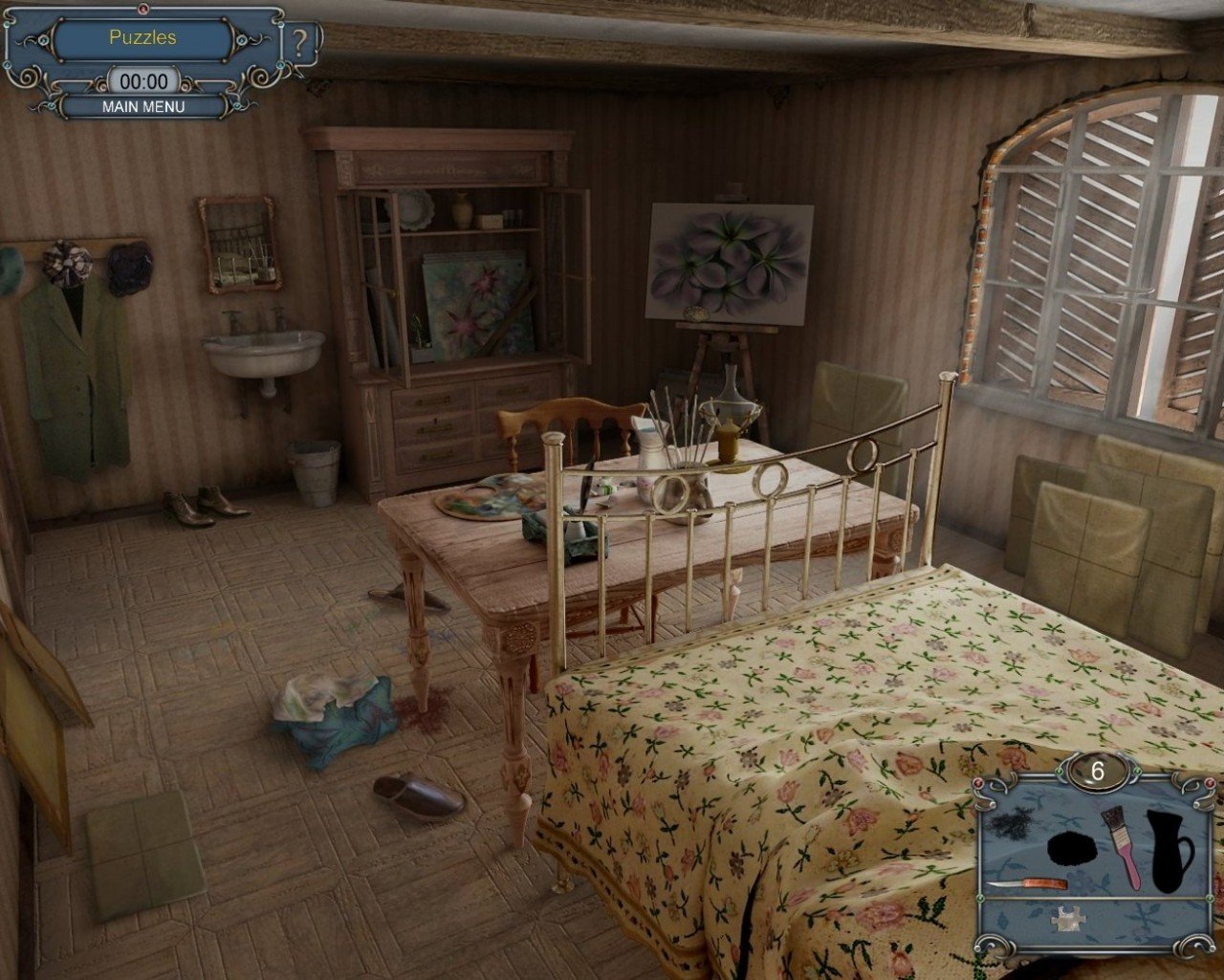
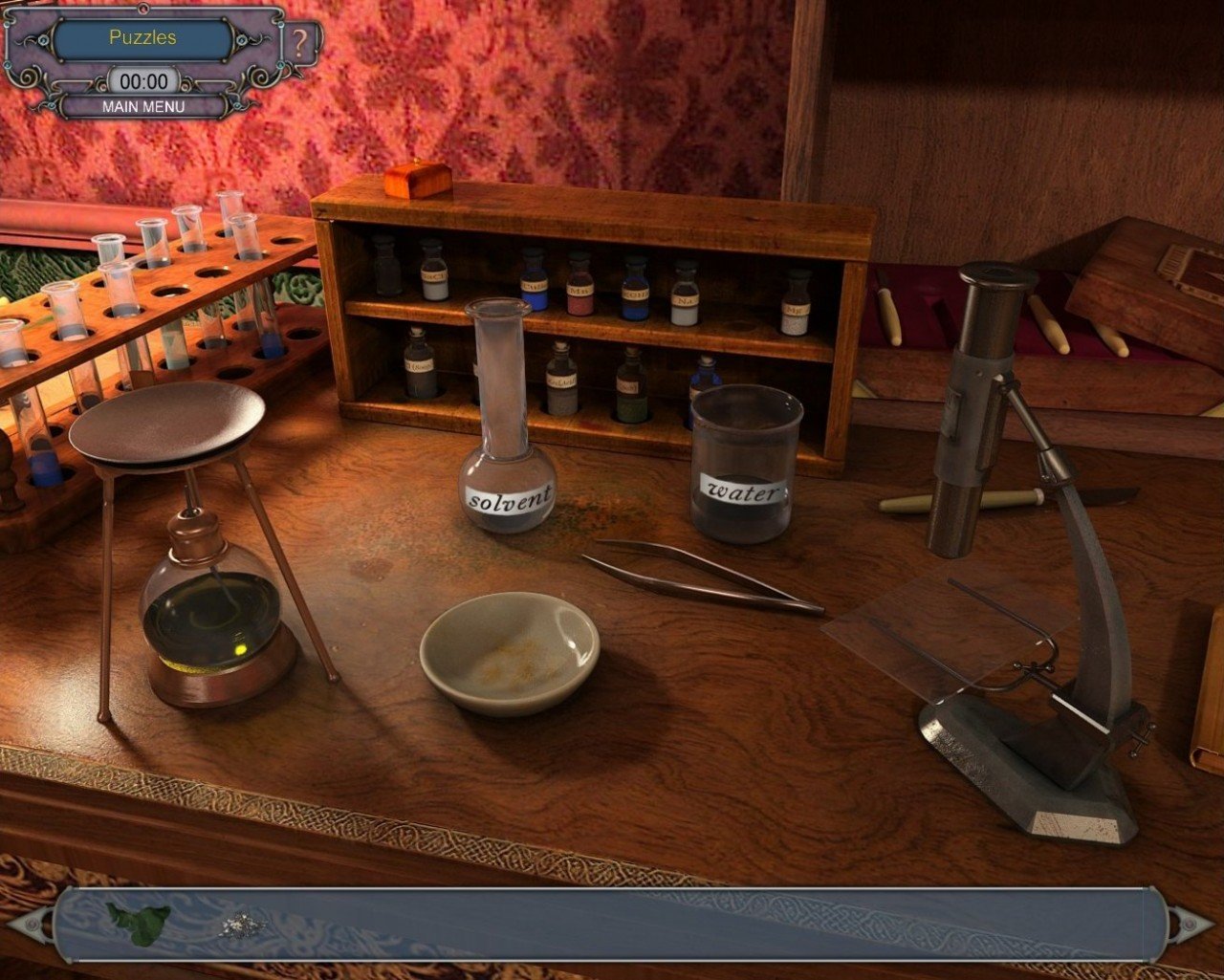
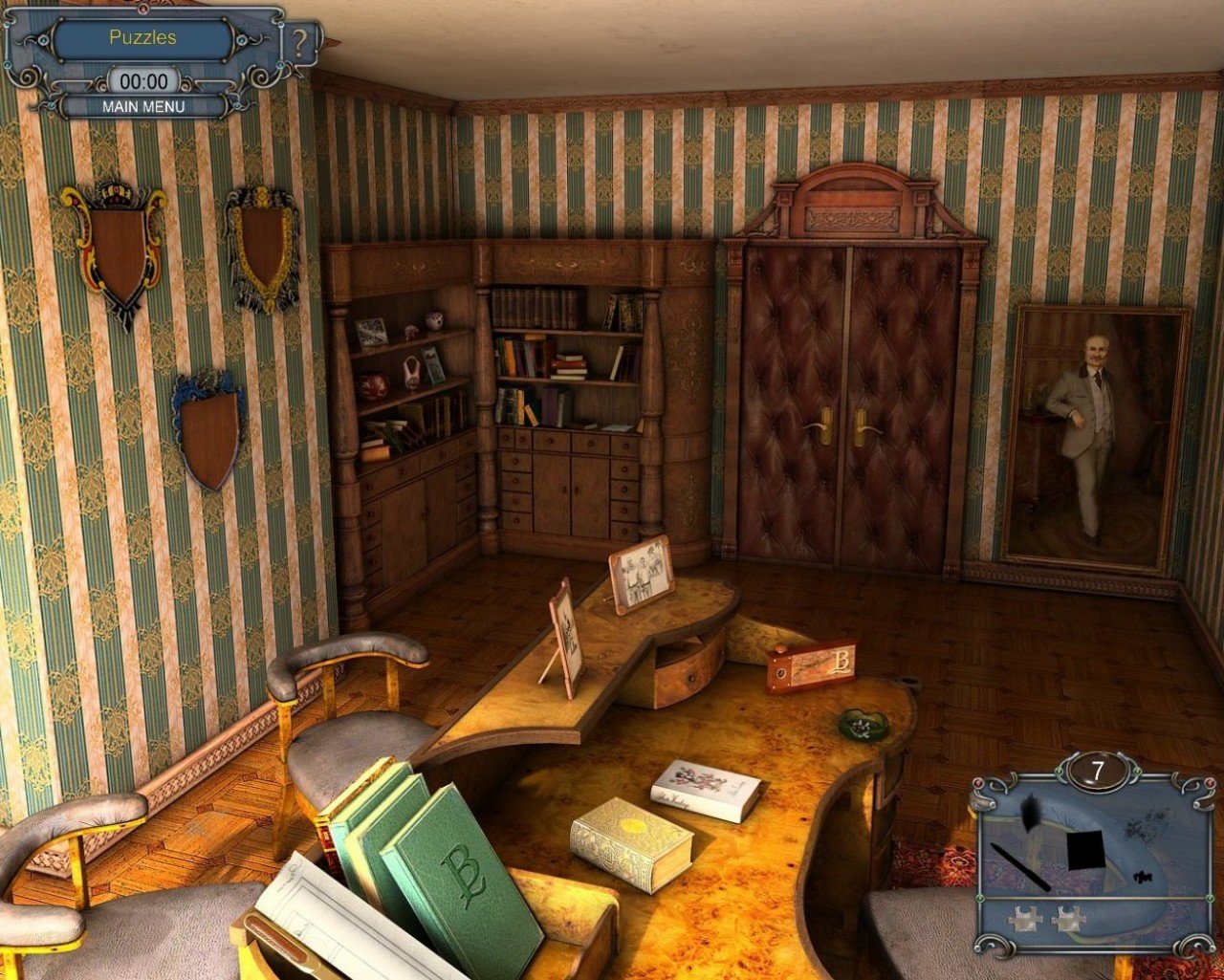
Of course, those clues are mixed in among an abundance of other junk. As a hidden object game, you’ll not only be looking for incriminating evidence, but lots of stuff with no use at all. It’s a completely traditional seek-and-find exercise: you’re given a timed period to sift through numerous cluttered screens to find every item on a pre-defined list, most of which are entirely arbitrary. The artwork is pleasant, the object concealment generally fair, and the activity fairly straightforward, although the game tends to rely a little too much on finding multiple items of the same type. Your list may look manageable enough until you realize you need to find six ducks or twelve ripped pieces of paper.
In each of the game’s eleven chapters, you’ll have five “hints” that identify a remaining object on your list, and while it’s unlikely you’ll fail a round as a result, you may find yourself using more than you think. As with most hidden object games, you’re out of luck if you simply don’t know what a “Calabash” or “Henna Hands” are, but you’ll also find yourself looking for undefined items like something that “rhymes with three”. Some of the objects are even part of the game’s few animations, which may seem either clever or unfair at the time. On other occasions, you’ll need to drag items into a sequence on-screen, but it’s often unclear where the items should go, and even the hints won’t help.
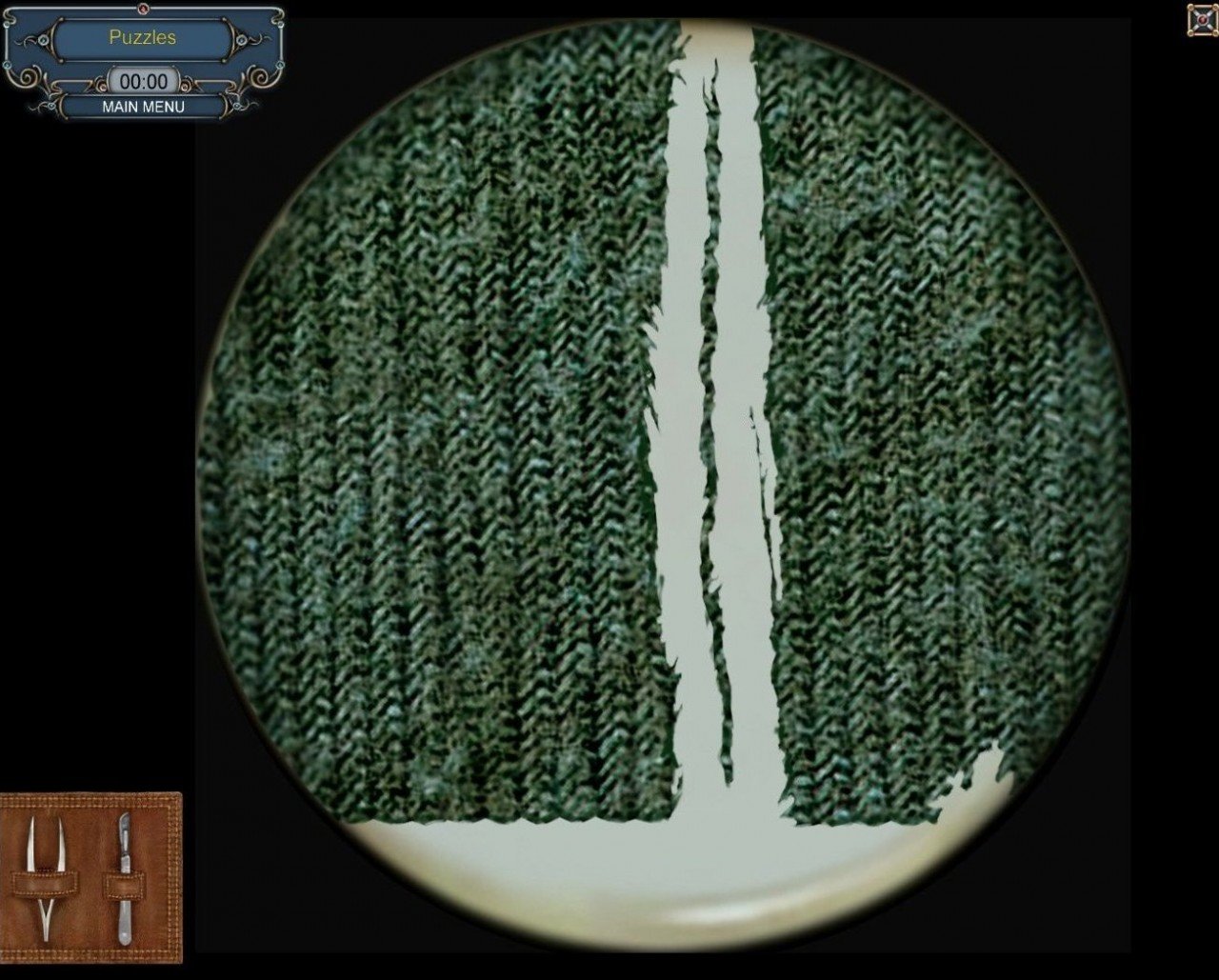
There are also a handful of other puzzles to round out each chapter. Most are either small jigsaws or match-clues-with-characters exercises, though there is the odd combination to crack and object to assemble, along with a few other standalone types. I found several of these poorly clued, but as a last resort, you can opt to skip any of these entirely with no penalty.
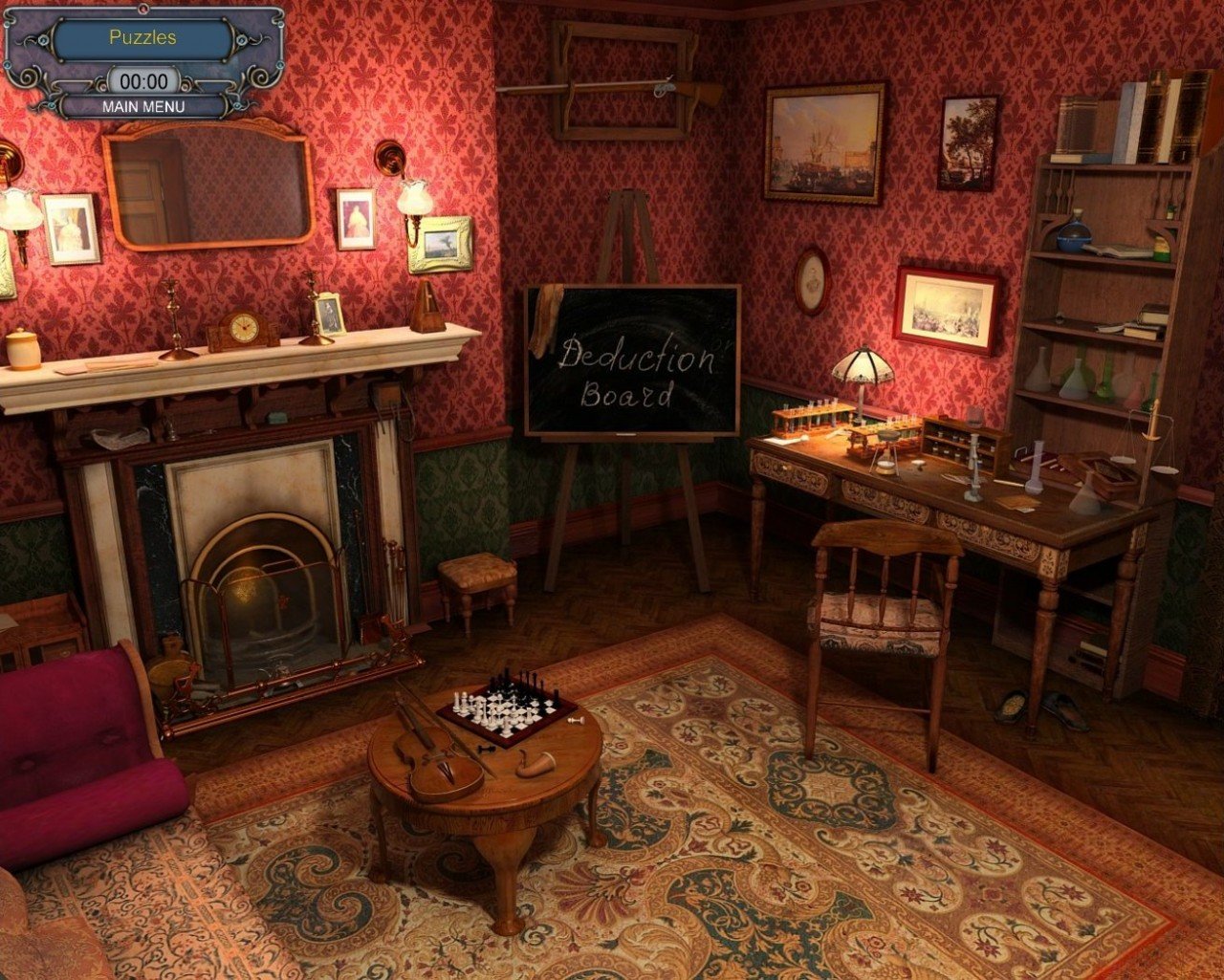
Naturally the murder mystery is a central component of the overall game, but only a peripheral element of the gameplay itself. A few comic-style, sepia-toned cutscenes move the story forward occasionally, and key plot points are fleshed out in random notes and articles conveniently left for you to discover. There is a “clue room” where you can review important items you’ve found (which the game determines for you), and a “salon” where you can ask questions of the ship’s guests. The latter makes for a nice change of pace, but it’s a little too sporadic to make the narrative very coherent. Even though the whole game only took several hours to complete, I was already forgetting who did what and why by the end. Luckily, the final reveal excused my confusion with a rather anti-climactic process of elimination task (which seemed a bit beneath Poirot but suited me fine).
Peril at End House is virtually identical to Death on the Nile, with only the details changed to suit the plot. This time around, Poirot is joined by his friend Captain Hastings, not to solve a murder (at least at first), but to prevent one if possible. The owner of the modest “End House” on the Cornish coast has been the near-victim of several suspicious incidents, and although her acquaintances all have skeletons in their closets, there seems little reason to wish harm on the likeable young lady, so the vacationing Belgian detective determines to take up her cause.
Gone from the previous game are the clue room and suspect questioning, replaced here by periodic “clue cards” which pop up whenever you discover an important item or piece of information. These can be reviewed at any time, but I missed the direct character interaction of Death on the Nile, however limited, as here I felt even less connection to the characters or the storyline. As a result, with so much revealed in so short a time, it proved even more difficult to follow the details unfolding.
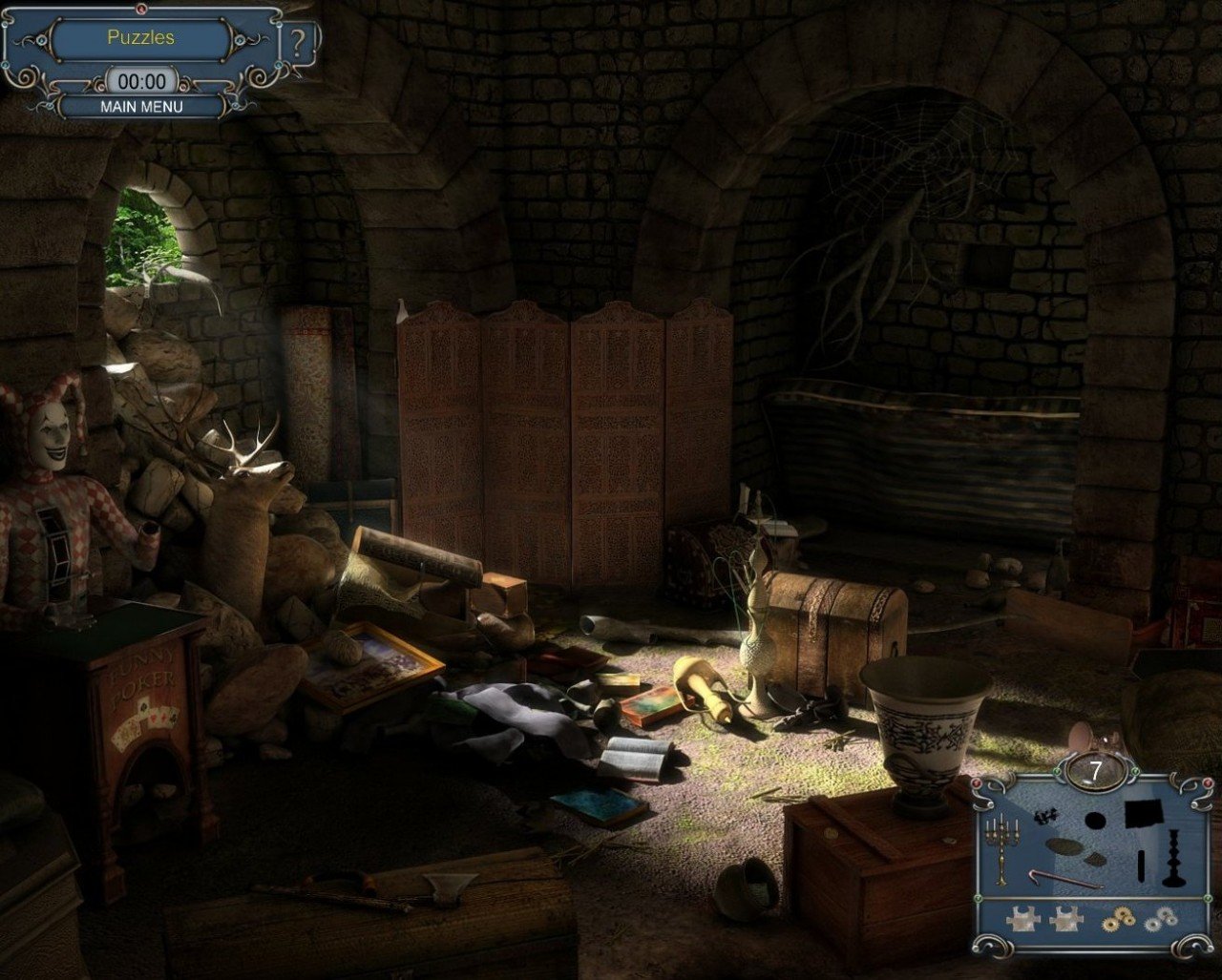
There are no significant changes to the hidden object gameplay or hint system, though the chapter-closing puzzles in End House include more pattern matching and dialogue fill-in-the-blanks exercises than its predecessor. Production values are similar as well, displaying attractive but limited-resolution artwork, light and often jazzy background music, and no voice acting of any kind.
If you like one of these games, it’s a no-brainer to suggest you’ll like the other as well, and as far as hidden object casual games, they’re pleasantly diverting fun. But if you haven’t tried either, bear in mind that neither should ever be confused with the Agatha Christie adventure series. There is no exploration, story integration, inventory puzzles, or personal freedom, and no matter how hard you look, these are just about the only things you’ll never find.
Up next: Sherlock Holmes…
Latest Gaming Articles
All Articles