



The Da Vinci Code

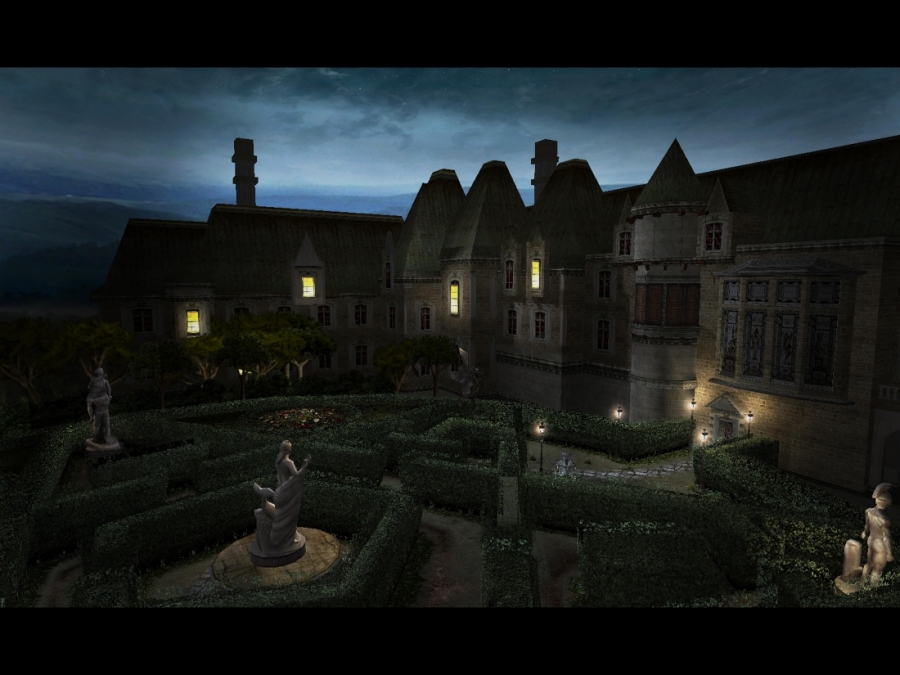
The game does offer a basic stealth alternative, allowing your character to move quietly in a crouch and throw objects to distract opponents. You can also drag unconscious bodies out of sight before they’re discovered. If you’re able to sneak up behind someone, you can initiate a stealth attack that may (but not always does) render him unconscious. You’ll quickly find yourself using this method as often as possible to spare yourself another drawn out affair. Otherwise, I didn’t find much use in sneaking, as the frequent need to re-trace your steps often means that you’ll be spotted at some point and end up having to fight anyway. Far easier to clean out an area in advance and then explore and solve puzzles at your leisure.
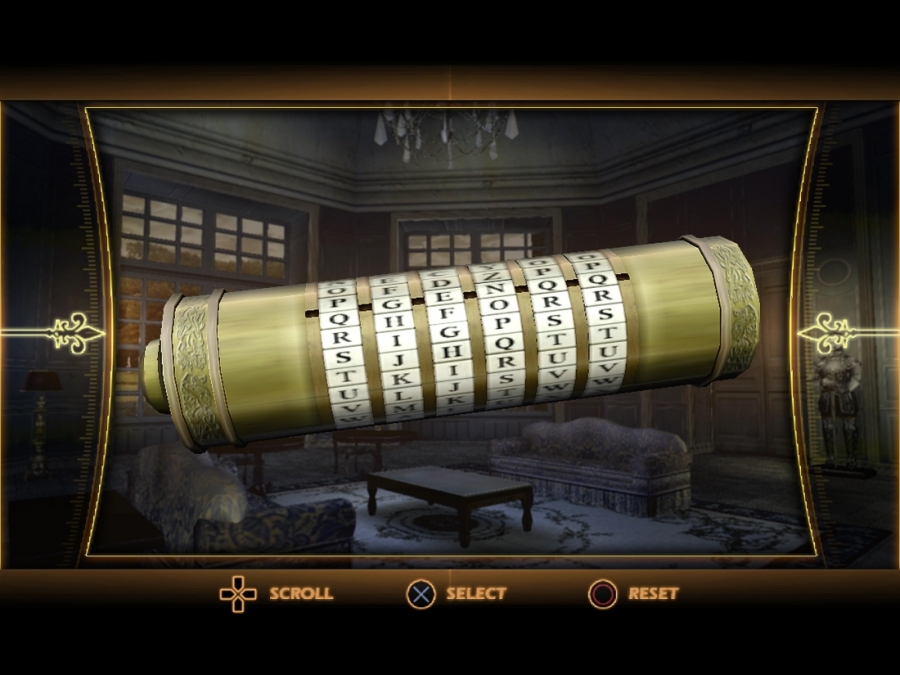
When wounded, there are bandages you can find throughout the game for healing yourself, but these don’t carry over from one location to the next for some inexplicable reason. The larger problem is that you can be in relatively good health, and if one encounter starts going badly for the reasons outlined above, it can all disappear in a hurry. Making matters worse is the checkpoint save system that can force you to replay some fairly lengthy segments of the game (including all the puzzles) over again. I’m not a fan of the “catering to consoles” complaint, but in this case, it’s hard not to feel deprived by the inability to save at will. On the plus side, the game does offer three difficulty options. And perhaps more importantly to those interested mainly in the puzzles, there are cheat codes available to get you through the game largely unscathed. Normally I don’t consider cheat codes a “feature” worth highlighting, but in this case it may very well be a determining factor for those concerned about the action overwhelming the value of The Da Vinci Code as a legitimate adventure. As an added bonus, one of the cheats enables players to return to two locations after completing the game. There is no plot to work through during these extra levels; just a generous helping of additional puzzles to solve.
While the combat is certainly the most demanding physical element of DVC, it’s not the only one. Various activities like pushing and lifting large objects, turning cranks, and even cutting locks with boltcutters are accomplished by following a sequence of timed keystrokes and mouse movements. There’s nothing overly challenging about it, and if you fail you simply try again. The intention is to create a more tangible sense of interacting with the environment. But while I admire the sentiment, I found very little connection between the onscreen action and the game controls, and before long, this seemed like yet another repetitive chore that offered no benefit to the gameplay. For those who have played Indigo Prophecy/Fahrenheit, you’ll find many similarities in both the basic action mechanics and the combat system, though here there’s a more defined separation between the controls and the onscreen events, and they are much different games overall. And while that game had the benefit of novelty working for it, already the system is showing itself to be shallow and tiresome.
Apart from the action sequences, The Da Vinci Code plays out like a customary third-person, direct-controlled, 3D adventure. Though come to think of it, there really haven’t been enough of those to consider the control scheme customary yet. But like Dreamfall, the game uses a combination of keyboard and mouse for navigation, with the keyboard providing screen-relative movement and the mouse freely rotating the camera around the character centered in view. The setup is intuitive and works fine overall, though it’s a little rough around the edges. The character movements aren’t particularly fluid, and the default walking speed is too slow. There’s an option to speed up ever-so-slightly, but only for a brief time before your character begins seriously sucking wind and slows down. I have no idea why this is so; with all the fighting the game makes them do, I’d have thought they’d be in better shape. But no.
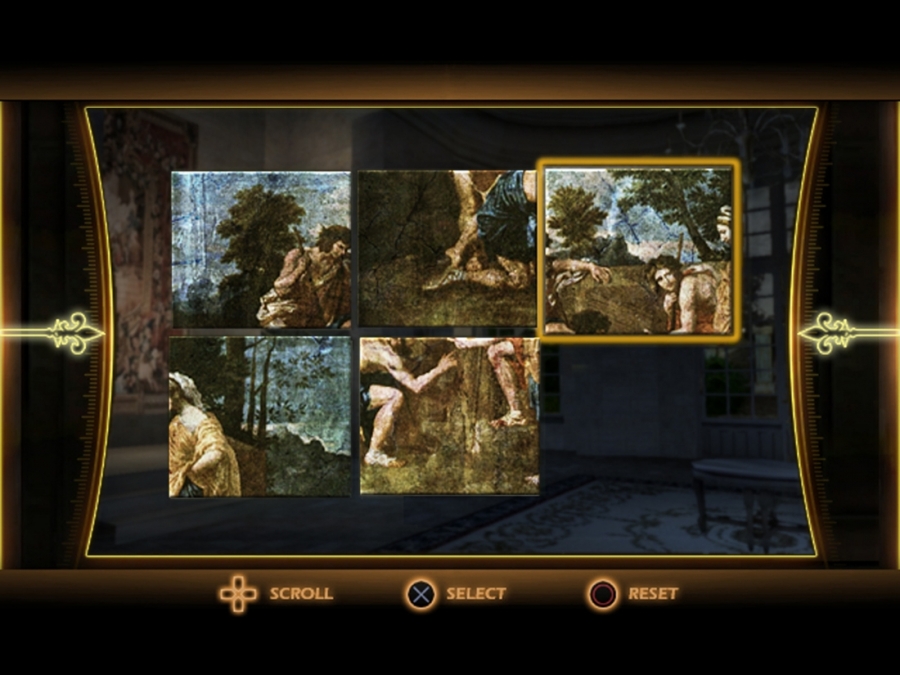
While moseying your way through the game, there is no visible interface until you approach a hotspot, which then automatically calls up a display showing the item description and (single) interactive option. Strangely, a few items glitter to draw your attention, while others will highlight when you come into range, and still others won’t do either, so you need to keep one eye on the description area to know for sure if an interaction is possible. At various times you can zoom into an area for a closer look in first-person with a movable cursor. Unfortunately, the camera movement is so dodgy in this mode that it’s a constant frustration. At least the inventory works well, allowing you to examine, rotate, and combine items quickly and easily.
As you progress, you’ll alternate between Langdon and Neveu, sometimes travelling alone and at other times together. Unfortunately, you can’t switch between them at will, and the game really makes no use of the partnership to solve puzzles. And since neither has their own specific abilities to contribute, as playable characters they are essentially interchangeable beyond the obvious cosmetic differences. When together, however, the game routinely switches to non-interactive animations or voiceovers while one or the other character expounds at length on some historical fact that may or may not have any direct bearing on the plot. It’s actually pretty interesting stuff, but it does have the effect of creating a very stop-and-go pacing which could have been avoided, especially as much of the information is recorded in a handy encyclopedia accessed through the menu screen. Remarkably, while the two academics prove a veritable fount of obscure information, neither has the intelligence to get out of your way in confined areas, though thankfully this is rarely an issue.
Like so many other aspects of the game, production values are a mixed bag in The Da Vinci Code. The environments are quite interesting, but the graphics aren’t overly detailed, and in some cases there are corners cut quite noticeably. So while it’s quite enjoyable to admire the impressive architecture or rich décor of real locations like Westminster Abbey, the Temple Church, and Saint Sulpice, one can’t help but wonder why the curator of Louvre didn’t notice he had four or five forgeries of the same painting adorning the walls. I mean, come on. I hate being a nitpicker, but basic stuff like that is an immersion-killer. Mind you, that’s nothing compared to the several prolonged instances of the game being consumed in a horrendous yellow light. This was an unintentional technical glitch, of course, but a critical one.
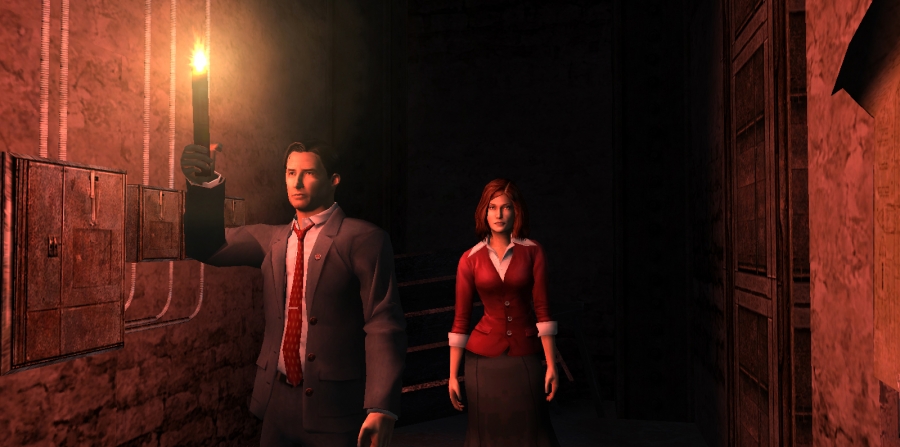
Characters don’t fare much better than the scenery. The character models are decently rendered, but they’re devoid of almost any expression. Then again, that perfectly suits the dull, flat performances of the voice actors, who seem to think that life-threatening situations and extraordinary secrets are just another day at the office. The voices themselves are just fine, though not provided by Tom Hanks and Audrey Tautou, who portray the characters in the movie. But a little direction would have ensured an emotional range that included something other than “ho hum”. The music, on the other hand, is excellent, with choirs and orchestras setting just the right atmosphere for the game.
Returning at last to Brown’s original story, it should be noted that while the game does a good job of adding new scenarios to bolster player activity, it does a poor job of conveying the story itself. The plot is advanced mostly through a series of disjointed, expositional cutscenes that just barely manage to cover the basics, leaving many narrative gaps in its wake. This won’t affect anyone already familiar with the book or movie, but if the game is your first exposure to The Da Vinci Code, you may find yourself struggling to fully grasp details and plot twists that aren’t sufficiently explained. It’s enough to make sense of the game for the most part, but it will likely leave you wondering what all the fuss has been about.
When all is said and done, The Da Vinci Code is as difficult to assess as it is to label. It’s not so much a mediocre game as it is an uneven collection of hits and misses. As an adventure, it’s a pleasingly solid contribution to the genre, with a wide variety of brain teasers to supplement a fascinating story that’s perfectly suited for an interactive experience. However, the inclusion of so many action sequences will likely discourage many hardcore adventure gamers, and even for those willing and able to meet the challenge, the insipid nature of the combat drags the game down, as do pacing issues, middling production values, control problems, and other technical weaknesses. Still, I experienced more fun than frustration during the twelve or so hours it took me to complete the game, and while there’s much to endure, there’s more to enjoy. It’s not the Holy Grail of gaming, and may not even be your cup of tea, but if you know what to expect going in, you may just find a nice little taste of The Da Vinci Code phenomenon.
Latest Gaming Articles
All Articles