



Super Meat Boy 3D vs Super Meat Boy: Can the meaty platformer make the jump?


15 years after the release of the original game, Team Meat, alongside Sluggerfly (another small development team), have come out with the demo for their upcoming Super Meat Boy 3D release date.
Considering the gap between the two releases, comparing the original with the newest entry allows us to see how far this franchise, and video games as a whole, have come. We’ll cover Super Meat Boy 3D’s gameplay and how it differs, the difficulty in both games, and how the original Super Meat Boy game compares to its shiny new release.
Super Meat Boy 3D vs Super Meat Boy: Premise

When comparing the two games, one must remember their context. As a sequel to a flash game (Who remembers those?), the original Super Meat Boy was a success story for the video game history books. While originally a PC game, Super Meat Boy’s console release was within the same month as its PC version, actually coming out before the latter. Despite its small team and relative obscurity, it benefited from the early days of the content creation space we see now.
This was because Super Meat Boy‘s gameplay was particularly well-suited to the content creation style of the time, with a focus on eliciting big reactions from entertaining and affordable games. Thanks to this and the game’s quality, it was a smash success, winning several awards upon release from major publications.
15 years later, the developers are coming out with a newer, more “with the times” game. Working with another indie development team (Sluggerfly), Super Meat Boy 3D’s release date is set for 2026.
With that in mind, this comparison may seem unfair. Not only is there a higher production value (it’s a more notable franchise now), but technology has improved considerably. However, there are still some aspects where the original may just edge out the new release. But more so, this is less a comparison and more an insight into the changing landscape around gaming, and how 15 years of evolution affected the industry.
Super Meat Boy 3D vs Super Meat Boy: Gameplay
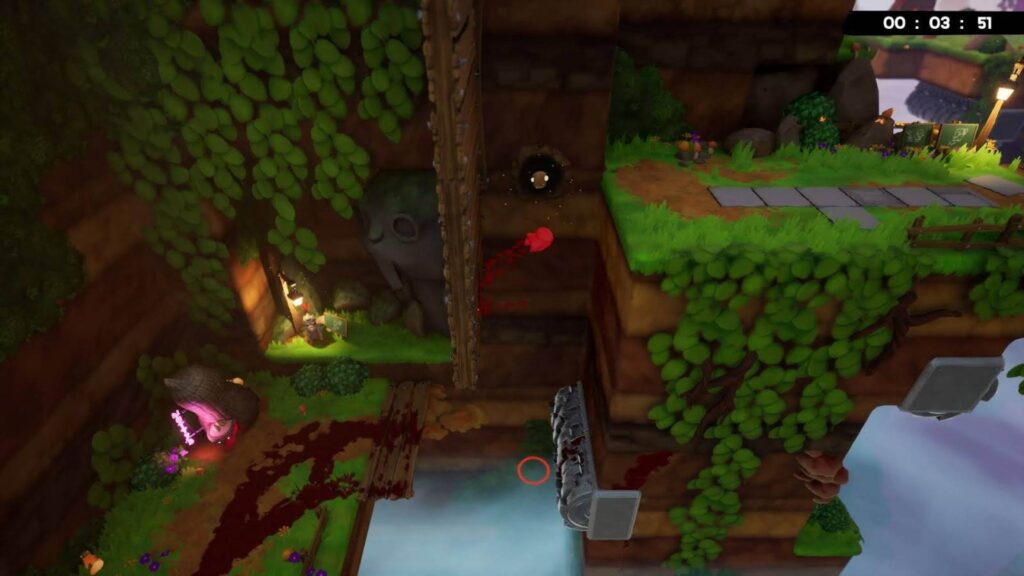
While Super Meat Boy 3D’s platforming takes a lot of foundational mechanics from the original, there’s a lot that’s new to make it work in a 3D space. While the first game limited your movement options to walking, running, and jumping, several additions in Super Meat Boy 3D introduce lots of fun, fresh ways to approach the game’s levels. For example, a new airdash and ground pound provide ample opportunities for players to correct any miscalculated jumps, and a wall-running mechanic adds a notable breakneck pace to certain stages.
While both are brutally difficult platformer games, the original Super Meat Boy developers (having less to work with at the time) made traversing small levels as fast as possible the aim. In the new title, flourish, and style are more achievable due to the more open nature. While some will argue there’s a higher skill floor for the first game, the skill ceiling in 3D is sky high. You can envision the ridiculous tricks and skips speedrunners — a demographic that this game is clearly intended for — will have to devise.
Super Meat Boy 3D vs Super Meat Boy: Difficulty

A main draw for both is their much-discussed difficulty. Super Meat Boy had a reputation for requiring dozens of attempts to clear even one level, so much so that the devs even put in an instant replay function where all of your attempts would play back concurrently. ‘Super Meat Boy tips’ pages were abundant when the game came out, as many underestimated the skill the game required. This was mostly due to precision and timing, the main sources of difficulty. The game’s simplistic controls were utilised well in levels that required split-second decision-making, which meant that while speed was a factor, it was more of a luxury than an achievable goal.
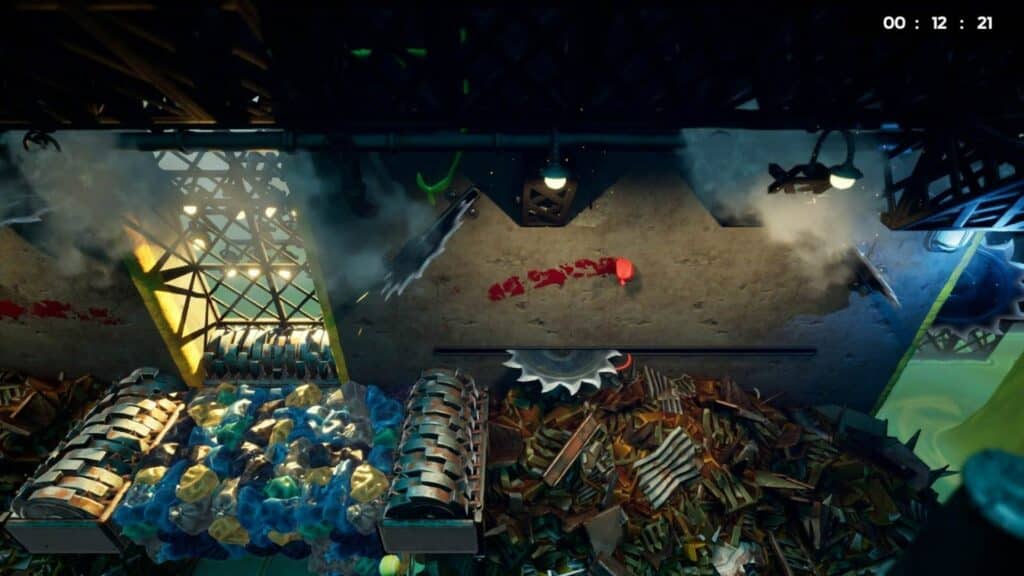
This is contrasted in the second game, where speed is the main focus. The movement mechanics in Super Meat Boy 3D mean that precision is required less, as mistakes are more easily amended (at least in the demo’s levels). While many players will appreciate the shift away from punishing gameplay, it results in an easier experience. However, as mentioned, speed is the name of the game; the main source of difficulty will undoubtedly come from players replaying levels to improve their times. That’s not to say the levels showcased are easy, as they’ll likely still take several attempts to clear.
Super Meat Boy 3D vs Super Meat Boy: The Old VS The New?
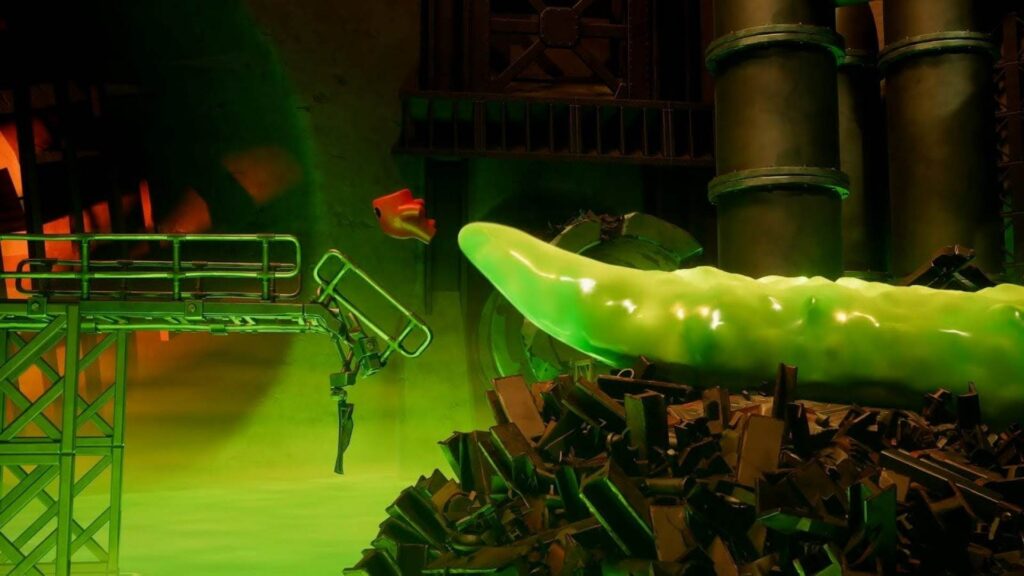
It’s worth noting that comments made here are subject to change, as Super Meat Boy 3D is still only a demo. However, in terms of contrasting the two games, there are two aspects truly worthy of reminder: presentation and design.
While Super Meat Boy 3D is a more expansive game, with better thought-out mechanics and a less challenging gameplay loop, is that really what fans want? The design choices may be displeasing to certain fans of the original. However, considering the previous entry in the series, Super Meat Boy Forever, and its poor launch reception, perhaps the studio felt it had to create a game in a 3D space, as 2D platformers are no longer as appealing.
This is where presentation becomes a major aspect. Although a higher production value has been invested in Super Meat Boy 3D, it may be to the game’s detriment. While the original Super Meat Boy had pixelated graphics, largely due to budgetary constraints, it gave the game a unique style that remains recognizable today. Subsequently, in Super Meat Boy 3D, characters are represented three-dimensionally in a more cartoonish art style. When compared to the original’s rugged presentation, this makes the characters somewhat resemble Funko-Pops or similarly uncanny figurines.
While Super Meat Boy 3D is a more appropriate entry given today’s gaming landscape, with a focus on expansive worlds and graphical detail, it makes one yearn for the days of innovative decision-making to better handle limitations. The first Super Meat Boy will remain a classic, both in presentation and gameplay. However, we hope that Super Meat Boy 3D will be able to match the original’s popularity, as it’s a faithful addition to the series and a great way to expose new people to the franchise.
FAQs
Is Super Meat Boy 3D a remake?
Super Meat Boy 3D is the third entry in the Super Meat Boy series. While it shares some similarities with the original game, there is no clear indication that it is a direct remake.
How much is in the Super Meat Boy 3D demo?
The Super Meat Boy 3D demo is fairly short and features only a handful of levels. Skilled players can complete the entire demo in around 10–15 minutes.
What made Super Meat Boy so successful originally?
The original Super Meat Boy gained massive popularity during the early days of content creation, with many YouTubers playing it and boosting its visibility. Its high skill ceiling and frequent frustration made it entertaining to watch, and the game also won multiple awards on release.
Is Super Meat Boy 3D the first game since the original?
No. Before Super Meat Boy 3D, the series released Super Meat Boy Forever. That entry received a mixed reception, largely due to its shift to an auto-runner gameplay style.
When was Super Meat Boy 3D announced?
Super Meat Boy 3D was announced on June 8, 2025. The game was showcased at the Xbox Summer Showcase during Summer Game Fest. The demo was released on December 11, 2025 coinciding with The Game Awards, which celebrate the best games of 2025.
Latest Gaming Articles
All Articles