



PSX 2015 round-up


Alone With You
Currently planned as a PlayStation exclusive, Alone With You is a “sci-fi romance adventure” by Ben Rivers, developer of 2012’s indie title Home. A catastrophe has resulted in the death of everyone on board a space station, and you—an unnamed, mystery-gendered person in a space suit and helmet—have been sent here to figure out what happened. The game’s pixel art graphics are reminiscent of old Space Quests and its structure is sort of like the Persona RPGs, but without combat. Every day, you search part of the space station for clues about what happened. And every night, you go on a date courtesy of the station’s holo-sim chamber.
Since Ben first showed me this game almost two years ago, the “romance” part of “sci-fi romance adventure” has always been the hardest part to understand, but with the PSX demo it’s starting to make sense. Alone With You consists of 12 missions over a 3-week period. During each mission you’ll explore an area of the space station, scanning dead bodies, journals, and other relics for clues about four people who had important jobs on the station. Meanwhile you’re in regular contact with an AI who gives instructions and asks seemingly banal questions like what you want for dinner, your answers shaping the story in subtle ways.
The two missions I played included some simple puzzle-solving, usually related to learning you need an item, finding it a few screens later, and then making your way back to the place where you can use it (a relatively easy task with locations laid out for comfortable exploration). Each area is associated with one of the four people you’re investigating, and at the end of the mission you’ll meet up with that person—virtually—in the holo-sim chamber. (This is the nightly “date.”) With the help of their notes and insight from hologram versions of themselves, you will piece together what happened. But at the same time you’ll get to know them, and choices you make about how to interact with these holograms could lead to romance.
Graphically, Alone With You rises to the challenge of looking low-res on the PS4’s high-res display. Its 16-bit pixel art graphics take advantage of the large amount of screen real estate to include a lot of detail. From couch distance, the chunky pixels blend together nicely—anti-aliased by your own eyes, in a sense—but the game also has a sharp 1080p interface that’s easy to read even from afar. Unlike the dark and stormy Home, Alone With You uses pastels from the Sega Genesis/Mega Drive color palette for an old-school console feel. It may remind you of a point-and-click adventure, but the gamepad controls are intuitive: move around with the left stick, press buttons that correspond with dialogue options, and hold down the R2 trigger to scan items of interest.
Even after playing part of it, I think there’s a lot about Alone With You that will be hard to grasp until it’s released—this game defies simple categorization and demo slices only tease at the big picture. It’s clearly a story-heavy game, with player decisions shaping the narrative and old-school graphics providing a nostalgia trip for fans of 1980s/90s adventure games (or Sega Genesis games, for that matter). Some players might be wary of the romance aspect, but Ben says it’s possible to play the game totally straight, without romance, if you choose. We’ll find out just how steamy an abandoned space station can get in Spring 2016, when Alone With You releases on PS4 and Vita.
Night in the Woods
You know that saying “You can’t go home again”? Mae Borowski, Night in the Woods’ 20-year-old protagonist, can relate. A college dropout with anger issues, she’s returned to her depressed hometown of Possum Springs, a Detroit-like place where industry has dried up and people dream of getting out, but don’t know how.
Mae’s quest for identity is at the forefront of this Kickstarted adventure game from developer Infinite Fall and publisher Finji Games. At a glance it may look cutsey, what with its talking animal characters and paper cutout aesthetic, but any such illusions disappear with the first talk bubbles that pop up over Mae’s head in her childhood bedroom (“If I don’t get out of this room, I’m probably going to burn it down with me in it.”) She’s sarcastic, cynical, and unhappy, and part of your objective in Night in the Woods is to understand why.
Early in the PSX demo, Mae’s mother and a neighbor admonish her for jumping up on mailboxes and climbing to the roofs of buildings—so of course that’s exactly what she goes on to do. The game looks and moves like a side-scrolling platformer, but jumping from a mailbox to a tree branch to a power line to a rooftop is more like puzzle-solving than platforming as you figure out how to progress from surface to surface to reach where you want to go. Some precision is required, but you don’t die if you fall.
The town is bustling with animated activity as cars drive by, flocks of birds migrate overhead, squirrels run across window sills, and autumn leaves blow around—it’s like a hipster version of Richard Scarry’s Busytown. As Mae chats with people ranging from old friends to the new crop of high school troublemakers to a former teacher, bits and pieces of her story come out, along with plenty of snark and sarcasm to establish her character. Dialogue is presented through non-voiced talk bubbles, with icons sometimes used in place of text to show what’s on someone’s mind. (In one sequence I’m pretty sure I interpreted correctly, a jilted passer-by went from thinking about a broken heart, to getting some money, to firing a gun…)
The part I played involved exploring the town and some light puzzle-solving, but as the story progresses Mae will discover that something unusual is going on at night in (wait for it…) the woods. The demo’s combination of cynicism and charm has me eager for more, but unfortunately Night in the Woods is still almost a year away, with a launch on PS4, PC, Mac, and Linux expected between August and November of 2016. The developers are promising to release some previously backer-only video before then, and two free minigames are already available from the official website.
Pavilion
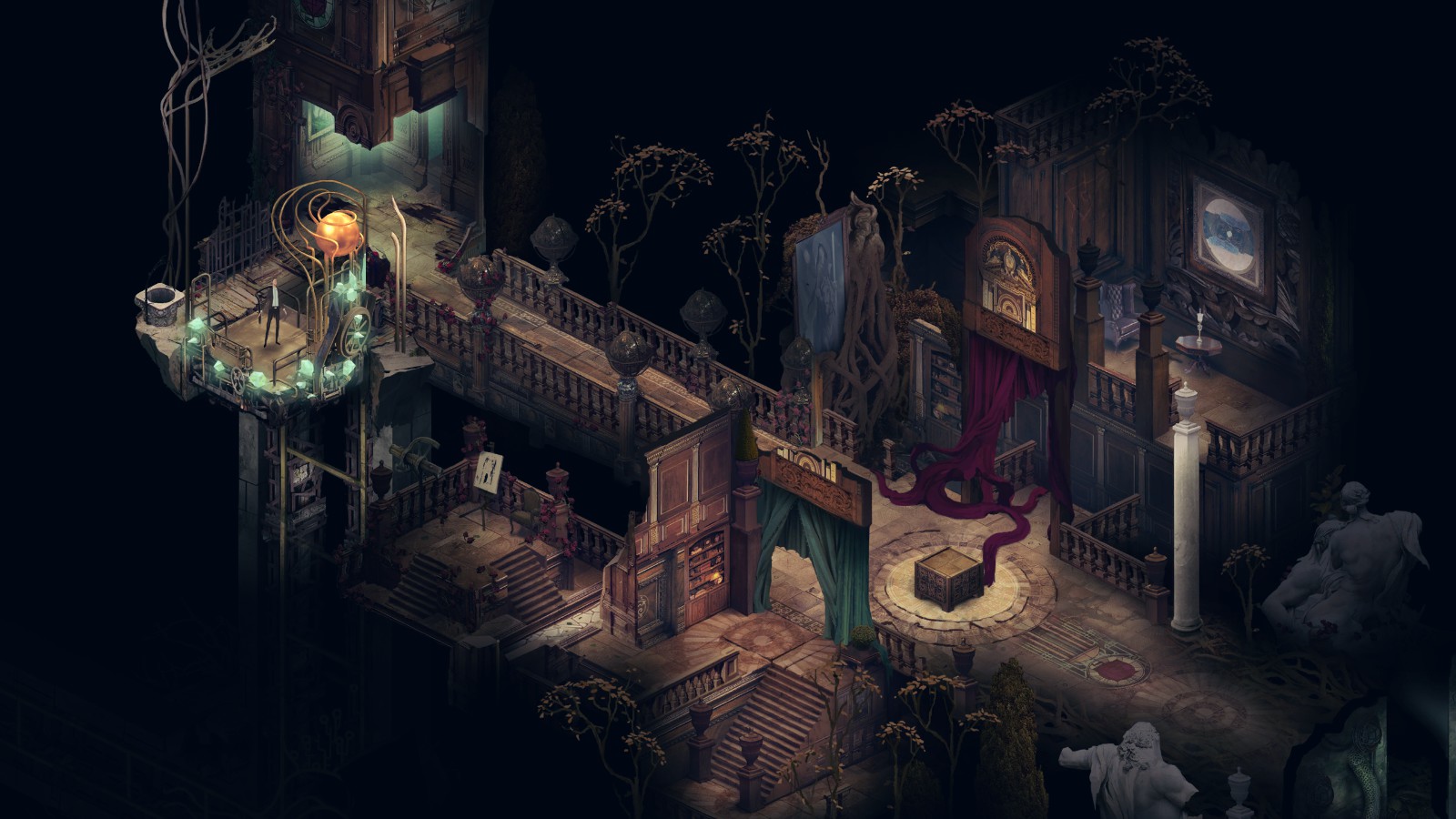
Indie developer Visiontrick Media touts Pavilion as a “fourth-person puzzling adventure.” Until I played it at PSX I had no idea what that meant… or how much fun it could be.
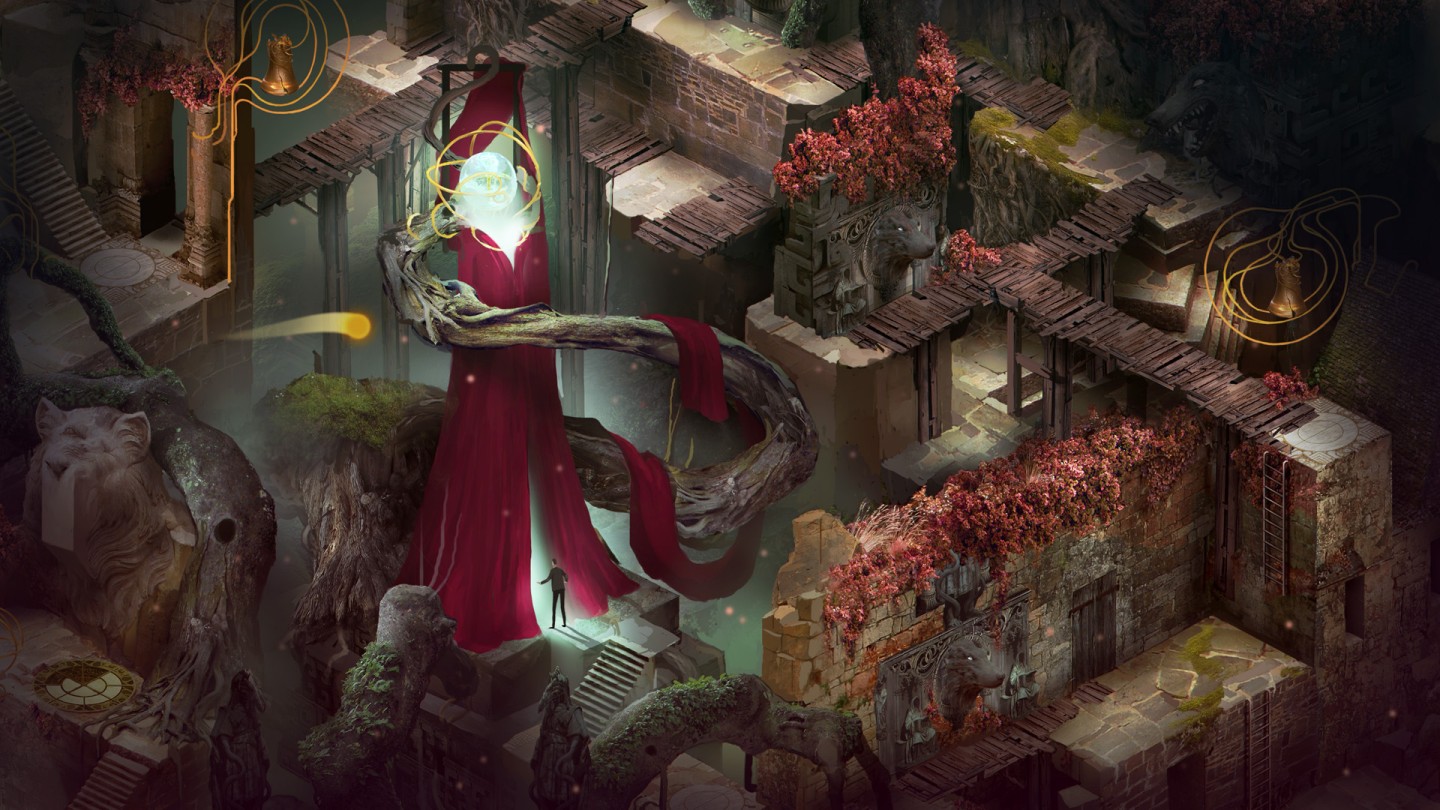
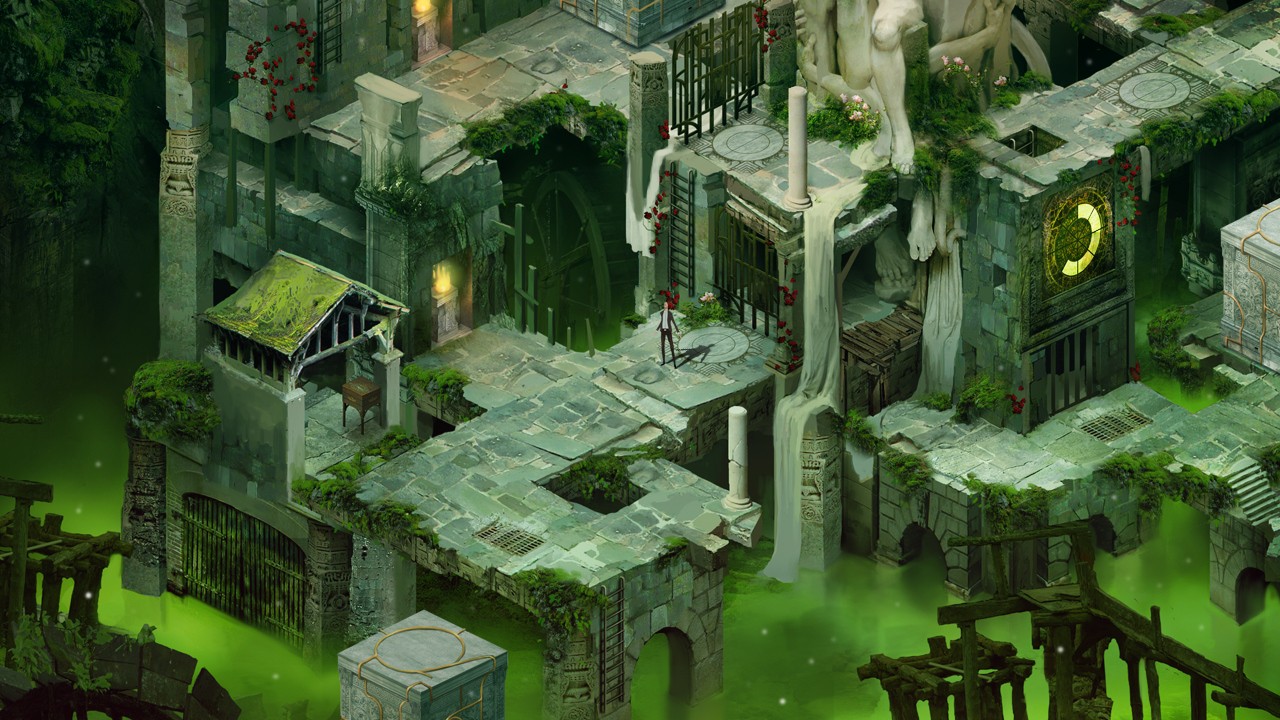
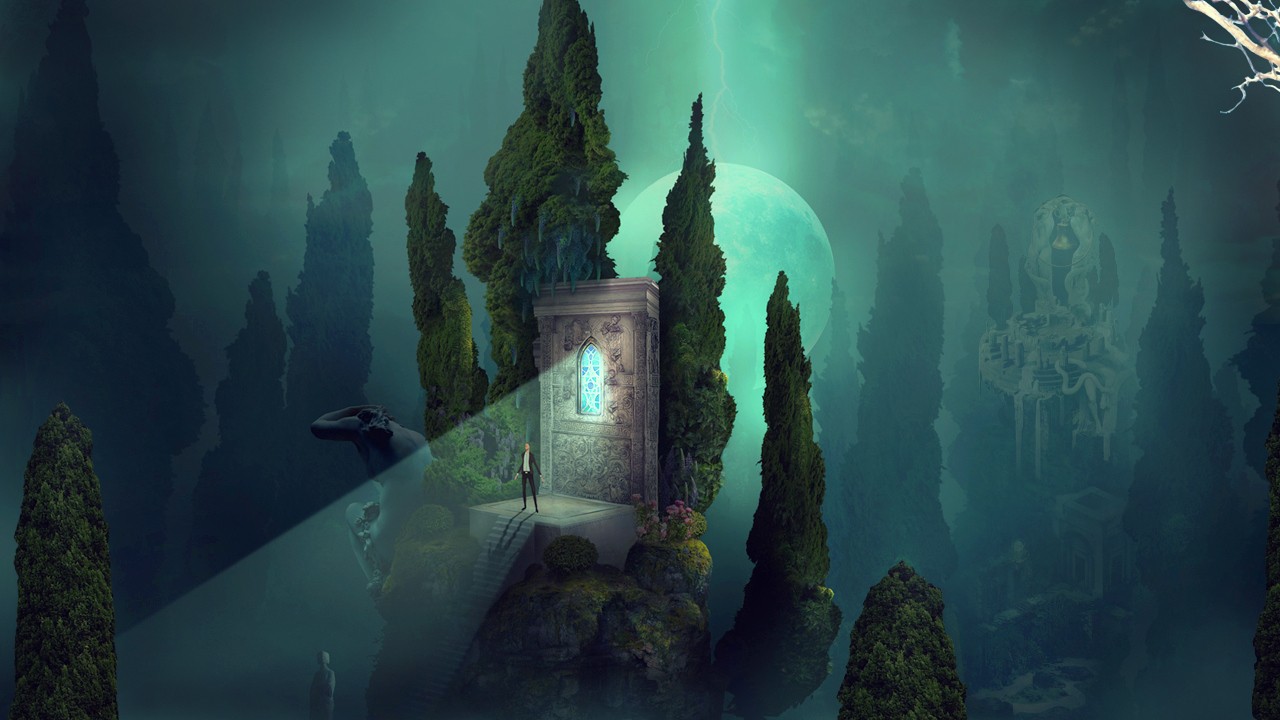
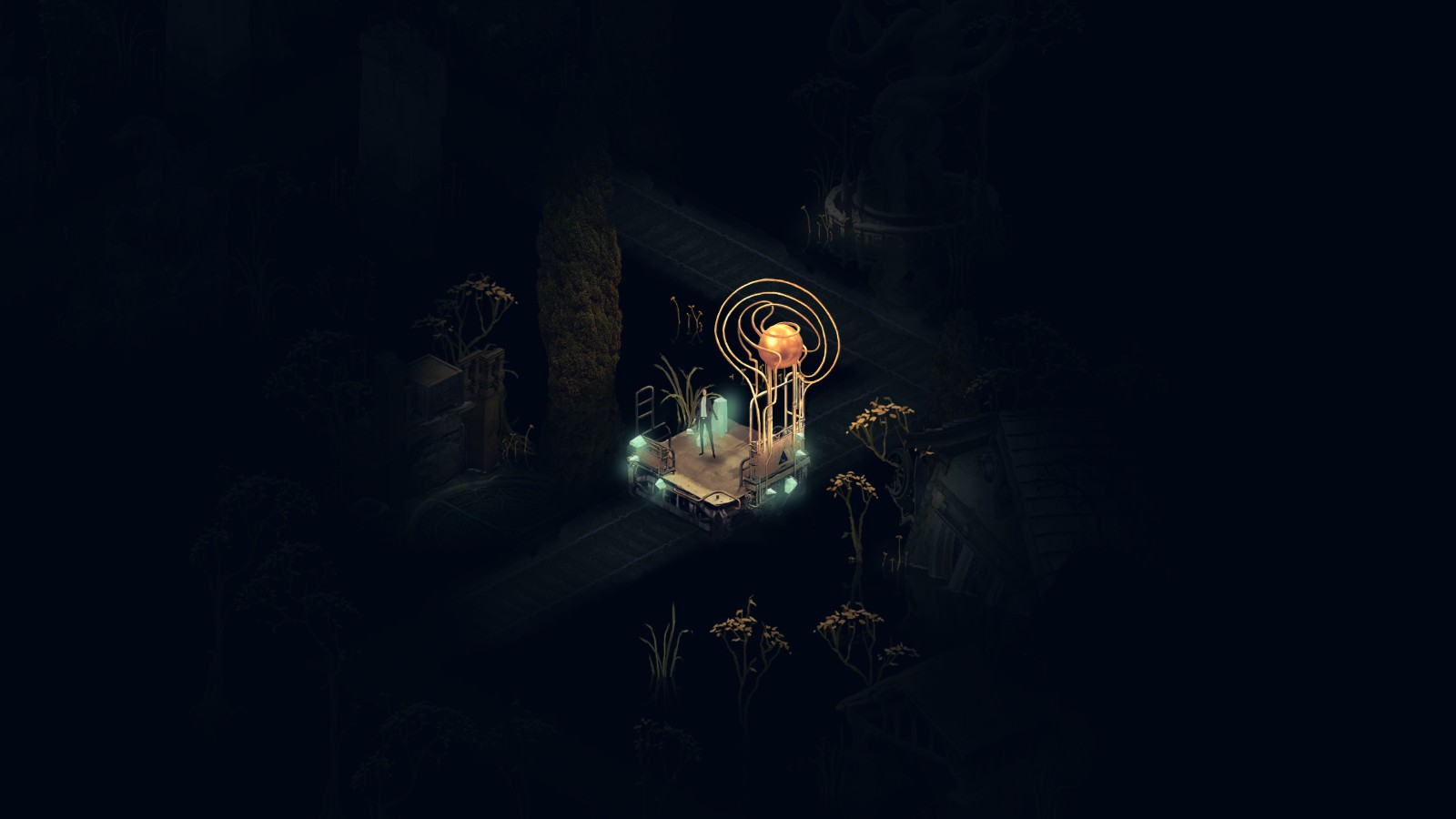
In this surreal puzzle game, a little guy in a suit is running through an MC Escher-like complex of bridges, ladders, and stairways. He runs on his own—you can’t control him. Instead, you manipulate the world around him to direct him. Ring a bell and he’ll run toward the noise. If he encounters a dark area he’ll hesitate, so you can flip on a light to make him progress or flip it off if you want him to turn back. Giant cubes can be pushed and pulled to block or open up a pathway. Some gates are locked, and you need to guide the man past a nearby chest to pick up the key. Other gates only open when a pressure pad with a timer is activated, so you need to direct him over the pad then get him back to the gate before it closes again. Trickier still, a gate may require stepping on two pressure pads in sync.
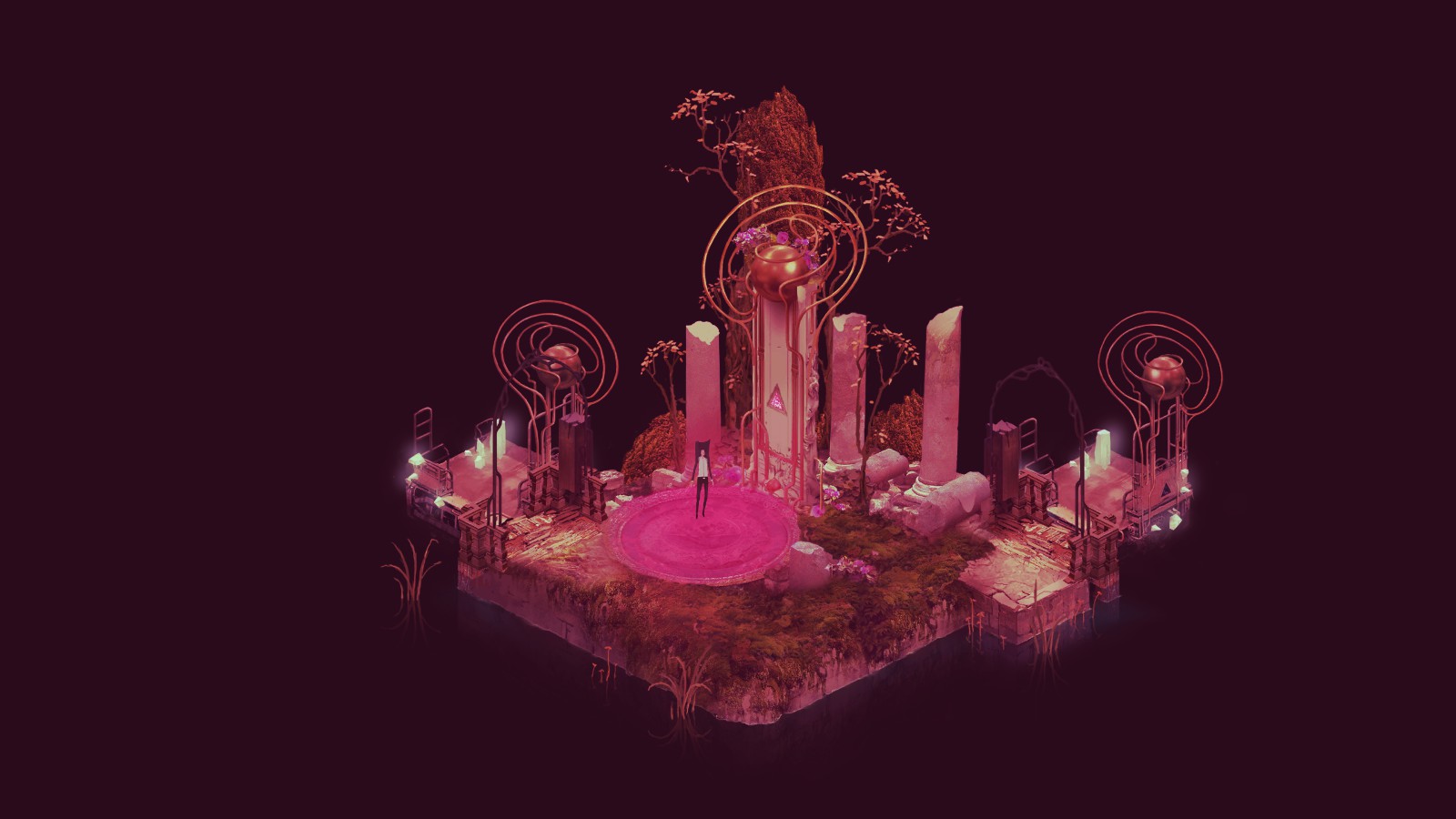
The “fourth-person” controls seem simple at first but the difficulty ramps up quickly—this puzzle game will make you use your brain. The isometric perspective means you view the tiny man from a distance, which provides a good view of the area around him so you can plan out a route while also giving the feeling that you’re playing as an omniscient, god-like character.
Even after completing two levels (I felt so smart!), I don’t know much about Pavilion overall, but that seems to be by design—it’s a game that eschews handholding as you figure out on your own how the man will react to different actions and how the world itself fits together. There does seem to be a larger story at work: the man is following (or chasing?) a woman who is also running, but in this demo she was always just out of reach. We’ll find out more about this mysterious world when Pavilion releases for PS4, Vita, and PC in February 2016.
Latest Gaming Articles
All Articles