



MineMogul VS Satisfactory: Which factory builder is superior?


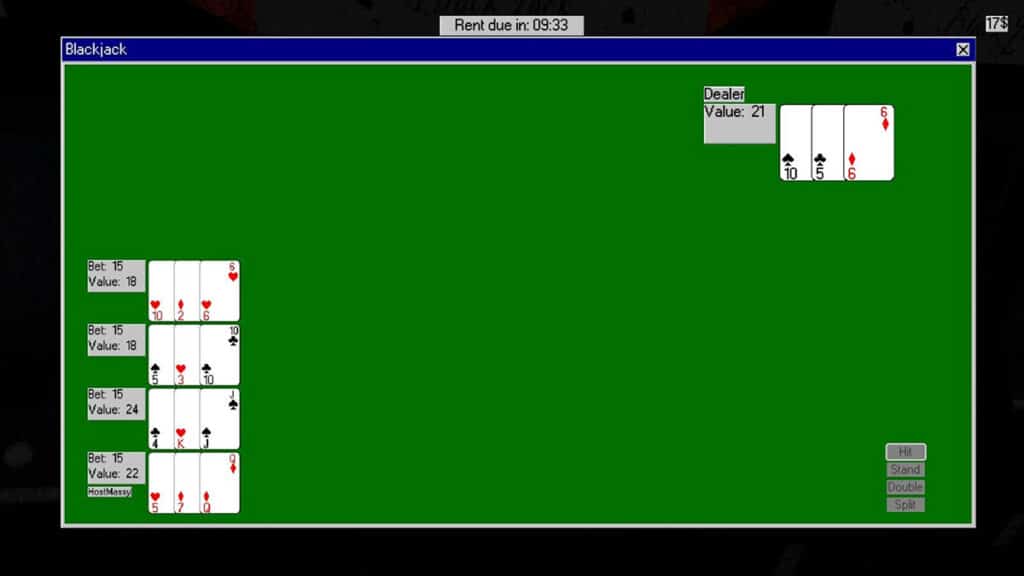
MineMogul is a recently announced game in which you must mine materials and then submit them to earn money. This cash is then used to buy machines that allow production to really ramp up and lead to the game’s main gimmick: automation.
Automation games are becoming a popular subgenre in their own right, and MineMogul’s automation reminded us of Satisfactory, an especially popular entry in the genre. We thought it fair to compare the two games to see which is more expansive and refined, but more importantly, which game has superior automation possibilities for fans of these experiences.
MineMogul VS Satisfactory: Premise

These two games, while appearing quite similar in main gameplay mechanics, have quite a few significant differences. While MineMogul’s demo was only just released – and the game is in early access – even now, it’s clear what separates it from other entries into the genre with a more intricate approach to base design.
MineMogul’s developers, a team by the name of NoodleForge, are a duo development team going by the usernames Gvarados and Diomonder. This is their first game published on Steam, but the two are not strangers to game design.
Previously, Gvardos primarily worked on maps and small games released on their website, whereas Diomonder has an extensive Steam Workshop page, where they have uploaded four full pages of Garry’s Mod maps. While their background in map design is evident in the sprawling passageways of MineMogul, it will be interesting to see what these two bring to the gameplay going forward.
To showcase the ongoing MineMogul updates, the news tab on Steam gets frequent posts from the developers, showcasing the work the developers are still doing on the game. Suffice to say, what we see now is likely a fraction of what we’ll see in the final product.
Satisfactory’s developers are Coffee Stain Studios, who have an extensive repertoire of games, from a personal favourite of ours in A Story About My Uncle and the famous Goat Simulator. As such, something to remember going forward is that Satisfactory was made by an extremely established studio when compared to MineMogul, a humble duo of map designers. But, despite this, MineMogul still manages to match Satisfactory in some aspects, occasionally exceeding it in some, but falling short in others.
MineMogul VS Satisfactory: Gameplay

MineMogul’s gameplay mostly focuses on increasing productivity through the creation of new machines and the optimization of previously built systems. While there is a little bit of spelunking fun to be had, you will find yourself almost immediately abandoning your trusty pickaxe and lantern in favour of grand industrialization.
The game, being set in a much more confined space, relies on set-generated ores and materials, which won’t change much between each new world. This also means that machines that mine these ore veins can only be placed in certain locations. While this may be upsetting to some fans of the automation genre, as it’s often paired with a more sandbox-esque playstyle, this means that the focus of MineMogul’s automation is not to increase production, but instead to maximise what is available to you.
As such, most of your time in this game will be spent repeating a cycle of planning, constructing, expanding, and deconstructing. There are several ways the game assists you with this, including the multiple types of conveyor belts available to the player and the magnet item. The magnet item reveals another fun aspect of this game in that every chunk of ore mined is an interactable item, each with its own physics. This can result in the game world getting quite hectic if the conveyor you’ve designed causes items to fall, as they will permanently stay.
This could not be further from the case in Satisfactory. The sandbox nature of the game means that sheer numbers are the objective. As with MineMogul, the machines that dig up the materials can only be placed on such materials. However, the space between these ore veins, as well as the method in which they are found, means most of Satisfactory’s gameplay revolves around transporting a material from point A to B.
This often results in you having several smaller factories that produce certain materials that then take a long journey to a main compound where they get refined and then used for crafting. This, alongside several creatures blocking your path and other such dangers, makes Satisfactory a constant loop of exploration and expansion.
MineMogul VS Satisfactory: World

The scope of the playable world in Satisfactory is much greater than MineMogul. There are several biomes, creatures, and flora that all make the setting feel much more immersive. While automation is absolutely the point, exploration is a major factor in Satisfactory.
The game world allows for this in having material clusters spaced far apart from each other, lending to the earlier-mentioned explorative gameplay style. This results in a strange dilemma where the player feels inclined to explore further to see what new materials and creatures they can find in this detailed world, but must stay at their base to optimize their production.

Meanwhile, MineMogul’s game design lends itself to a more enclosed space, something that is executed very well here. The sprawling hallways of the mine that the player finds themselves in allow for a fun initial exploration. However, the mind immediately goes to how to best utilise the space provided for production efficiency.
As there is not much available space, it’s not unfair to say that many playthroughs of MineMogul would end up looking the same, as the map does not allow for much in the way of customization. However, the first time you play this game and attempt to figure out how best to snake conveyor belts through tight passageways and across large divides is truly a mind-bending enigma.
As such, while Satisfactory’s map lends itself to large-scale automation, MineMogul’s map requires a more surgical approach, where proper planning is essential before any decisions are made.
MineMogul VS Satisfactory: Automation Contest

Given that automation is the main objective in both of these games, which of the two better allows the player to make it so they can do nothing? MineMogul’s automation is fairly simplistic initially and progressively gets more convoluted. All the mining machines output the material corresponding to the ore vein the machine is placed on; it is then up to the player to use conveyor belts to process the materials through various other machines to maximise their value.
Where the complications begin is making sure the right materials go to the right place and splicing these conveyors for greater efficiency. Paired with the physics engine and the very real possibility that the items will fall off the conveyors, automation is something that can be aimed for, but not guaranteed. This is why items like the magnet exist: to correct any grievous errors in the player’s planning.

In comparison, the automation in Satisfactory is more direct. Conveyors are easier to place, require less planning, and mistakes are far less punishing. This means that where MineMogul requires preparation, Satisfactory is more about quick decisions to add more throughput to systems you’ve built.
This all culminates in an easier automation system when compared with MineMogul, at least in the early game. It can be argued that once more materials are introduced, Satisfactory can become more complicated as several conveyors need to intersect at one point. However, the same can be said for MineMogul, with the additional challenge of a more enclosed environment.
While both of these games are fantastic, the two of them have some striking differences, making them very distinct entries into the automation genre. In terms of which is more refined, Satisfactory features the most expansive world, and the gameplay loop are far more approachable than MineMogul’s cramped, almost surgical gameplay style.
However, for fans of the automation genre that are looking for a challenge, MineMogul’s demo is definitely worth trying, especially if you are considering purchasing the game. MineMoguls price is currently 14.99$ on steam which is well worth it if the game even vaguely interests you.
Purchasing it would also support the developers who have made a remarkable product that stole hours of our time, and will definitely only improve once MineMogul’s full release date arrives.
FAQs
Is MineMogul a sandbox game?
While MineMogul does have a lot available, it does not really meet the requirements to be defined as a sandbox. Due to the enclosed nature of the game and the more regimented way of placing machines, the only “sandbox” elements are how you choose to transport the materials.
How much is in the MineMogul Demo?
Quite a lot is featured in the MineMogul demo. While there are some things in the full game not present in the demo, there are still several hours of gameplay before you reach these roadblocks.
What made Satisfactory so successful?
Much of Satisfactory’s success can be attributed to both its addictive gameplay and entertainment factor. This is especially apparent when considering that during the game’s pre-release phase, many content creators were playing the game in strange ways, garnering more intrigue.
Is Satisfactory the biggest factory builder?
While Satisfactory is a very popular game in the genre, Factorio is arguably the more popular and more recognisable game. However, Satisfactory is more player-friendly than Factorio, so it can be seen as more popular with general audiences.
When was MineMogul announced?
MineMogul was announced on one of the developers’ (Gvarados) X page. In the same post, they also announced the demo release date.
References
- gvarados on X (X)
Latest Gaming Articles
All Articles