


Little Nightmares

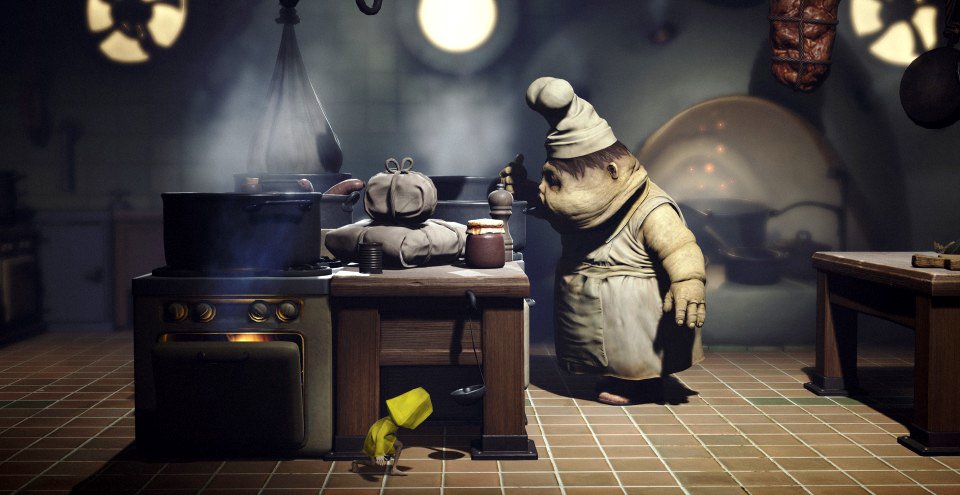
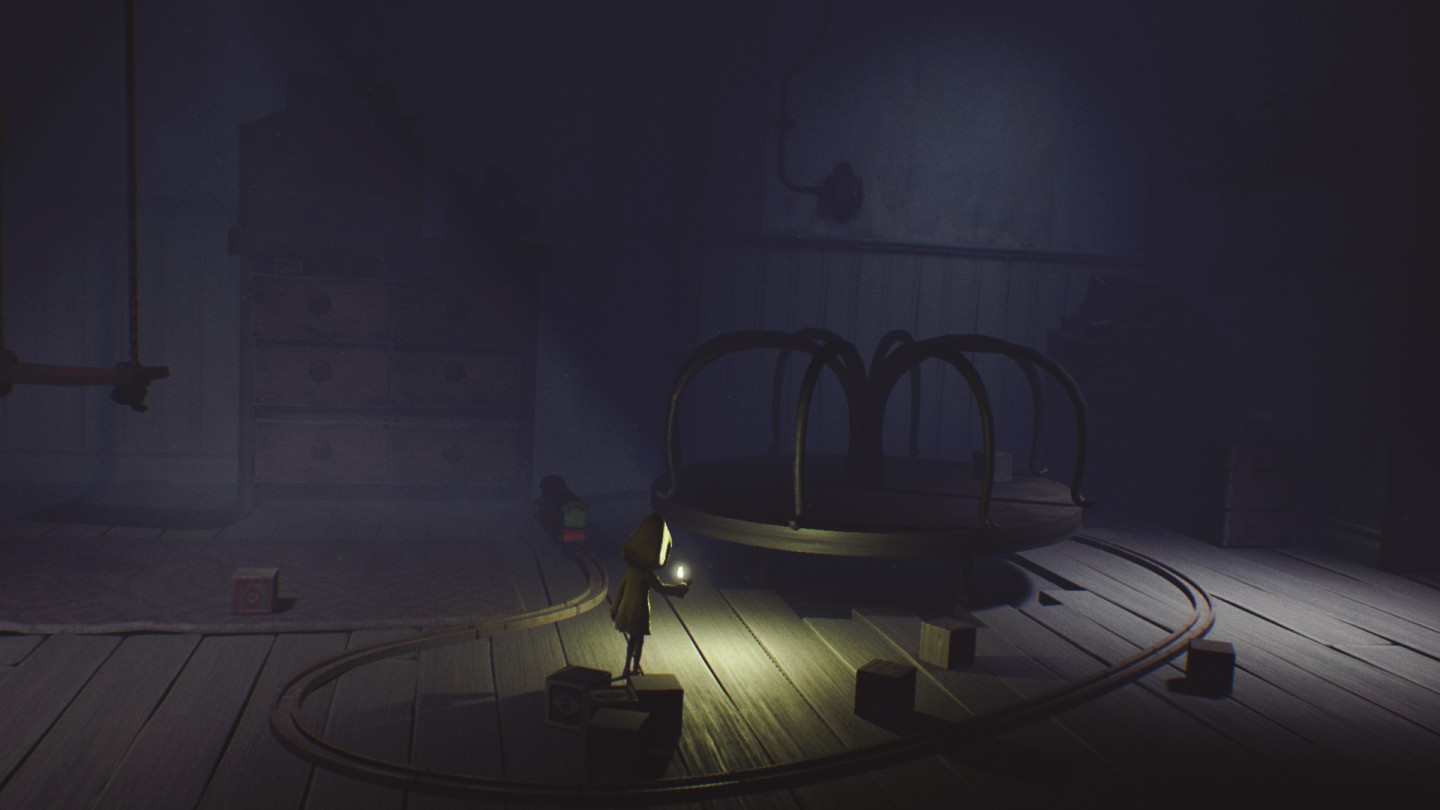
The sound design, too, is meant to raise your hackles, with low, industrial tonal music keeping you on edge, amped up by a rapidly beating heartbeat whenever your enemies are prowling in close proximity. And yet I couldn’t help delighting in it at times too, like the little swish-swish of Six’s raincoat as she shuffles along, or the splashing of puddles beneath her bare feet in damp areas. And that’s just one of many different movement sounds, depending on the surface Six is currently traversing. I’m used to two or three effects for wood and metal, but Tarsier went above and beyond to give each unique surface its own distinctive footfall. It’s a small thing, but in a game with no voice acting (unless you count the grunts of piggish, ravenous eating) and a whole lot of sneaking around, you’ll be acutely aware of the type (and amount) of noise you’re making.
Being stealthy is the only way to survive The Maw. You have no weapons (with one notable improvised exception), and are rarely able to outrun even the fattest of grotesqueries unless given a big enough head start. You’re so much tinier than everything on the ship that even everyday items are mountainous to you, so you’ll usually need to sneak over, under, or around your many deadly obstacles. Fortunately, most of the crew are dim-witted and nearsighted (and in one case, completely blind) so you can use strategic cubbyholes and darkness to conceal yourself, but I found the game to be very erratic in this regard. Occasionally I’d get caught without making a sound while completely engulfed by shadow, and other times I’d luck out with a particularly inattentive guardian. At times your disadvantage seems outright unfair, as more than once I was snagged by the super-long-armed janitor despite being seemingly out of reach.
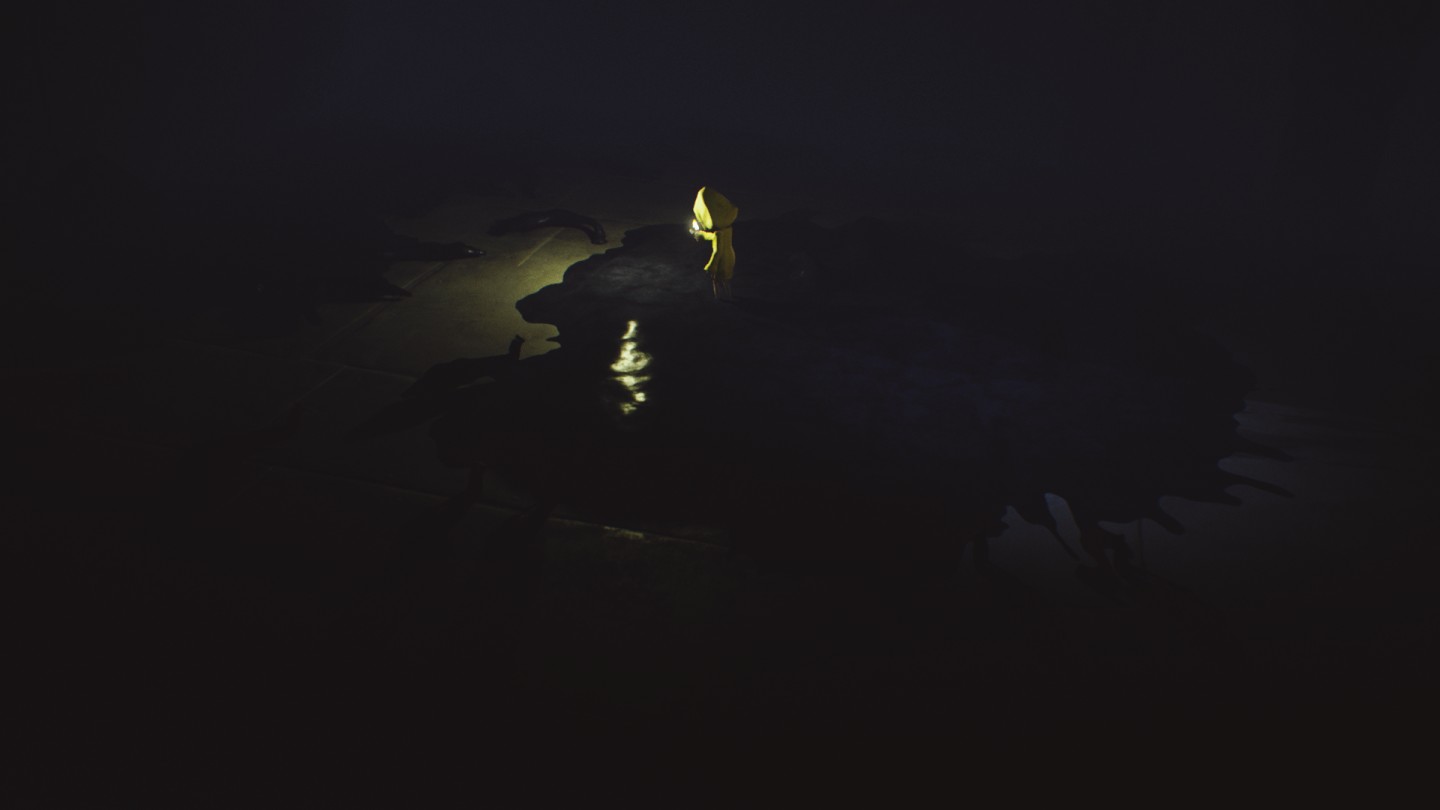
There’s no question these stealth elements greatly up the anxiety quotient, but after the deceptively leisurely first chapter I found them to be overdone. Like the game’s unbalanced contrast between dark and light, so too does the fear wear off after a while and the frustration kicks in. This is partly due to the lacklustre controls. Being the weakling that you are, actions are limited to such things as (slowly) running, crouching, climbing, and grabbing objects to hold, push, or pull. Even keys are so big that they must be carried in both hands and slow you down while you lug one to its lock (which, inevitably, is on the far opposite side of a patrolled area). That’s all well and good for the quiet moments, but you’re frequently thrust into life-or-death situations that require a degree of precision that the controls simply don’t afford. With a hyper-alert, hard-charging dishwasher on my tail, I’d find myself crouch-sliding into a wall because I hadn’t aligned my escape route just so, watching a carefully thrown object fall woefully short of its target, or mistiming a jump and failing to grab a ledge just out of my grasp. These are controls made for puzzling, not for platforming, though the gameplay emphasizes the opposite.
Even with some mechanical clunkiness, Little Nightmares won’t be particularly hard for experienced action gamers, as a few failed tries will eventually lead to success and the auto-restore points are reasonably spaced. Strangely, the game seems to indicate that lanterns and candles serve as save points when lit, but there are extra checkpoints in between. They do, however, have a tendency to include a pointless section right before a do-or-die sequence (like slowly climbing a large bookshelf in one room before encountering a foe in the next one). What’s worse is that the most death-defying feats and little unexpected requirements often occur right at the end of a lengthy chase, catching you off-guard and almost guaranteeing a few restarts right back at the beginning until you get it right.
So my biggest complaint about the stealth scenarios isn’t that they exist, but that they ultimately overwhelm everything else. The puzzles are quite basic – pulling levers, weighing down pressure plates, activating out-of-reach buttons – and occasionally they make use of real-time physics, but once introduced they seem to exist only to repeat under duress later on. Sure, throwing that switch to call an elevator the first time was easy, but can you do it before the door slams shut or without being captured by a rampaging crew member? Some scenarios even start to feel familiar, with only cosmetic differences between locations: enter new area, see locked door, sneak past enemy to new room, find key, distract enemy, sneak back, open door. If you’re spotted somewhere along the line, add some cursing and desk pounding to the list. Better to not be caught, but expect that you probably will.
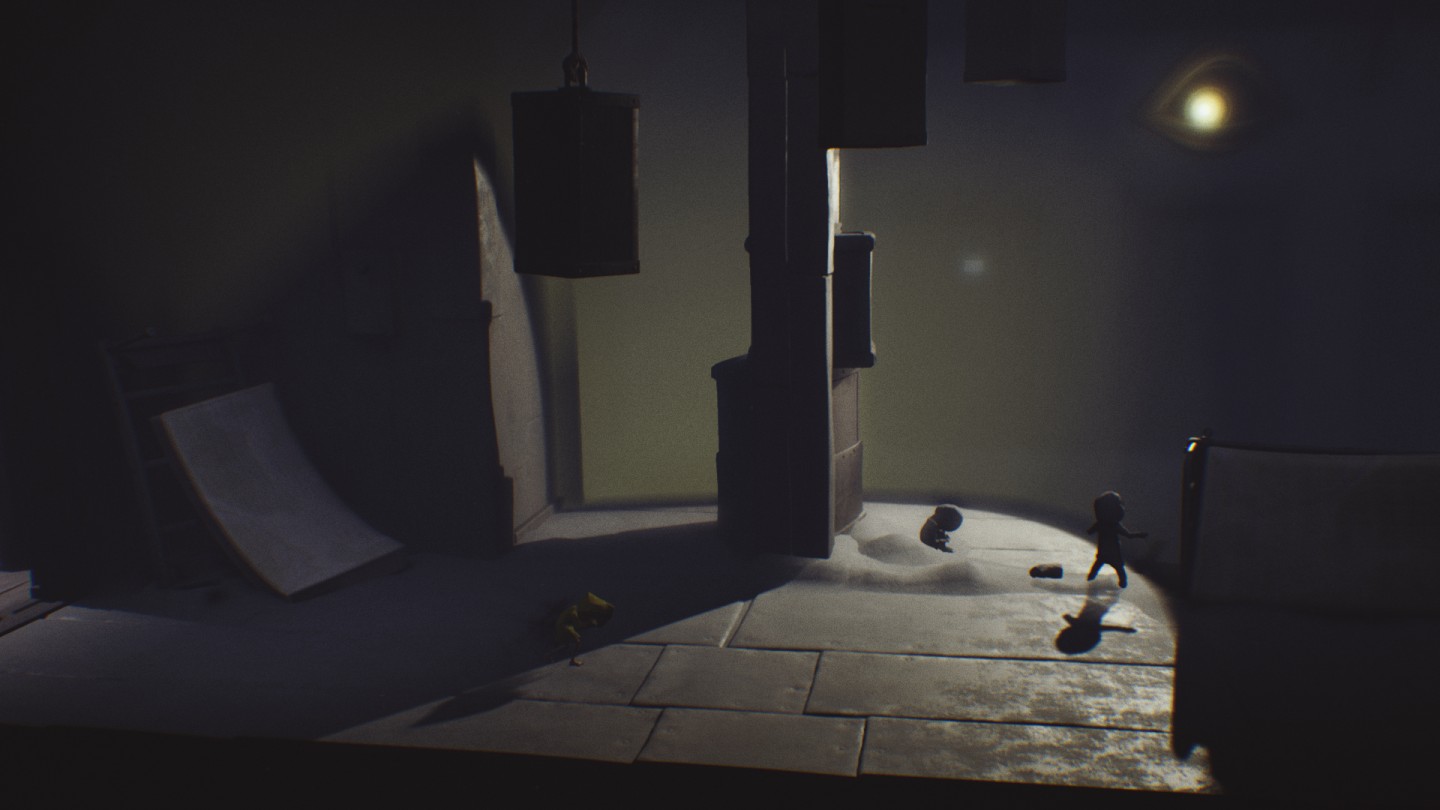
Each chapter finishes with a dramatic, pulse-pounding sequence, and the game itself with a “boss fight” of sorts, the latter remarkably easy once you figure out what’s involved. You’ll arrive at this point maybe 4-5 hours after you first woke up as a frightened little girl sleeping in a suitcase, feeling far more empowered but likely confused about exactly what just happened. With three different expansions planned (the first of which, The Depths, has been launched at time of writing), each meant to tell a complementary side story to Six’s adventure, I wonder if maybe a bit too much narrative detail wasn’t held back to fill up the downloadable content. That certainly offers incentive to continue the story, but leaves the main campaign with more than a few loose ends.
Whether you decide to venture into The Maw will depend entirely on what you hope to experience. Those looking for compelling puzzles or slick platforming will find Little Nightmares largely unappetizing. This is a game that relies far more on style than substance, infusing an unforgettable story, as lean and raw as it is, with an atmosphere so thick you could cut it with a knife (or vice versa). It’s creepy and dark and disturbingly tense, and once the panic ramps up, it rarely eases off. So if you’re up for a stealth-based horror feast and don’t ask much of the gameplay trimmings, you’ll get more than your fill here. Bon appétit.
Review copy graciously provided by GOG.com
Latest Gaming Articles
All Articles