



Jeff Tobler – Riddle of the Sphinx

Riddle of the Sphinx now being in the final stages of development, we asked co-designer Jeff Tobler some questions about the progress so far, and the early days of the project. Be sure to read our preview too.
Omni Creative was originally a website production and 3D animation company. What made you decide to get involved in interactive entertainment?
Omni Creative's website production is now at http://www.stlouiswebery.net. Our 3d animation has, with the exception of a few good clients, been focused toward ROTS. But I should step back and say that we were a full-service, albeit small, advertising agency before making the switch to developing interactive titles.
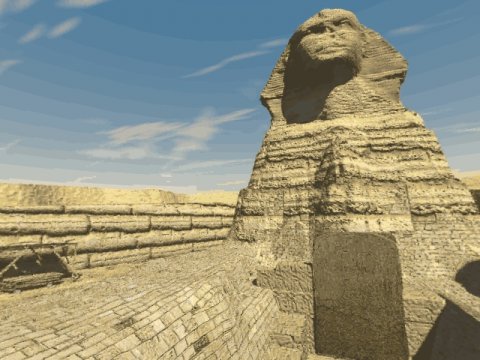
The combination of the interactive medium becoming a reality along with our knowledge of 3d art, design, music, and programming, plus our love of adventures (any kind of adventure) and puzzles/games, are all what made the light bulb flick on. It literally hit us in a single moment that we have the tools and know-how to produce the kind of title we wanted to produce, so why not? The specific influences to produce ROTS came from our interest in ancient Egypt and her mysteries, and certainly our experience in Myst.
What we didn't realize was that we needed a larger team, more money, and beefier equipment than what we had. We now have a much better idea of how to tackle these next projects.
Did your background as graphic designers prepare you for the job?
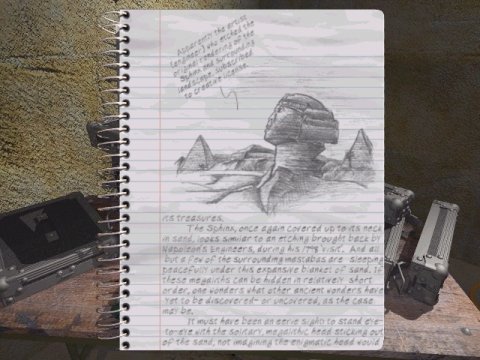
Certainly. Design theory never changes. 3d has it's nuances, but we are still working with design tools. Probably the biggest stumbling block is changing the way in which you think. Thinking as a designer (2d tools) requires tricking the eye into seeing what isn't there. Well, when designing in 3d, aside from lighting and mapping, there is no need to “fool the eye”. You build it and work with a camera to compose the scene.
The 3d transition was easier for me since a had started drafting at a local foundry while still in high school. From there I studied technical illustration and architectural design. Only after that did I decide I much preferred the creativity in design. Then a few years later I was able to combine those two worlds in 3d art.
How did you come up with the concept for an adventure game set in Egypt? What was your experience with (adventure-) games before you started the project?
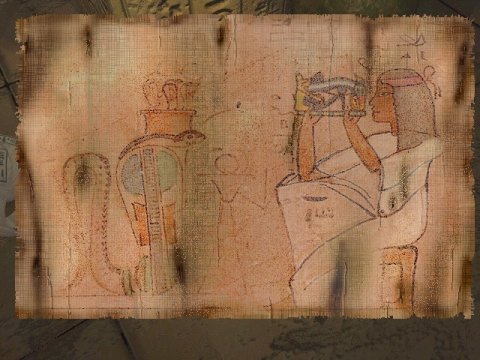
For us there is no other topic more interesting. Plus, each year more activity and new finds comes to the surface. It's hard not to notice the enigmatic nature of the Great Pyramid and Sphinx (literally and figuratively). I can tell you that we have both been very interested in archaeology at a very young age. That was one of the first things we realized we had in common. The difference between being a true archaeologist and a closet archaeologist is that I probably wouldn't have the tenacity to sit day after day, month after month, brushing away dust to find one piece of broken pottery. Rather, we want to uncover the big finds in a relatively short time period 🙂 That is why we started ROTS!
We also got tired of all of the hype and no tangible discoveries. In ROTS, we answer the questions behind most of the mysteries surrounding the Sphinx and Great Pyramid. Those wanting to know what is behind the “Secret Door” in the air shaft of the Queen's Chamber (Rudolph Gatenbrink's discovery using his robot) will find out in ROTS. Anyone interested in the evidence and lore of hidden passageways and secret chambers within the Great Pyramid will find the answers in ROTS.
As to our experience with adventure games or otherwise, I started out playing a very simplistic adventure-style game on an Apple II (although I can't remember the name of the game). I think we both played Donkey Kong, Asteroids, Centipede, and other arcade style games at that time. Then we really got into King's Quest and Larry the Lounge Lizard. I still really enjoy that type of game. We played other games after that, but Myst was definitely the one that took hold and wouldn't let go 🙂 The other games around that time were not as appealing due the lack of continuity between puzzle and environment, but we've enjoyed many others (too many to mention). And, of course, we have always enjoyed board games, cards, great adventure movies, etc.
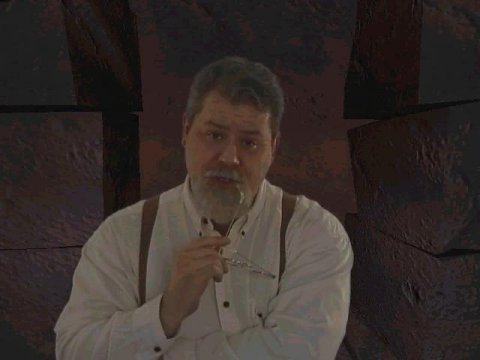
How many people are involved in the development of Riddle of the Sphinx?
Karen and I worked on ROTS for about 4 years. Our typical day was: in at 9am and home at anywhere from 12am to 3am. I don't want to see those days ever again. Then one of our designers began to help us out in a few areas toward the end. But I would be remiss in not mentioning the multitude of those who have helped in many other ways. We have had good friends lend us equipment, their time, and most importantly their support and friendship when we needed it most.
Tell us a bit about the research you did on Egypt and the Sphinx.
Latest Gaming Articles
All Articles