



GDC 2014 – Zork Post-Mortem


For longtime adventure fans, the lexicon associated with the text adventure Zork and the company founded to publish it, Infocom, have become legend. Many gamers still recoil at the thought of the grues lurking in the dark, fondly recall the arcane magic words necessary to survive in the Great Underground Empire, and laugh about the fallen Flathead empire. Even the term “Implementor” to refer to an Infocom designer has become not only a part of gaming history, but a powerful artifact from the beginning of digital storytelling.
On a Thursday evening in downtown San Francisco, Dave Lebling, one of the founders of Infocom and also one of the original Implementors, hosted a post-mortem to discuss the origins and legacy of 1977’s Zork. Lebling would go on to write and design several more text adventures for Infocom, including classics such as Starcross, Suspect, Spellbreaker, The Lurking Horror and James Clavell’s Shogun. To this day, however, Zork remains the highest-selling and most iconic game that Infocom published and is rightly considered the spiritual godfather of all gaming. What many people aren’t aware of, however, is that Zork is in fact a spiritual successor itself.
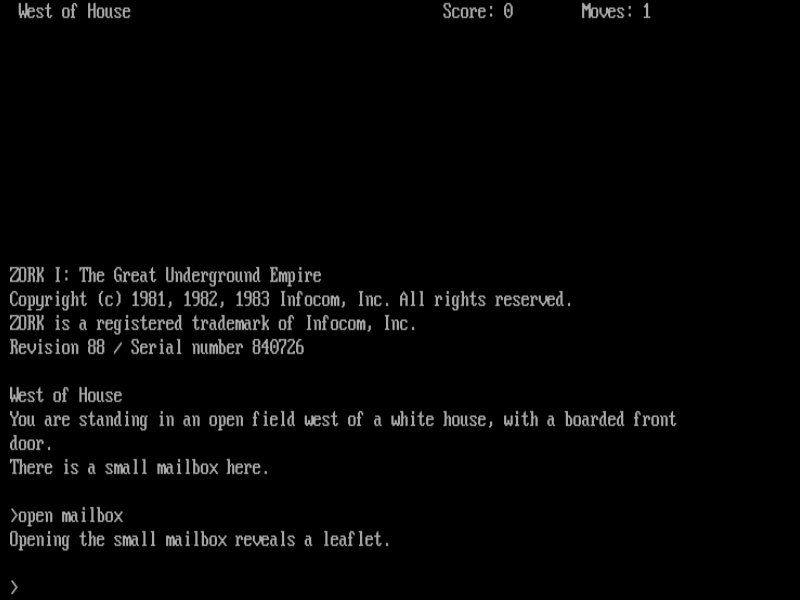
As Lebling approached the podium in front of a crowd that included other Infocom luminaries such as Steve Meretzky, Bob Bates, and Michael Dornbrook, as well as text adventure historian and Get Lamp director Jason Scott, he began by asking how many people had ever played a text adventure. Although the response was nearly unanimous, Lebling began by explaining the format and origins of the text adventure (or “interactive fiction,” the term which Infocom would coin and is now the commonly accepted moniker for text-based adventure games). “A text adventure,” Lebling said, “is a game you play entirely by telling the computer what to do and the computer tells you what happens. It’s kind of like playing D&D (Dungeons & Dragons) except with a DM (dungeon master) who is really stupid, but also a DM who is totally without any qualms about killing the player.”
Latest Gaming Articles
All Articles