



Adventures in Storytelling: Unrest, The Shopkeeper

Story and puzzles used to be inseparable in adventure games, like spaghetti and meatballs, bacon and eggs, peanut butter and jelly. But lately, more and more games have been abandoning puzzles altogether in favour of strictly (or at least largely) narrative-driven experiences. Popularized by the likes of Dear Esther, The Walking Dead, and The Stanley Parable, these puzzle-free story games are quickly forming a subgenre all their own. (If you’re wondering where all the puzzles have gone: the platformers took ’em.)
For some this change is reason to lament, but for story lovers it can be welcome news. Unencumbered by the need to work in arbitary obstacles where they don’t belong, these games are free to tell their stories their way – or at least, the way that players choose to direct them. The experiences can be entirely different, not just between tales limited only by the imagination of their authors, but even within a single game from one playthrough to another. Two such games are Unrest, which takes players into a fantastical version of ancient India to a time of poverty and political strife, and The Shopkeeper, which sees players endlessly seeking a perfectly devious gift in a Victorian-era small English store.
Unrest
Katie Smith
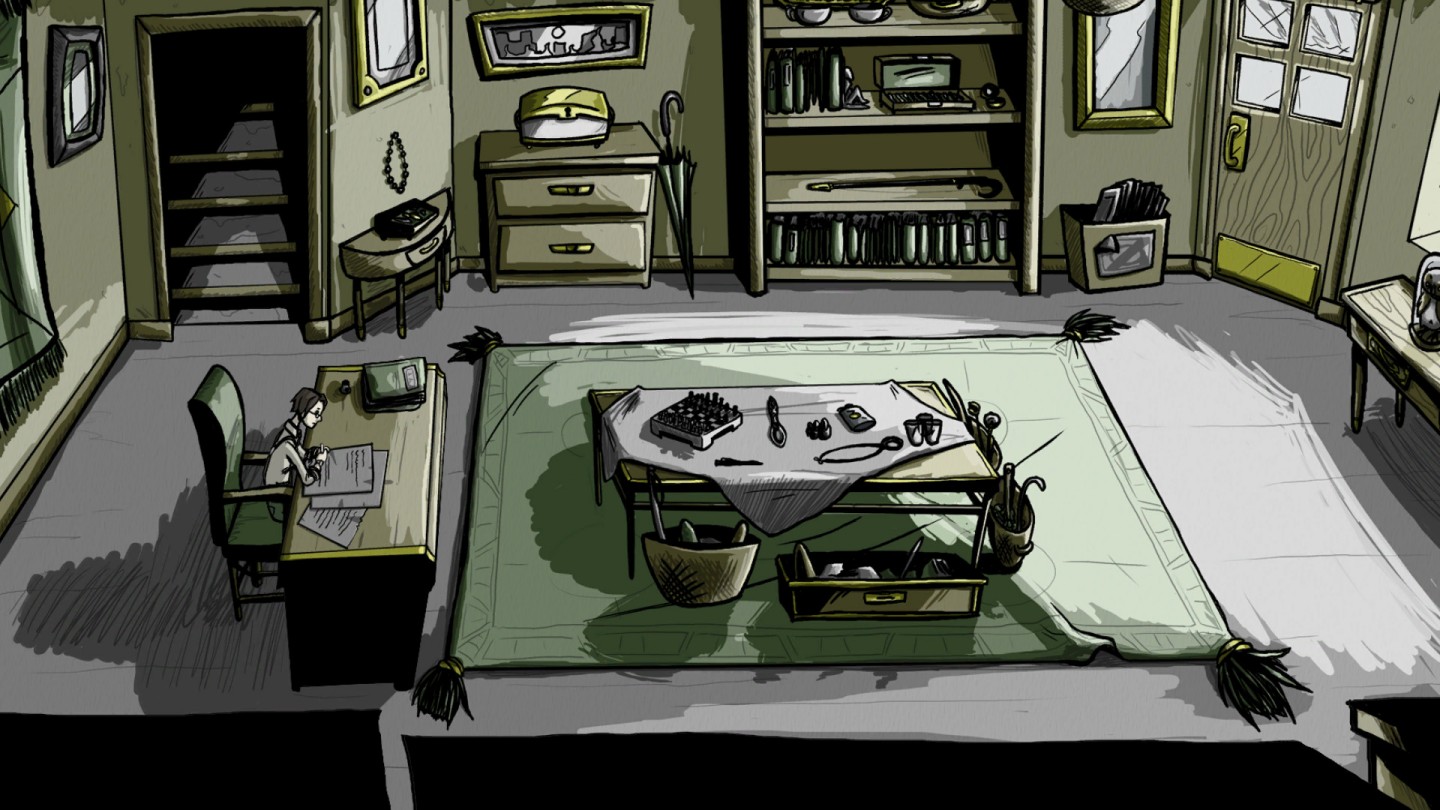
In Unrest, an unusual, RPG-styled narrative adventure funded through Kickstarter, the town of Bhimra has fallen on hard times. Famine, caste tension, and a possible trade alliance with a frightening race of snakes has put the town on edge and left it on the brink of destruction. Five citizens from different walks of life are struggling to survive the upheaval, and even death does not mean game over. There are many different choices of how to handle things, but the decisions don’t matter much in the end, and the lack of puzzles and character depth make this pretty game a trudge to get through.
The game world is modeled after ancient India but features the fantastical Naga, the snake-like creatures that half the town fears and half the town hates. The story is split into eight short chapters, each focused on one of the five playable characters. Asha is the sole heir to Bhimra, struggling to claim the throne. Chitra is a seasoned diplomat for the Naga Empire, set to retire after sealing a deal with Bhimra. Tanya is the daughter of one of the townsfolk, arranged to marry a boy she despises. Bhagwan is a local priest, tasked with choosing between angry men, sick women, and starving children for whom to give a limited amount of food and medicine. Shyam is the local mercenary who needs to protect the inner city, which may leave out the slums and the poor people within them.
Regardless of the character, the game centers around making good decisions to survive, which is done by walking around the scenes and talking to the different people. Inventory items are picked up but used only through dialogue, so there are no puzzles to speak of. Objectives can range from simply speaking to certain people, to appointing one new sergeant out of three different candidates, to choosing whether to sell the medicine you are carrying or give it to the sick man who offers you a measly sum of money.
You have a choice between Myth and Mortal at the beginning of the game, where you can either have multiple saves or just one save so you can’t go back on the choices you make. Each chapter starts with a picture of the playable character, along with their basic background and traits. The protagonists all begin with certain unchangeable characteristics, such as being a princess, diplomat, or family man. Other traits can be changed, however, depending on how you choose to respond during conversations. You can opt to be opportunistic, kind, or ruthless, etc., and each conversation has about four responses to choose from that reflect attitudes like rebelliousness, curiosity, or openness. The responses you tend to pick will influence the additional traits each character acquires. It usually doesn’t have any impact on how the story ultimately plays out, but it is interesting to see your influence on the character.
When speaking to others, a dialogue box comes up with their portrait, a link to your journal (which includes what is known about that character), and three bars at the top. The bars signify the level of friendship, respect, and fear that character feels toward you. The responses you choose may influence one of these factors, and a bell will ring if it changes. These factors change the tone of the conversation and the information you learn. If you are open, you may coax them into talking more freely about issues that they would usually be reserved about. But you might be talking to a traditionalist, who doesn’t appreciate you trying to speak about sensitive issues publicly. It is even possible to begin a fight during conversation and die. Fighting is handled through text-based choices, like when three others gang up on you and you’re given choices such as stabbing at the guy to your left, lunging at the opponent in front of you, or hitting the one standing to your right. There weren’t many times that I encountered an option to fight, however. If one character dies in such an altercation, the story continues, giving a brief blurb about what happened as a result, then moves on to the next chapter.
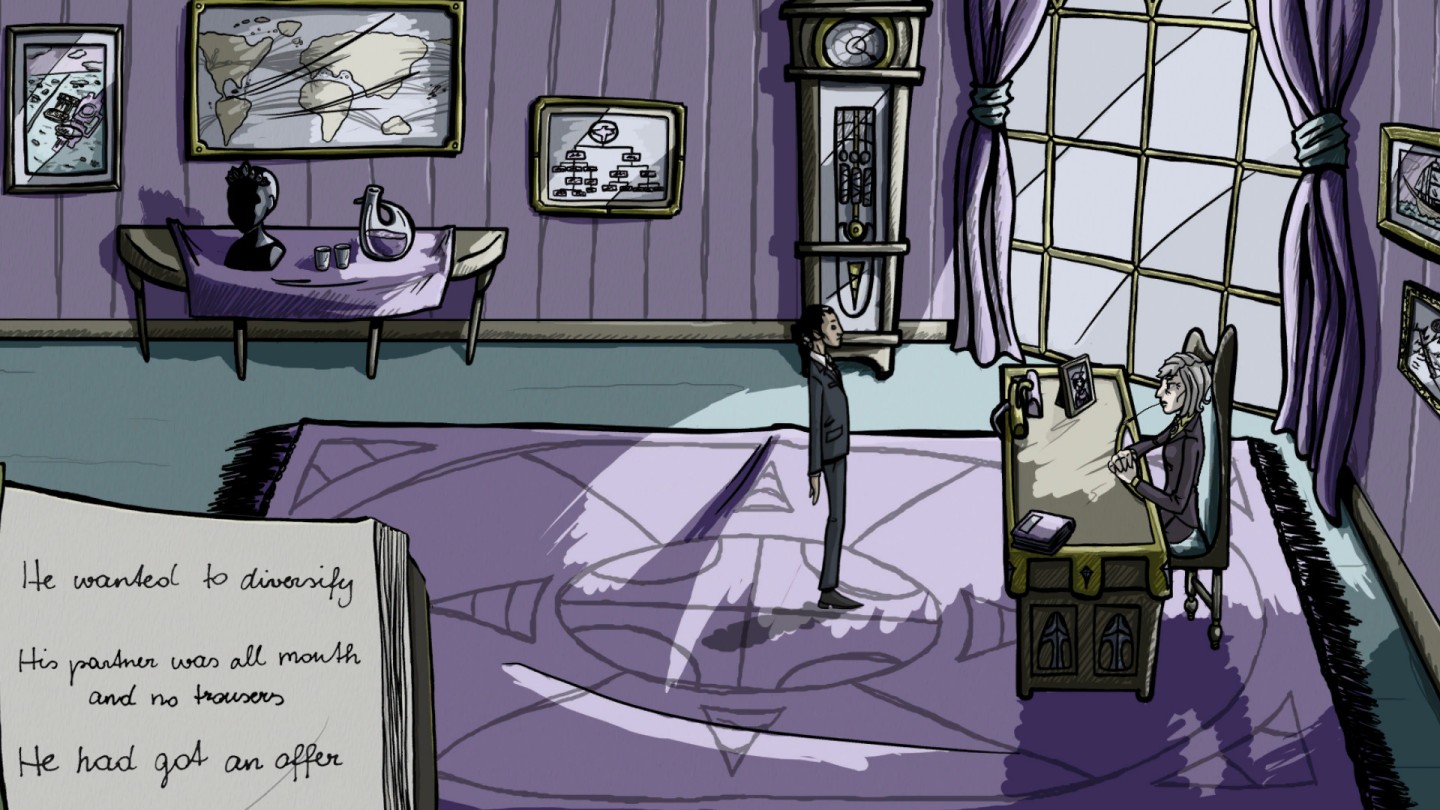
Only Asha appears in more than one chapter, and what happens to the other characters is only mentioned quickly in passing. It is easy to feel connected to each character since you control a lot of their personality, so it’s a shame that most of them don’t have more time on screen, and are largely abandoned between chapters to make way for the next. It’s also too bad that their roles aren’t more relevant to the overall storyline. When you do make a decision, the consequence isn’t fully capitalized upon. The fate of the town is up in the air, but it doesn’t feel like you really contribute or control anything that will help determine its future.
There are plenty of other characters scattered around Bhimra, some of whom only have one line to say while others you can engage in conversation. Some of the same characters are mentioned or can be interacted with in more than one chapter. Among the more notable secondary cast, Vijay is the advisor to the King who respects Asha but feels little friendship or fear of her. Laxmi is the tough wife of a landowner, with whom both Chitra and Tanya can interact. Unfortunately, the characters are one-dimensional, which makes having to slog through all the dialogue a chore. The setting itself makes for a more interesting backdrop. Other than the presence of the Naga, it feels very historical, like it could have been a real town from the ancient past. The distinctly cultural influences are interesting to explore, and the impoverished setting is refreshingly different from other games out there.
Icons at the bottom of the screen include a map, a journal, and inventory. The map shows where you are in the bigger town picture, though there’s no quick travel option. You can’t run through scrolling screens or double-click exits either, so walking from place to place can take a long time. The journal includes a list of current and past quests, a guide to people and places, and the basic history of the land. Rather than drowning players in detail, the information is very basic, which doesn’t go far in helping build the world’s lore. An icon appears next to any information that hasn’t been viewed yet. The inventory includes descriptions of everything. You start off with some items already, including money, and you can buy more items at the market, such as a map or blanket. However, like conversation choices, these decisions don’t seem to matter in the big picture. You’ll use some items through dialogue, but most of the inventory is not used at all.
The game uses an isometric view of the town, giving it a three-dimensional effect. Movement can be controlled in multiple ways, from traditional point-and-click to WASD on the keyboard, or even a controller. Sometimes trying to navigate the world can be tricky, since the character sprites often get stuck on corners of objects and can only speak to others in certain positions. People who can be interacted with have an icon over them, both on the main screen and the map. When you have a decision to make, the map will also show where you must go to make that choice. You’ll find books to read throughout, but they are only a paragraph long, in keeping with the short and shallow journal details.
Latest Gaming Articles
All Articles