




The Last Show of Mr. Chardish

The Last Show of Mr. Chardish is a game about art. It examines not just the life of an artist, but also the ways we use art to come to terms with our emotions and experiences, the struggle to make art that is both authentic to the creator and interesting to the general public, and a number of other ideas that dabble in the philosophical. The worlds explored in this game—both the real one and the numerous self-contained imaginative settings of the titular Mr. Chardish’s plays come to life—are beautifully rendered, and the story is engaging and even poignant at times, but some dull gameplay sequences keep the experience from being as appealing as its aesthetic.
The year is 1976, and you play as Ella McLane, an actress returning to the theater she co-founded for the first time in twenty years. The theater has become run down, a shell of its former self, and as you roam around it you’ll find notes and other items that begin to fill in the backstory, a tale that feels sadly familiar in its depiction of struggling artists and once-acclaimed but now-faded displays of great art. Robert Chardish—the celebrated director, actor, and playwright with whom Ella helped open the theater—went on to have a rich and varied career on the stage after she left, but with his best days behind him, it soon becomes clear that Ella’s connection to him and the theater itself is deeper than it may at first seem.
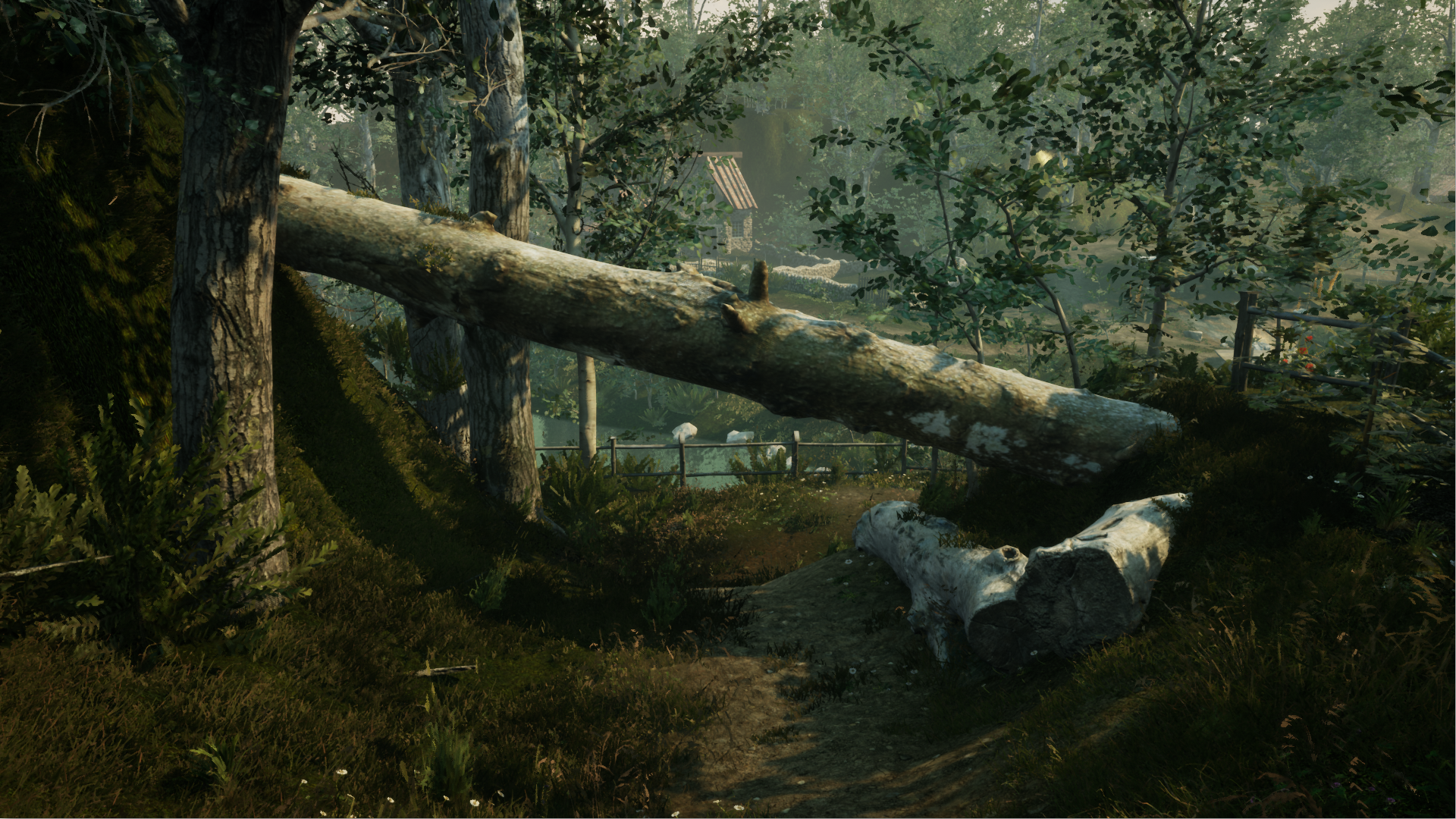
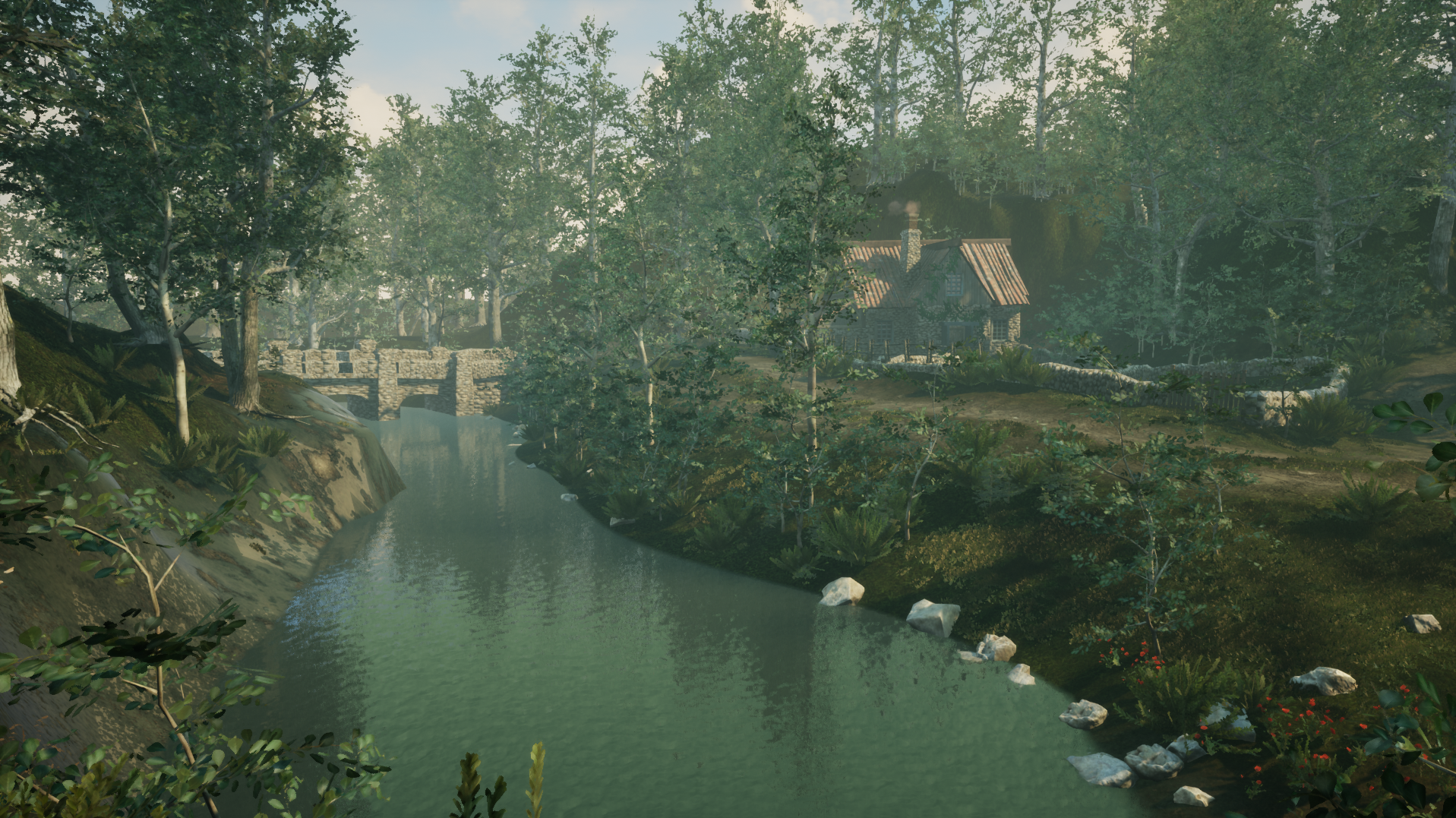
You begin the game in first person, exploring the near-photorealistic theater situated in the remote British countryside, the central hub where you’ll return after each excursion into one of Chardish’s plays. The only gameplay in these portions involves walking around and looking at the various documents left behind. As you do so, Ella will occasionally play snippets of recorded interviews with the director in which he discussed the creation of his many original plays and offered some insight into his mental state as he tried to keep the theater afloat, all while dealing with critics, fickle audiences, and his own personal struggles. These segments are enjoyable, serving as a sort of palate cleanser every time you revisit them, but they make up less than half of the game.
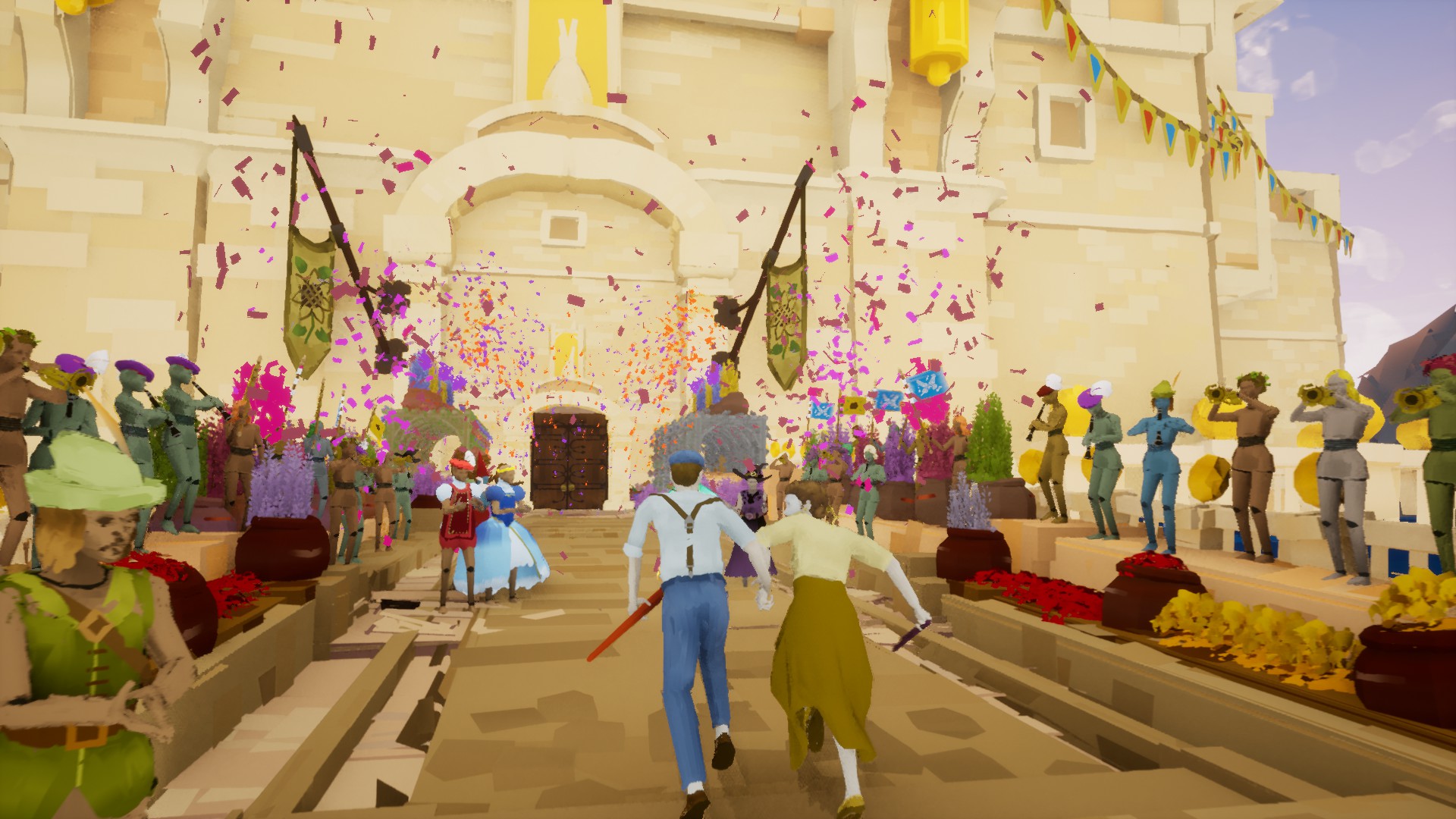
The majority of play time will be spent within the worlds of Chardish’s plays. Shortly after you arrive at the theater, you’ll don the first of five masks that will transport you directly into a play to control Chardish as he carries out his assigned parts. Each of these self-contained diversions features a painterly art style, with the perspective switching to third person as you assume the role of different avatars, from a winged man to a love-struck painter bringing color back to his world.
The plays feel like short vignettes—mere slices that are not particularly concerned with context or background details. Many are set in lush outdoor landscapes with bright green grass dotted with flowers, though there are a few exceptions—one is set in a cold metallic factory, while a flight sequence takes place above a golden-hued city. The game isn’t explicit regarding your objective in these sequences, so they generally just ask you to move through them, letting the voice-over dialogue play out as you try to reach the end.
Each play is focused more on various themes and feelings than on a clear narrative, which works well given their abbreviated length. The themes themselves vary, from creative frustration to regret, loneliness, and the complex relationship between artists. These sequences feel more like representative pieces that make up the whole of Mr. Chardish’s character and life experiences expressed through his art.
The five plays you’ll star in (named Solitude, Symmetry, Anger, Ascension, and Daydreaming) have their own unique styles of gameplay as well, not unlike the concept of What Remains of Edith Finch. The first asks you to move spotlights to reveal platforms and doors that only appear when the light is shining on them, the second asks you to maneuver a robot (or sometimes two at once, in a sense, with the other robot mirroring your movements) as you solve light environmental puzzles, but all five have fairly similar controls.
Using a keyboard and mouse, you’ll move with WASD, jump with space, and perform specific actions with the left mouse button. The game also has full controller support, and I imagine this option would work just as well considering how basic the mechanics usually are. Controls generally feel fine, save for a flying sequence that I (having little experience with flight sims) found difficult to maneuver in and ended up more frustrating than fun. Briefly switching to a controller led to a much better experience here, but this was still one of my least favorite moments—and some technical issues involving my avian avatar getting stuck when reaching the invisible boundary of the environment certainly didn’t help.
Most of the plays have some light platforming elements that, while not especially difficult or time-sensitive, still require a level of dexterity. I found these segments to be mostly decent, though there are some areas where you have to traverse frustratingly narrow platforms to progress. One sequence has some combat, but there’s no health bar or consequences for being hit, as you’re just fighting off piñatas on strings that fly towards you and defeating them is simply something you have to do to progress. The varied gameplay helps to keep things fresh, but the sequences themselves are not particularly engaging.
Each play includes a bit of dialogue, mainly from Chardish as he comments on his experiences but occasionally from Ella or another supporting character in the play. I can’t say I loved a particular sequence entirely in rhyme, but it is all well written for the most part and each segment helps nicely illuminate Mr. Chardish’s psyche as he created the plays you now explore.
The Last Show of Mr. Chardish is fully voiced, and everyone involved does great work. We hear most often from the titular director, whose actor brings a lot of depth and pathos to his performance. There is a sadness to much of his dialogue, especially in the recorded interviews we hear, which is conveyed nicely in its delivery. The rest of the cast is heard less often, but they too successfully inject personality and life into their roles. In the background, lilting, melodic piano makes up much of the soundtrack, and while the score didn’t immediately jump out at me, it works well in supporting the game’s wistful, nostalgic tone.
The most enjoyable part of Mr. Chardish’s plays are the stylish visuals. In contrast to the crisp, realistic style of the “real world” sequences, each segment has a lovely, colorful aesthetic that resembles a painting come to life. These fictional worlds were created using VR painting technology and it shows, as you can see what look like brush strokes as you traverse the vivid 3D landscapes. The last two plays were my favorites from a visual standpoint, with one allowing you to soar through a stunning environment in the air, and the other tasking you with returning color to a greyscale world. Though the non-theatrical environments aren’t as obviously creative and vibrant, they too are beautiful to look at and explore.
While I found the play time of around two hours to be enough (it is well paced and doesn’t feel like it needs extra hours to tell its story), I imagine some players will find the short length unsatisfying. But more isn’t necessarily better, as I was most disappointed by the gameplay in the fantastical theater plays. I appreciated the effort to mix things up, but I found the actual gameplay to be dull for the most part, and even though each sequence has a “unique” style of play, they all boil down to the same thing: walk around, do some light platforming and environmental puzzles, and occasionally click to punch/swing/paint—the lone exception being the flying sequence, which had problems of its own. It all works well enough for the most part, but that’s about it.
Even with some uninspired gameplay, The Last Show of Mr. Chardish is a worthwhile experience overall, offering a short but sweet adventure with gorgeous visuals and a nicely introspective story. For anyone interested in a largely well-written and skillfully acted tale of memory, nostalgia, and the power of art, this game is worth the couple of hours it takes to complete.

The Good
- Poignant story with great voice acting
- blends photorealistic real-world exploration with stunning, painterly visuals during theatrical sequences
- unique environments and settings used to explore its interesting themes.

The Bad
- Many of the gameplay sequences aren’t all that fun
- very short at only two hours of play time.




A solid adventure that is generally enjoyable, though it lacks enough polish or ambition to recommend without caution.
What The Last Show of Mr. Chardish lacks in particularly engaging gameplay, it makes up for with a beautiful art style, a variety of settings, and some interesting ideas about art and identity.


Top Adventure Games
More