




Neon Hearts City

Based on an interactive missing person case, Cosmic Void’s Neon Hearts City features a quest to restore lost connections and relationships. Vivid pixel-art locales encompass well-animated, fully voiced characters who present adventurers with challenging (but not taxing) puzzles, grown organically from the plot’s tilled soil. Players control the game using a traditional point-and-click interface. Aside from two minor issues – the lack of a journal to consult, and the inability to label saved games – Neon Hearts City is a shrine to classic adventure games.
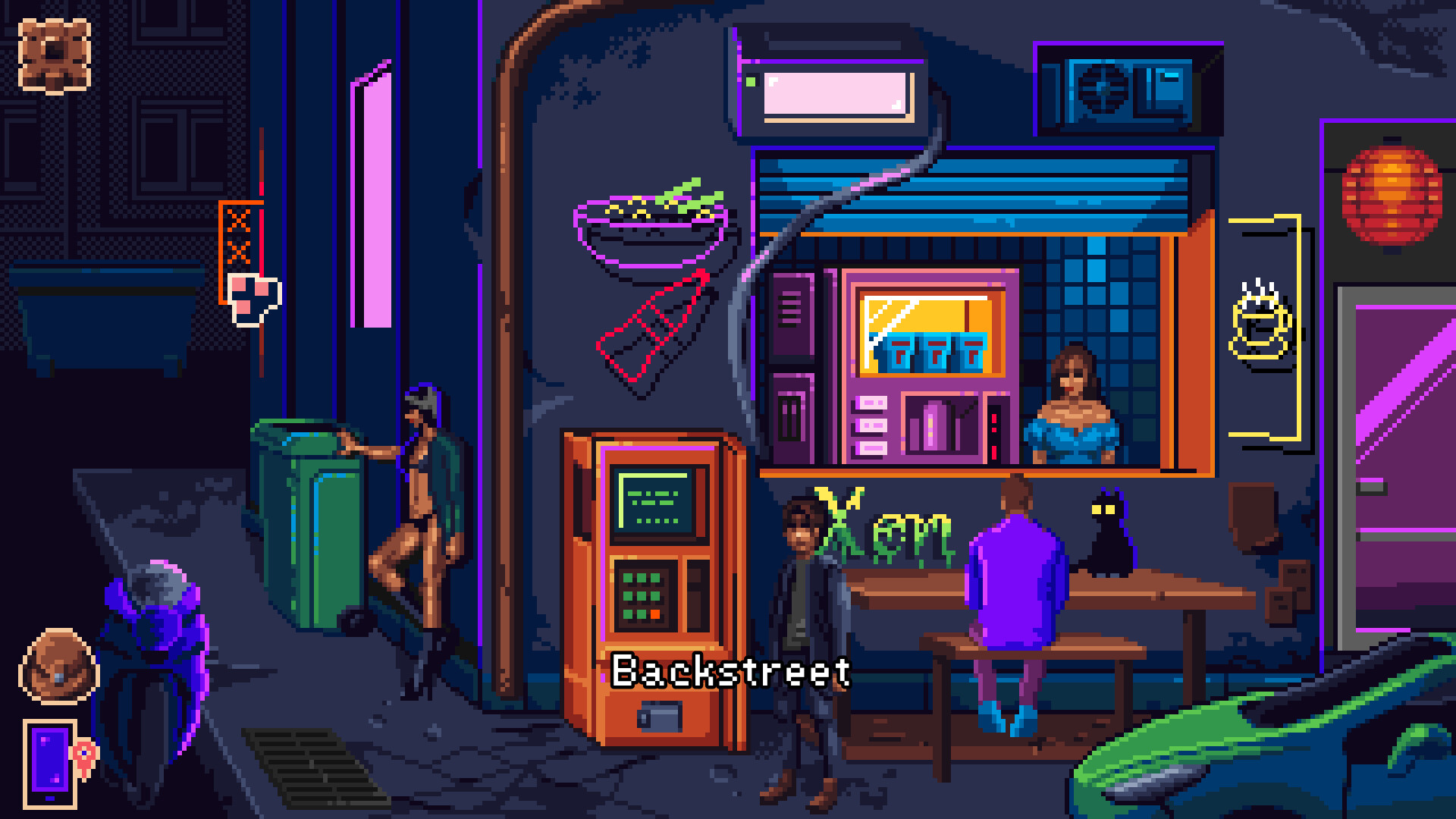
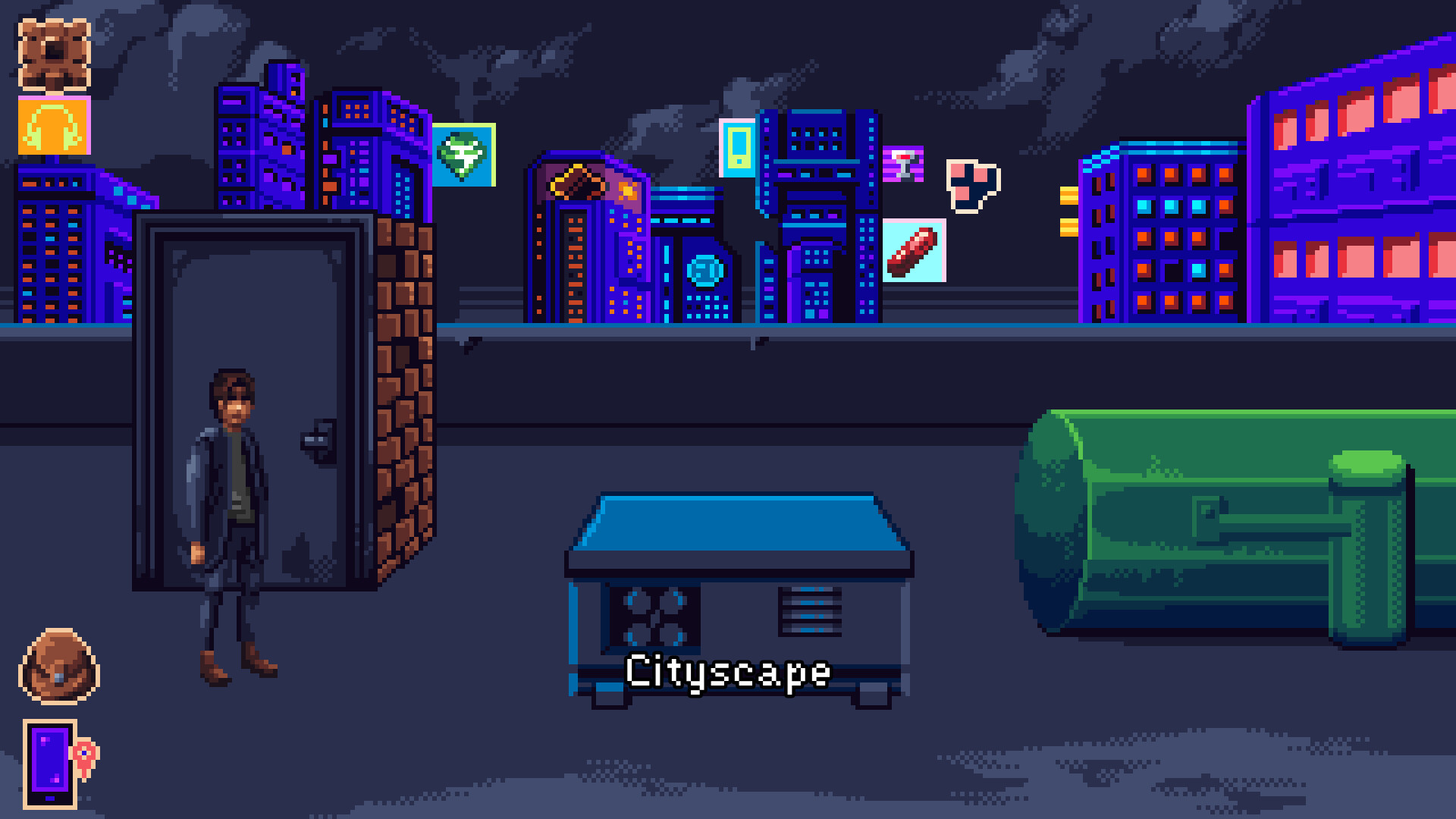
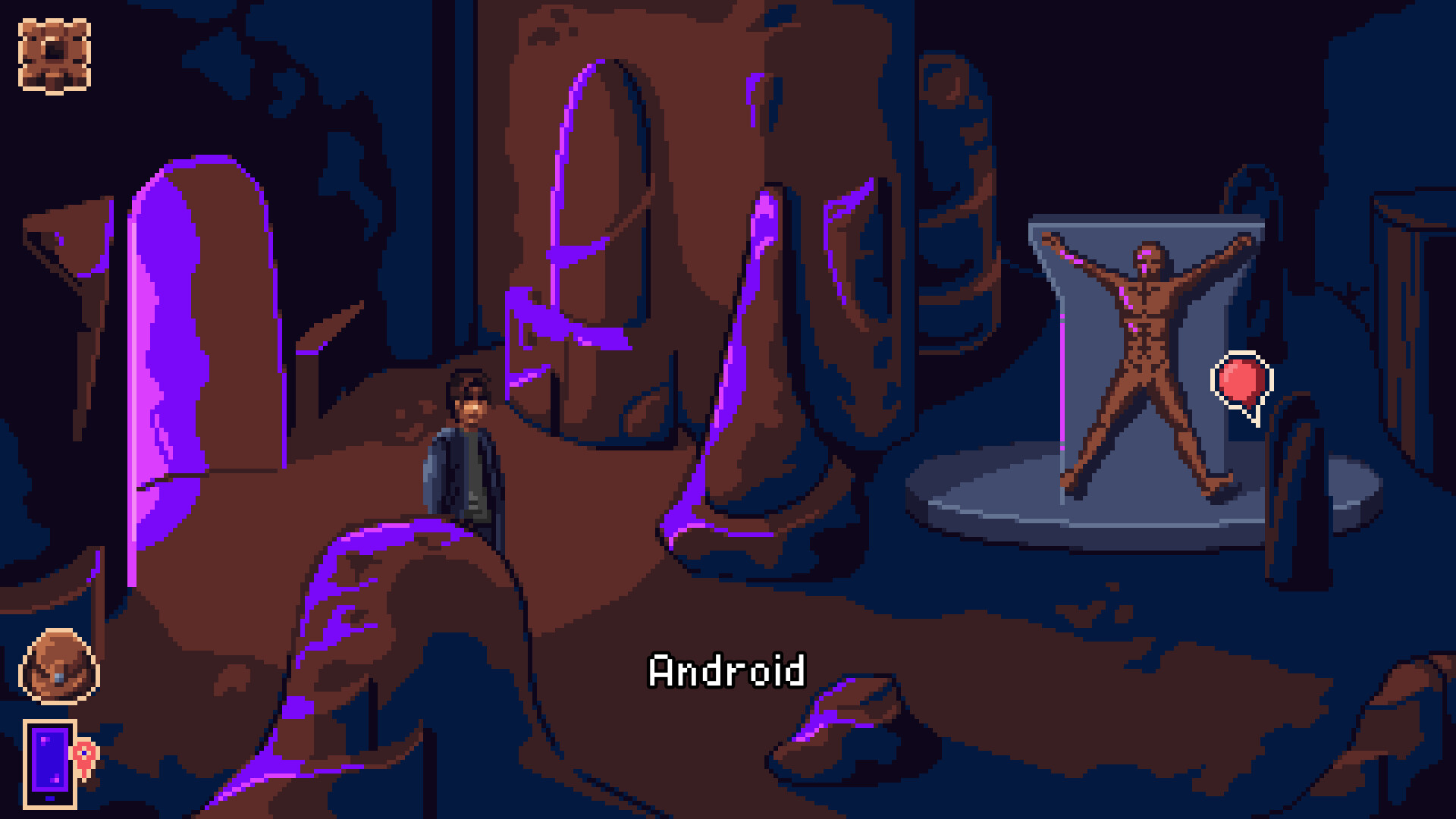
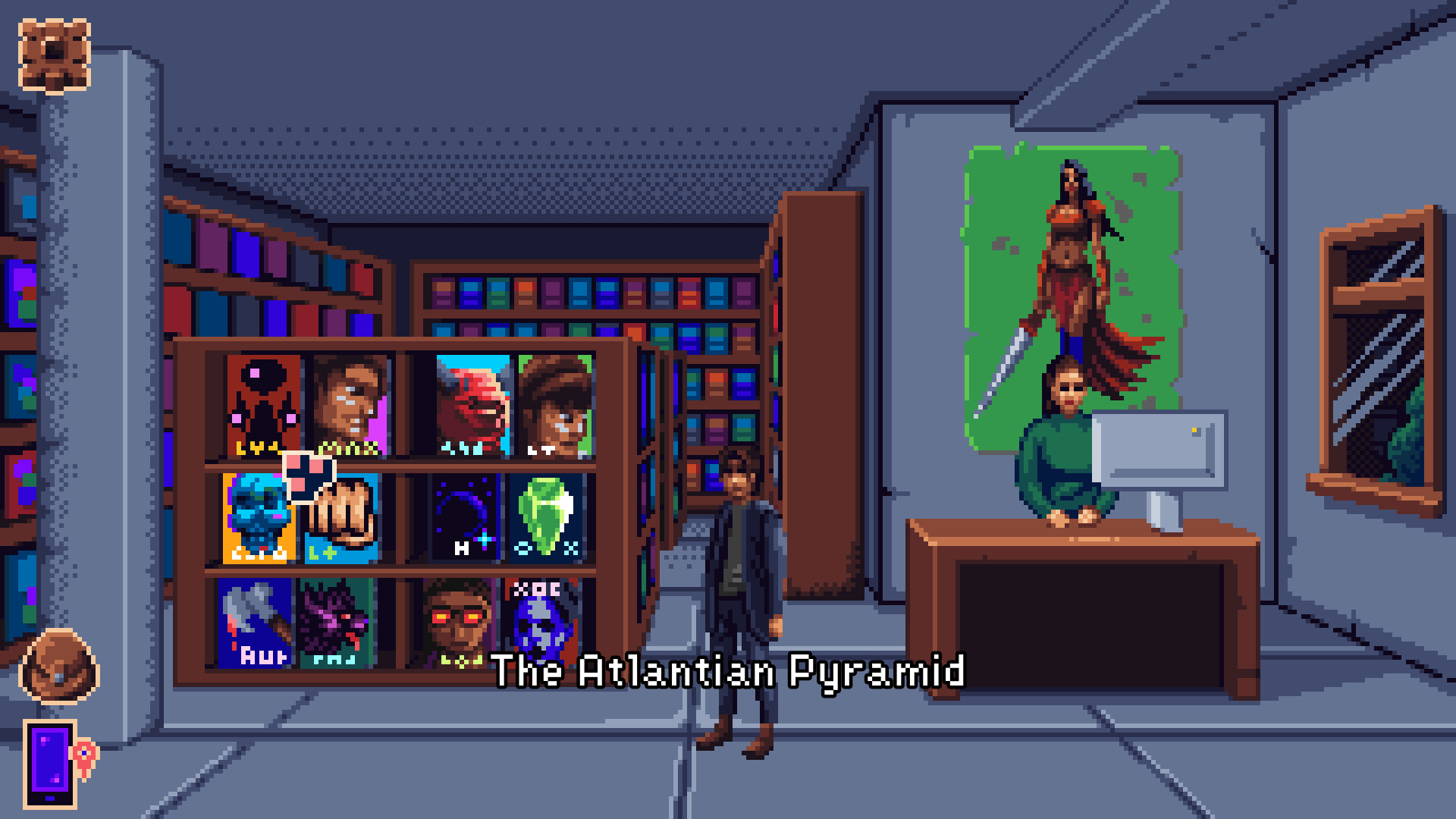
A worried mother, Scarlett, tasks a private investigator, Elijah Crow, with locating her missing teenage daughter, Audrey. Finding her requires Elijah to confront the past and visit a place he desperately wants to avoid as the compelling narrative unfolds. Neon Hearts City has many different locations including, intriguingly, a ramen joint (just looking through the service window will make adventurers hungry). The most unexpected locale is not on the map – it lies in virtual reality. I appreciated its green sky, lovely blue waterfall and purple rocks. This magical aesthetic contrasts with the city’s technological, darkly colored settings.
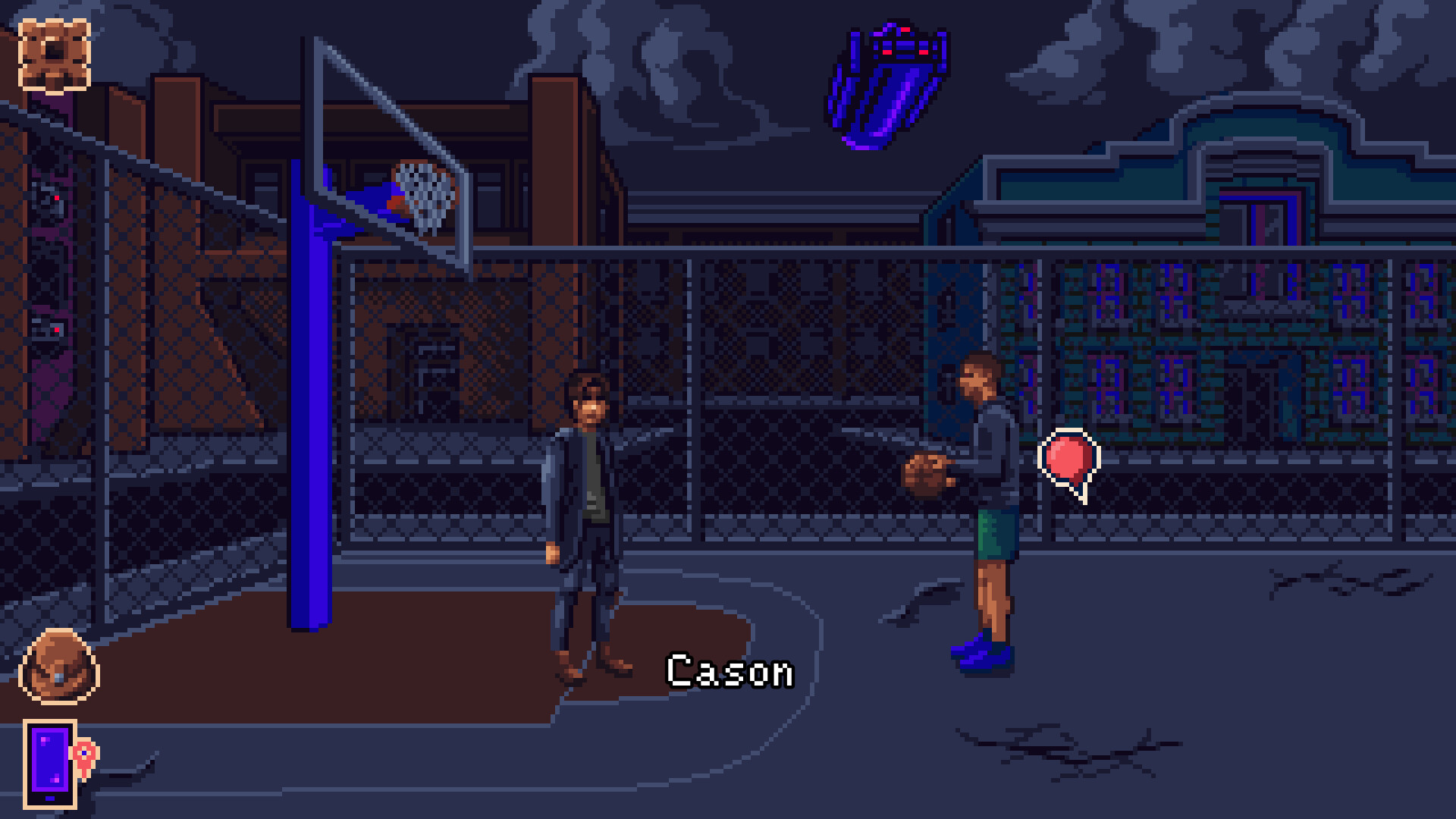
The sound design is equal to the eerie pixel-art graphics. The electronic, rapid-tempo music complements the futuristic urban locations. The soundscape in the cyberworld is particularly memorable; its melodic tones match the ethereal setting.
Music isn’t the only treat for the ears. Each character is brought to life by stellar voice acting. Adventurers hear expressions of hard-won determination from Elijah, a mother’s desperate hope from Scarlett, and a daughter’s passion from Audrey. Elijah’s voice-overs spark empathy for him and encourage players to help overcome the challenges this case presents. (Plus, anyone with a mutual ramen obsession will want to join him for dinner.)
Neon Hearts City’s multiple challenges are reasonably straightforward and don’t impose hours of head-scratching. They consist of fetch quests, solving riddles and playing mini-games that have clear instructions. My favorite puzzle involves utilizing comic books to solve a riddle – I have never imagined using comic books in this ingenious way.
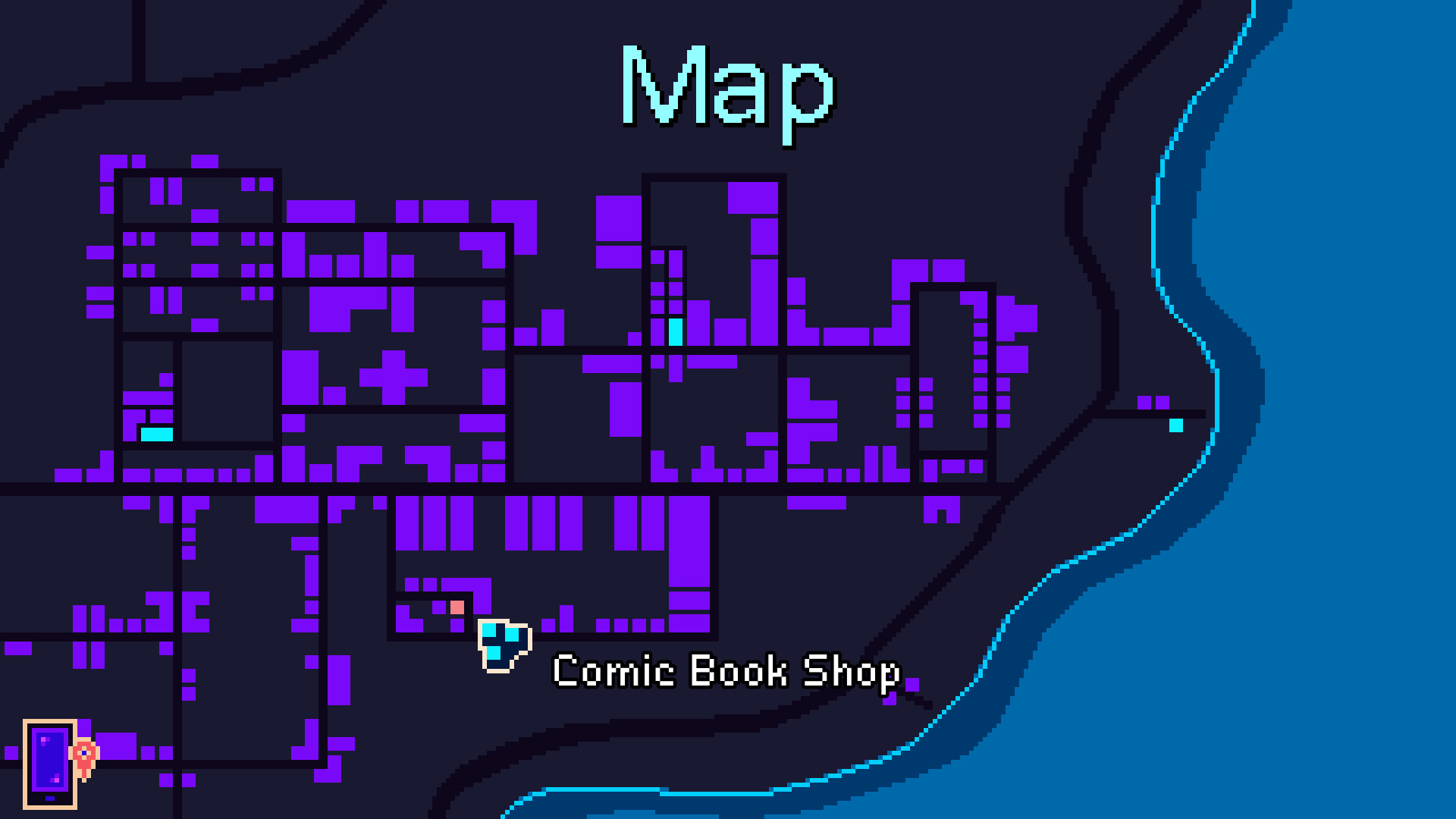
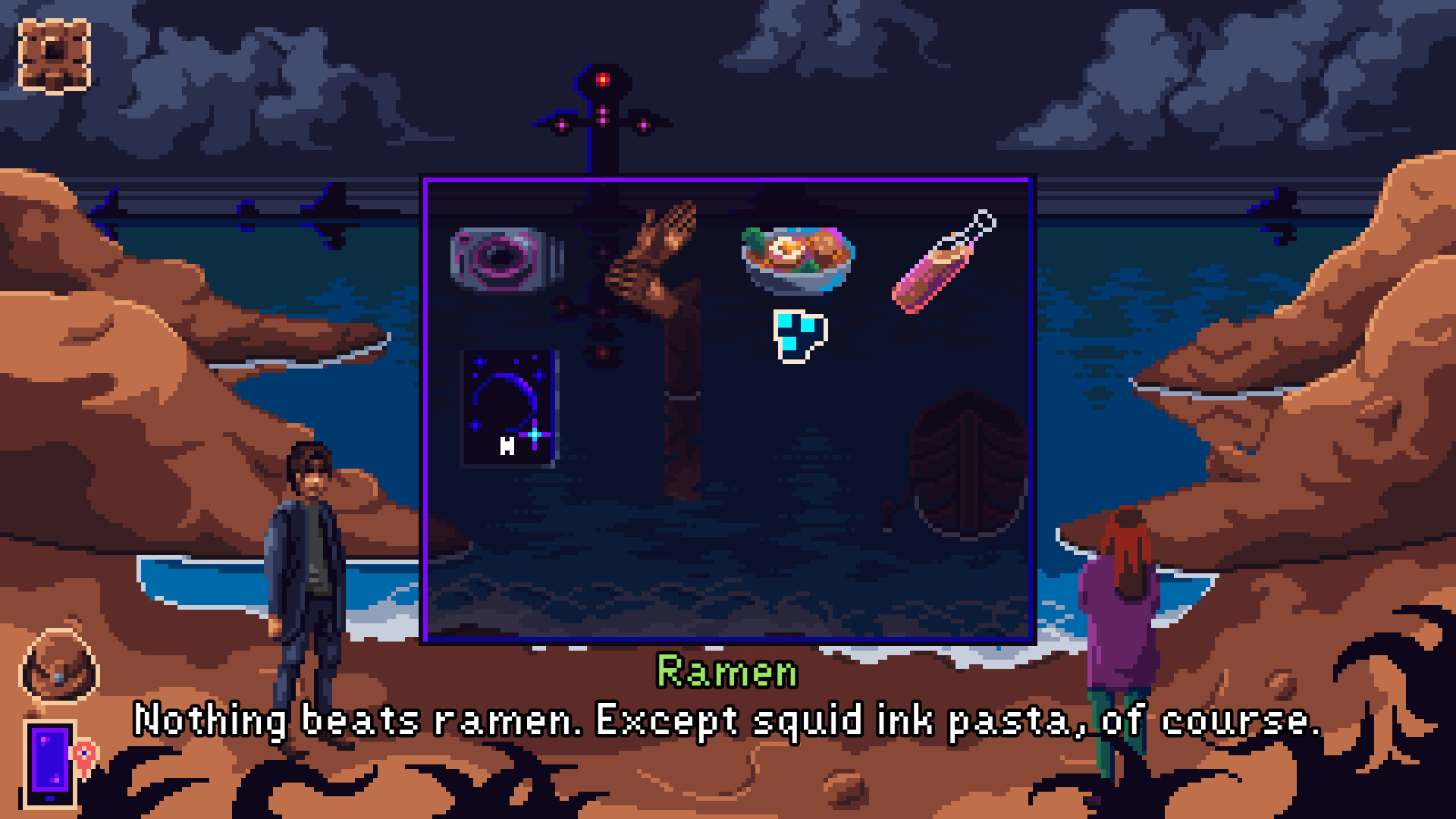
Adventurers control everything with the mouse: Eljah’s movement, talking to characters, gathering and combining items, saving and loading the game, and traveling between locations. Left-clicking on a spot on the screen causes Elijah to move there. Players can travel quickly to locations by left-clicking on the phone on the bottom-left corner of the screen, then left-clicking on a location on the map. Clicking on an object enables Elijah to pick it up and add it to his inventory. Hovering the mouse over an item provides its description and a hint about its proper use. Items can also be combined, which is useful if adventurers want to add spice to food, for instance. The game informs players if their combination is successful. Holding down the Tab key highlights all the hotspots on-screen.
Learning about gameplay objectives involves left-clicking on characters and passively watching Elijah’s conversations with them, rather than selecting questions through multiple-choice dialog options. When it's time to take a break, players can save their progress by clicking on an empty save slot. The game labels its slots with the location, date and time, but doesn’t allow players to type individualized labels. Left-clicking on “Continue” from the menu loads the game at the location where adventurers took their break, but this autosave feature doesn’t remind them of what they were doing before leaving the game. The addition of a journal would address this minor problem.
The alluring downtown settings and lively sound design in Neon Hearts City hearken back to the golden age of adventure games. The puzzles are fun and not excessively challenging, and the story is appealing. The lack of a journal won’t overly handicap players. I recommend this game to all those who yearn to experience classic-styled adventures.

The Good
- Radiantly contrasting, eerie pixel-art surroundings
- Catchy soundtrack
- Voice acting inspires empathy for the characters
- Puzzles feature a reasonable level of difficulty and make sense in the context of the story
- Familiar interface
- Hotspot indicator and autosave feature

The Bad
- This game would benefit from the addition of a journal and the ability to type customized labels for saved games




A game of very high quality. Although some aspects might have been executed better, we would recommend this game without hesitation.
Neon Hearts City blends colorful pixel-art graphics, intriguing challenges, excellent voice-overs, and mood-enhancing music to draw adventurers into its darkly exhilarating tale.
Top Adventure Games
More